Straight Into the Vat
Mash & Fermentation
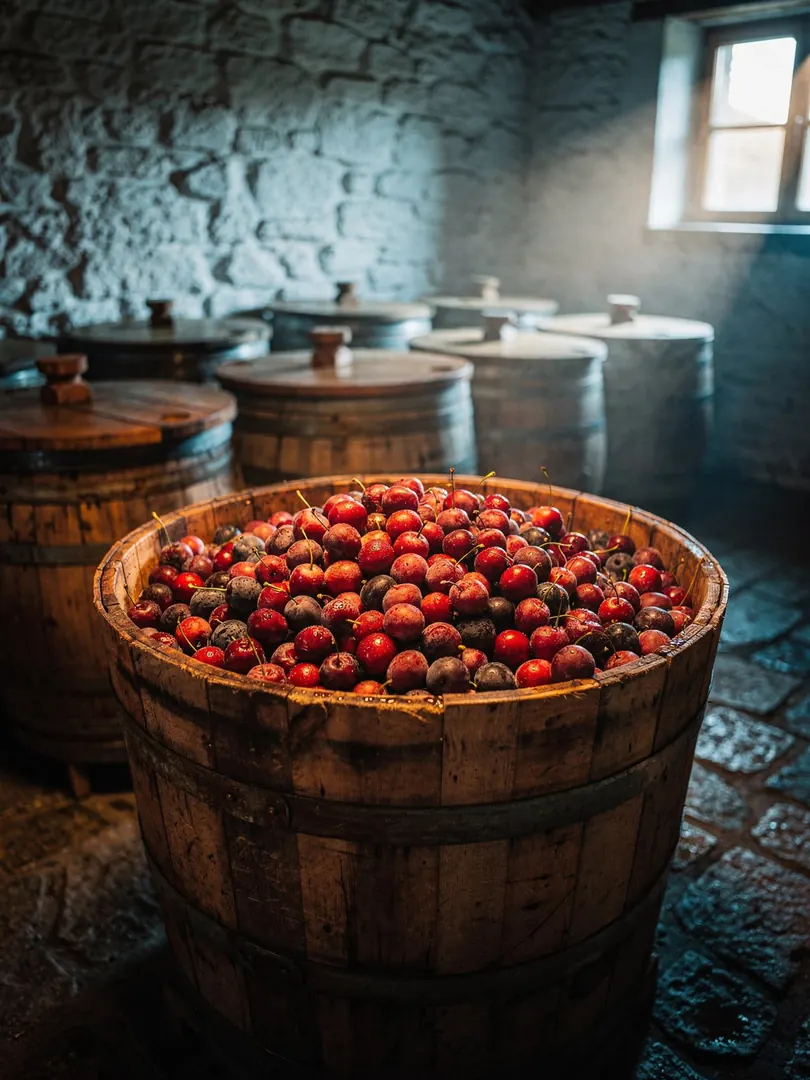
There's no mash in the usual sense with Damassine, since the specifications forbid both crushing and pitting. The whole Damasson rouge plums go into the vat with skin and pit intact, ideally on the day of harvest, at the latest the following day.
Beforehand, they're carefully sorted. Rotten or moldy fruit is removed, along with any wood, leaves and grass. This matters especially for windfall that's lain on the ground, since poor-quality fruit would spoil the flavor of the finished brandy.
Then fermentation begins, where yeast converts the fruit's sugar into alcohol. Only cultured, non-genetically modified yeasts and enzymes are allowed, monitored via a positive list maintained by the producers' association. Before fermentation, acidity may be lowered with phosphoric or lactic acid to a pH of 3.0 to 3.2, but not afterward.
Fermentation takes place at 15 to 25 degrees Celsius in an odor-free, weatherproof location, in barrels or tanks fitted with a fermentation lock — a valve that releases gas but keeps air out. Nothing is stirred. Once fermentation ends, the barrels are topped up completely with the fermented fruit mash and sealed tight.
The mash then rests further at 15 to 25 degrees until distillation, which must happen no later than December 31 of the harvest year. During this time, pits, flesh and skin remain in contact, and the bitter almond note the specifications cite as a hallmark of Damassine is one experts often trace, with stone fruit, back to the pits.