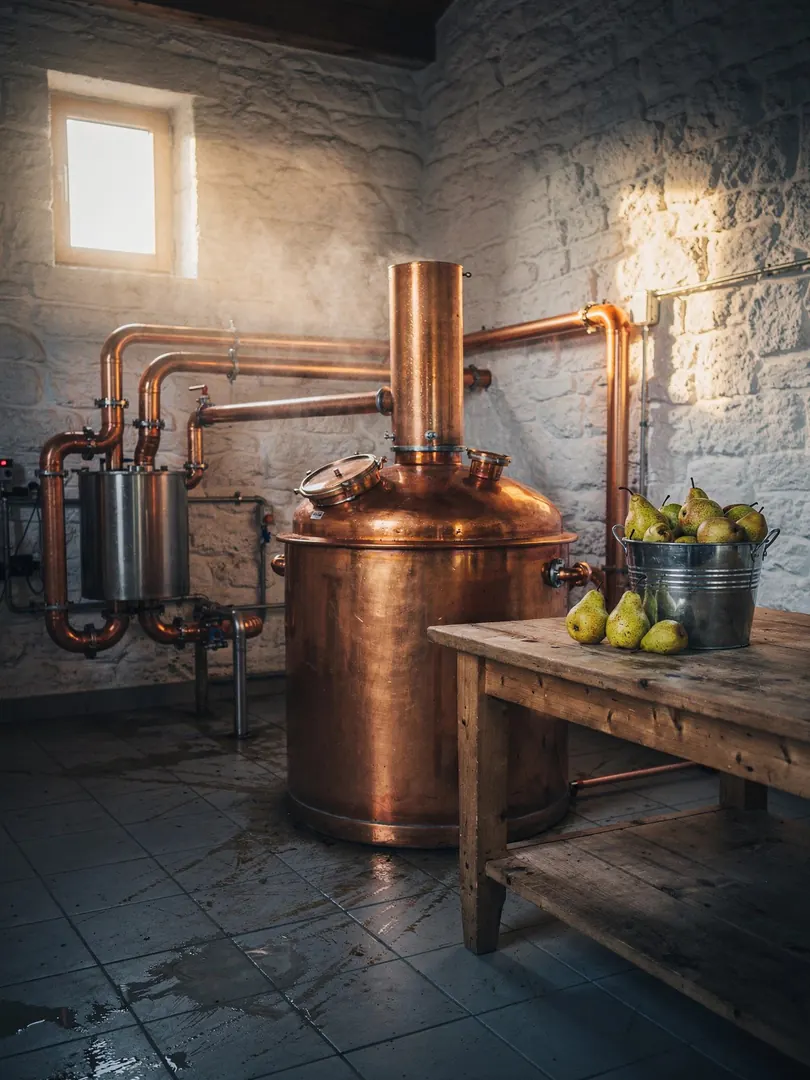
Copper and the Still Run
Distillation
In the distillery stands a copper pot still, into which the fermented mash is loaded. As it heats, alcohol and aroma compounds rise before the water does, condense again in the cooler, and drip out as distillate. Some houses fit a rectifying column atop the pot to concentrate the alcohol in a single pass; others distil twice. Which technique a given Valais house uses is entirely its own choice.
The distillate doesn't flow uniformly. First comes the heads, smelling of solvent. Then follows the heart, also called the middle cut, which is what ends up in the bottle. Finally comes the tails, heavy and fusel-laden, which are separated off and often redistilled. The distiller judges where to make these cuts by smell, taste and alcohol content.
A common misconception holds that all the methanol sits in the heads. In fact, methanol forms in the mash itself from the fruit's pectin and is distributed across the whole run. Cutting off the heads only partially reduces the level. Methanol becomes dangerous above all in adulterated alcohol, not in legally produced fruit brandy that stays within EU limits.
Both Valais AOPs require distillation within the canton. Abricotine, per its specifications, is distilled immediately once fermentation is complete. For pear brandy, as represented by Williamine, the specifications focus mainly on the result: an intense Williams character free of grassy, oily, rancid or oxidised notes.
Anyone tempted to try this at home should be warned. Distilling without a licence is illegal in Germany and Austria, and in Switzerland it's only permitted within the framework of alcohol legislation. Making the cuts between heads, heart and tails takes experience and careful measurement. Valais brandy is produced in licensed facilities built for the purpose.