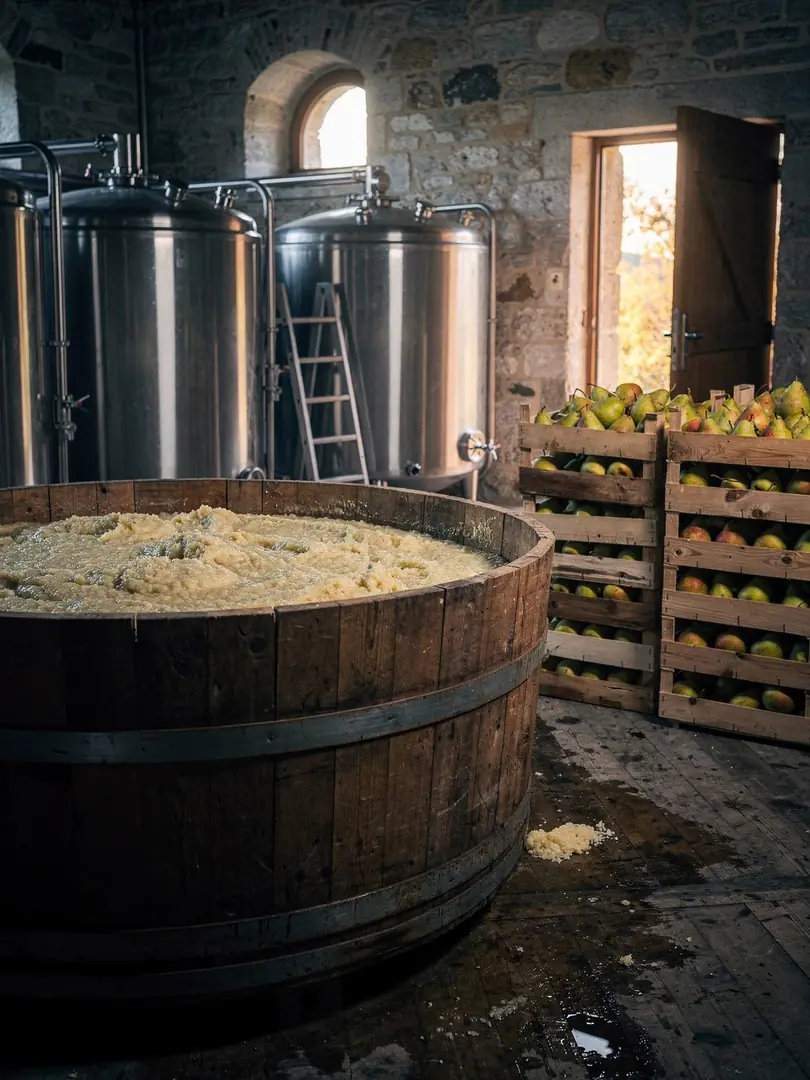
Pitted, then fermented
Mash & Fermentation
Apricot brandy begins with a decision about the kernels. Abricotine is meant to taste free of bitterness, so the fruit is pitted either before or after fermentation. Leave the kernel in, and a strong almond note creeps into the brandy — and the law sets a firm limit on hydrogen cyanide content regardless.
After that, the yeast gets to work. It converts the fruit sugar in the crushed fruit into alcohol, inside barrels or tanks kept tightly sealed so no oxygen reaches the mash. How long this takes depends on the fruit, the temperature and the yeast; Valais sets no fixed figure for it. What matters is simply that the fruit sugar has fermented out completely by the end, since only then does all the alcohol that can later pass into the distillate actually sit in the mash.
For apricot brandy, the Abricotine specifications are clear-cut: once fermentation is complete, distillation follows immediately. Finished, fully fermented mash left standing spoils quickly, picking up off-flavours and losing its fragrance.
With pear brandy, the Williams mash is especially delicate. The fruit is soft, its flesh breaks down fast, and pears are rich in pectin, which releases methanol during fermentation. This isn't a fault of the distiller but simple fruit chemistry — which is why the EU permits Williams pear brandy the highest methanol limit of any common fruit brandy, at 1,350 grams per hectolitre of pure alcohol.
One distinction matters here: this is true fermentation, and the brandy emerges without any added neutral alcohol. That's what makes Williamine and Abricotine genuine fruit brandies rather than fruit spirits, which are made by steeping unfermented fruit in alcohol.