Nose Before Tongue
Tasting
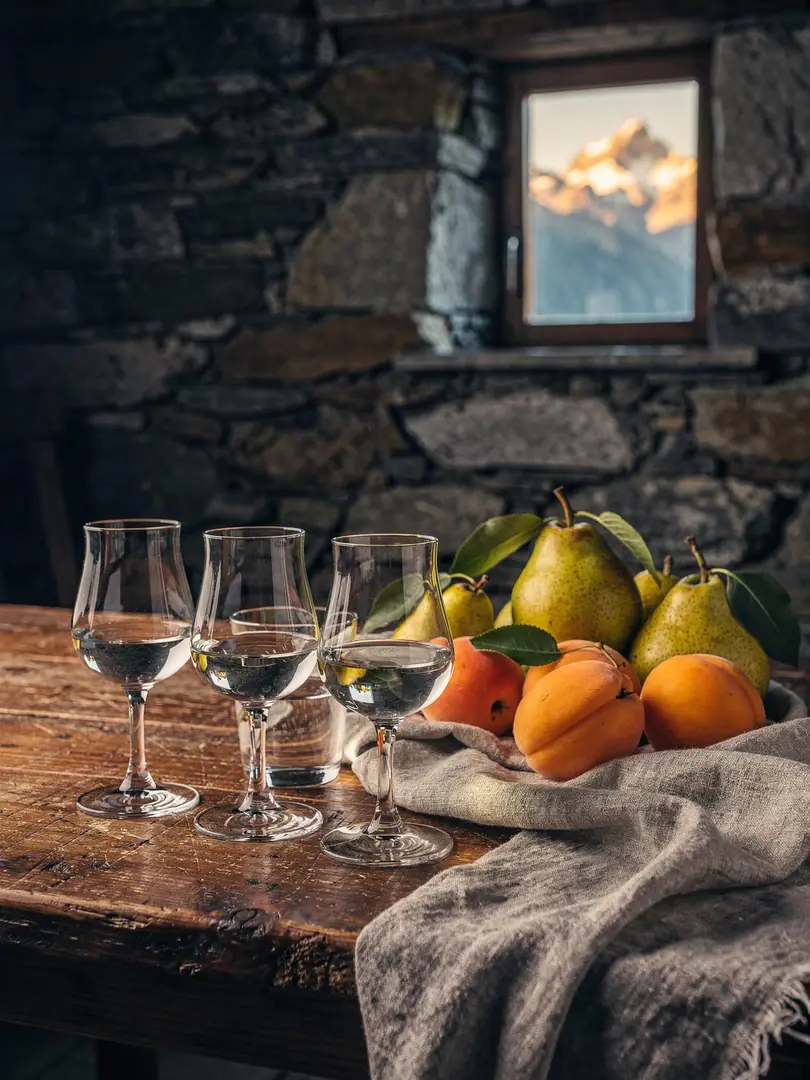
A Valais fruit brandy begins in the nose. A nosing glass or a small tulip glass concentrates the aroma above the opening, and a Williams brandy smells of fresh, ripe pear in it, almost juicy. Swirl the glass briefly and take two short sniffs at the opening, and you'll quickly sense whether the fruit is clean or carrying off-notes.
On the palate, a good Eau-de-vie de poire du Valais tastes of pear, with the gentle sweetness of its own aroma but no added sugar. Grassy, oily, rancid or oxidised notes count as flaws. If the aroma lingers long in the glass, that speaks well of clean fruit and a successful rest in tank.
Abricotine smells riper and warmer, of dried and fresh apricot, sometimes with a fine hint of almond from the kernels. Bitterness here is a fault — precisely why the specifications require pitting.
Three examples serve as illustration: Distillerie Morand's Williamine in Martigny, an Eau-de-vie de poire du Valais AOP, and an Abricotine AOP. The comparison shows just how differently two fruits from the same valley behave in the distillate: the pear fresh and vivid, the apricot warm and round.
On temperature: room temperature is enough to open up the aromas. Cold numbs the nose, so the bottle has no business in the freezer. Small sips are enough, one glass can carry a whole evening, and a glass of water alongside helps the palate. Drink alcohol, and drink it in moderation.