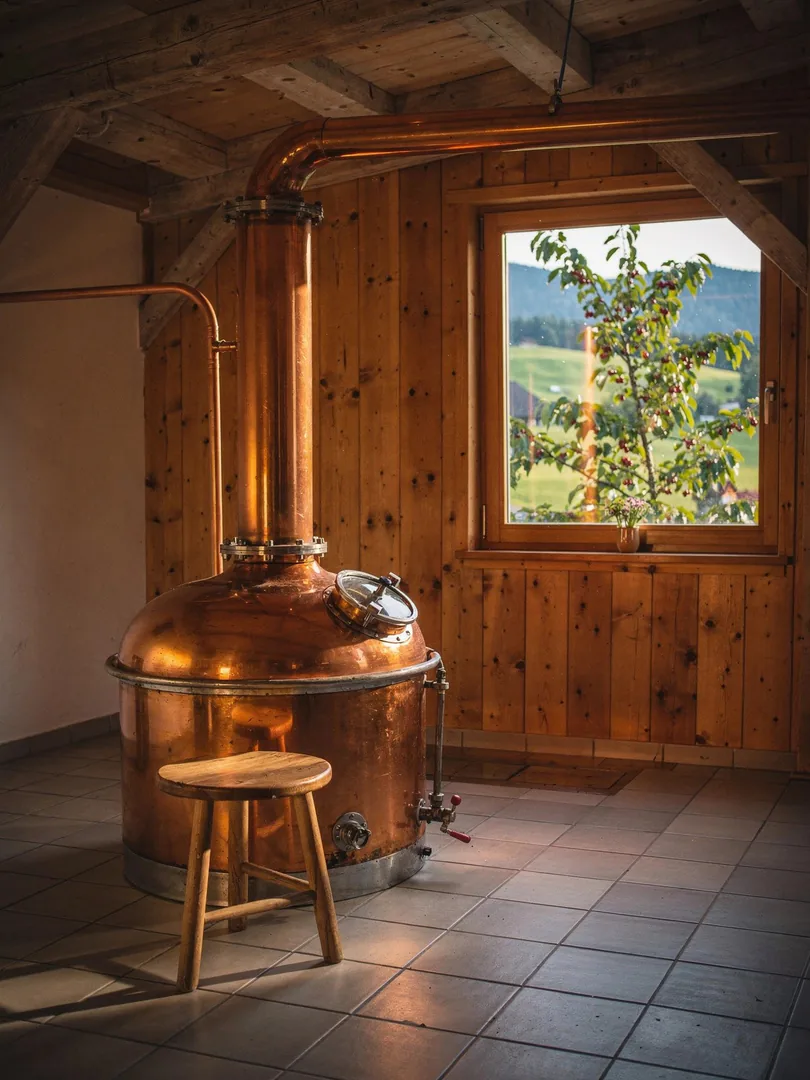
Pot Still and Heart Cut
Distillation
Zuger Kirsch and Rigi Kirsch may only be distilled in traditional pot stills, known in Switzerland as Hafenbrennapparate. The equipment must be federally approved. The fermented mash is heated inside, the alcohol rises as vapor, and condenses back down into a clear distillate.
The distillate doesn't come out uniformly good from the start. First comes the heads, which smell of solvent and are separated off as long as they carry notes of acetaldehyde and ethyl acetate. Next comes the heart, the main cut. It must average at least 68 percent ABV. Finally come the tails, carrying heavier compounds, which are redistilled separately.
Where the heads end and the heart begins is a judgment call the distiller makes using nose and instruments. The heart is clear, already smells distinctly of cherry, and is still far too strong to drink — it's later brought down to drinking strength with water.
Methanol is present in the fruit's pectin and forms already during mashing. Every fruit brandy therefore contains it, and the law sets maximum limits that legally produced spirits must meet. The heads only carry off part of it, which is why clean fruit and healthy fermentation matter more than any cut made during distillation.
Anyone curious to see this firsthand can watch during a tour, for instance at Dettling in Brunnen. Distilling on one's own is off-limits: without a permit, it's illegal in Switzerland too, and equipment approval, oversight, and taxation all fall under federal authority.