Pomace and Sidra
Mash & Fermentation
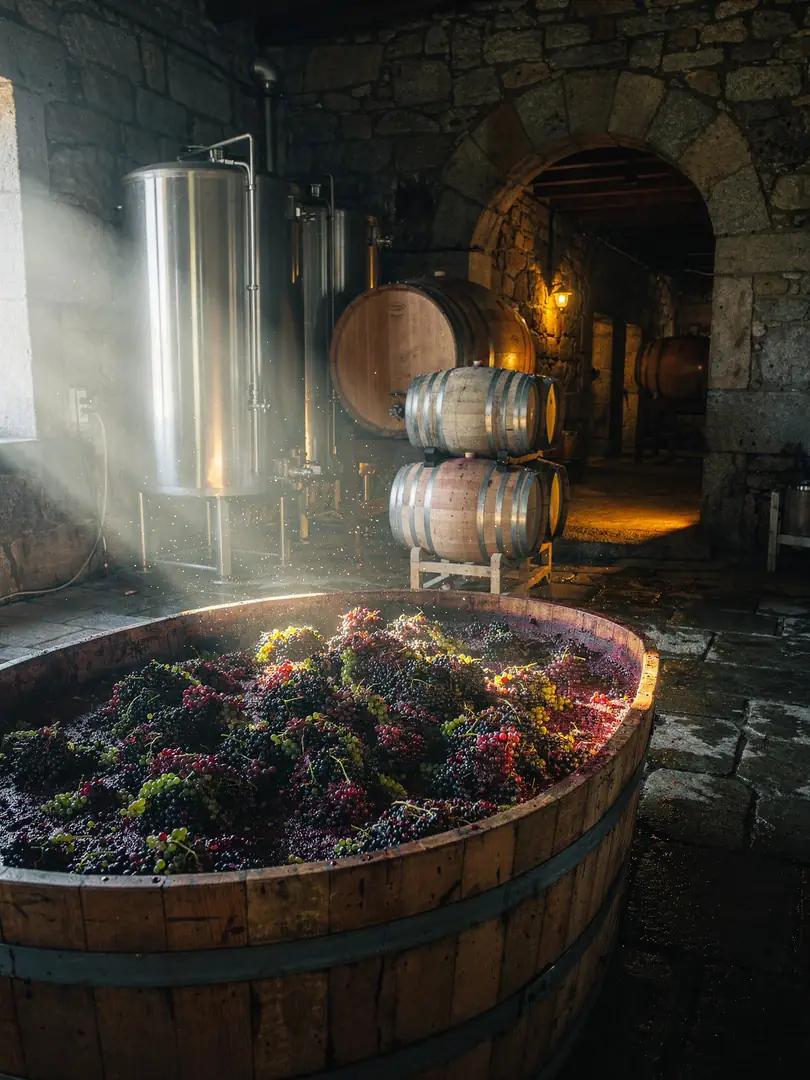
There's nothing to crush in the mash for Orujo de Galicia. The pomace comes out of the press already as a loose, crumbly mass of skins, seeds, and stems, then waits in vats to be distilled.
There, fermentation either continues or begins. Red pomace has already done most of the work, since the wine fermented on the skins; white pomace still contains fruit sugar that yeast must convert into alcohol. The container is kept sealed to keep air out. Oxygen attracts acetic bacteria, and a vinegary note is a flaw that should never appear in the finished brandy. One producer cites roughly a month between storage and the first distillation.
Methanol already begins forming at this stage. It comes from pectin, the gelling substance in the fruit's cell walls, and is not a sign of poor work. Because it's toxic, the Spirits Regulation sets an upper limit: no more than 1,000 grams per hectoliter of pure alcohol in the finished pomace brandy. Even cutting the heads and tails only removes part of it, as the next stage shows. Methanol becomes dangerous mainly in adulterated alcohol, not in a properly made Orujo.
The mash for Aguardiente de sidra de Asturias looks completely different — it's liquid. The juice of pressed apples ferments into sidra, apple wine, and only this Asturian apple wine may later be distilled. Added alcohol and flavorings are strictly forbidden; the yeast simply converts the fruit sugar into alcohol. The recipe is simple: apple wine, nothing else.
The same basic rule applies to both brandies: if fermentation isn't managed cleanly, the flaws carry through into the brandy, since distillation improves nothing — it only concentrates.