Pears, Apples, Pomace
Mash & Fermentation
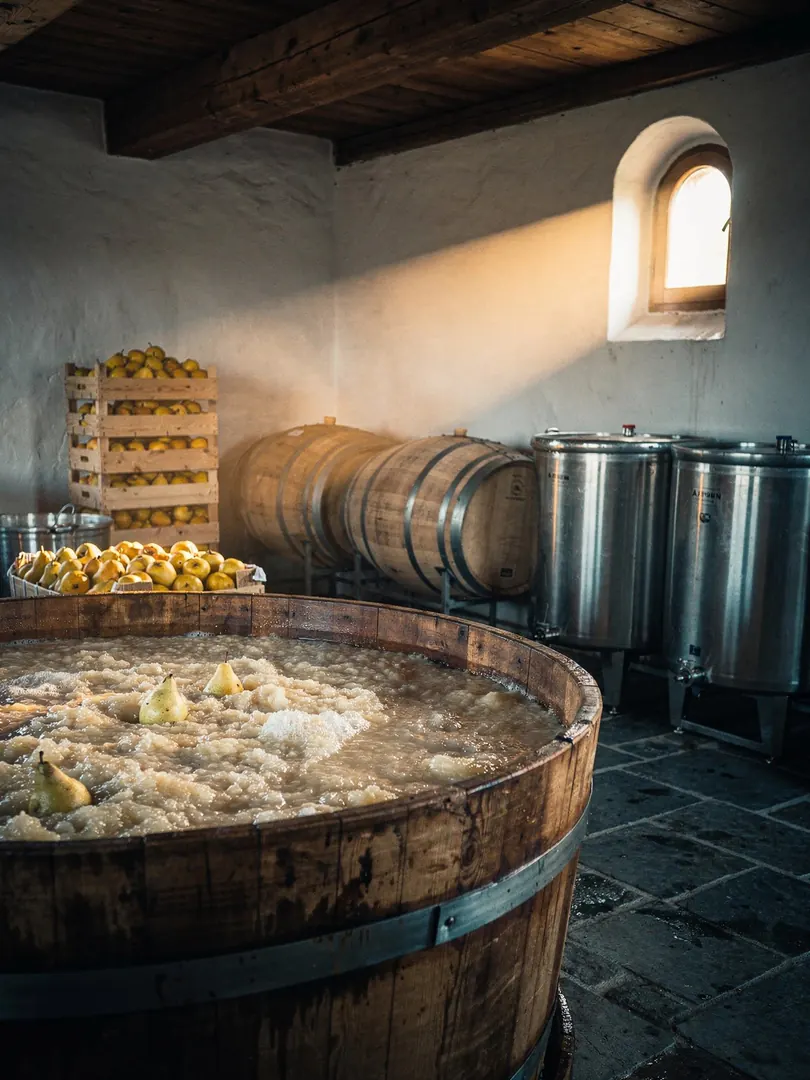
When the Williams pears roll into the distillery in late summer, the trickiest part of the work begins, even though none of it will be visible later. The fruit is crushed, usually skin, core and all for pears and apples, and the result—the mash—goes into tanks or barrels. A clean brandy starts with healthy, ripe fruit, since rotten spots bring unpleasant notes into the mash.
To ferment, the mash needs yeast, either naturally present in the fruit or added, plus a bit of patience. The yeasts convert the fruit sugar into alcohol, bubbles rise, and the mash foams. After a few weeks the sugar is used up, and then things must move quickly: if the mash waits too long, bacteria form acetic acid and the fruit loses its aroma.
The mash is especially delicate with Williams pear and apple, since the fruit's aroma is volatile. Pectin, the substance that firms up fruit and makes jam set, releases methanol during fermentation. Every fruit brandy therefore contains some of it, and the law sets maximum limits.
The pomace for South Tyrolean Grappa follows different rules. Red varieties like Lagrein ferment together with their skins, so their pomace is already fully fermented after pressing. White varieties like Gewürztraminer, on the other hand, are pressed immediately; their pomace still contains sugar and only ferments afterward, sealed airtight so it doesn't spoil.
Fermentation, whether for pear, apple or pomace, takes as long as the fruit needs. A distiller who fills the mash into the still too early gives away alcohol, and one who waits too long will smell it.