Fermenting or Steeping
Brandy or Spirit: What's the Difference?
A fruit brandy comes from fermented fruit, whose own alcohol gets distilled. A fruit spirit comes from unfermented fruit, steeped in neutral alcohol and then distilled. Kirschwasser and raspberry spirit represent two different processes, not two quality tiers.
Fruit Brandy: The Fruit Supplies Its Own Alcohol
With fruit brandy, everything starts with fermentation. The fruit is crushed into a mash, a mixture of flesh, juice, and, depending on the fruit, pits too. Yeasts convert the fruit sugar into alcohol. Only this fermented mash goes into the still. Whatever ends up in the glass comes entirely from the fruit: not a drop of outside alcohol, no added flavoring, no coloring.
Regulation (EU) 2019/787 lists fruit brandy as Category 9. A minimum of 37.5 percent alcohol is required, and every distillation must stay below 86 percent so the fruit's aroma survives. To round things out, producers may add up to 18 grams of sugar per liter, calculated as invert sugar. The law allows no more than that.
This process works well with fruits high in sugar. Cherries, plums, pears, apples, and apricots all bring enough of it to produce a robust mash.
Fruit Spirit: When the Fruit Can Barely Ferment
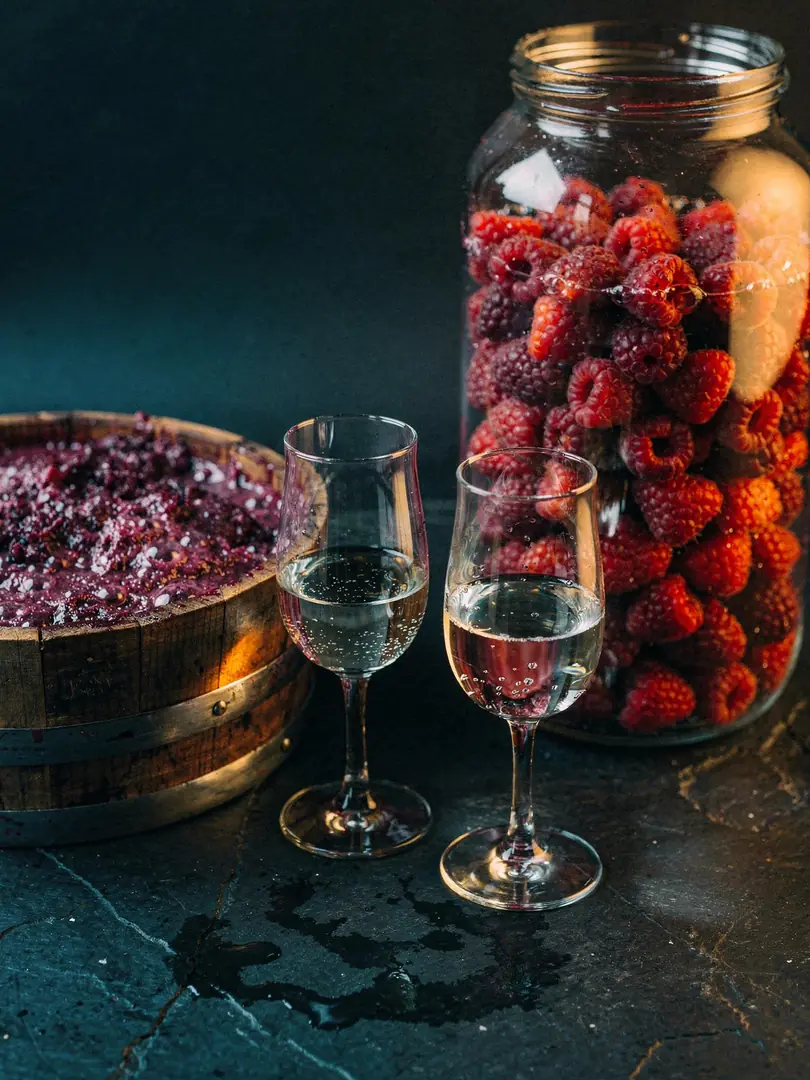
Raspberries, sloes, or hazelnuts, by contrast, contain little fermentable sugar. A mash made from them would yield so little alcohol that distilling it would hardly be worthwhile. For such raw materials there's the fruit spirit, Category 17 of the regulation. The fruit goes in unfermented, steeped in ethyl alcohol of agricultural origin, meaning neutral alcohol such as that derived from grain. This alcohol draws out the aromatic compounds. The whole mixture is then distilled.
With a fruit spirit, then, the alcohol essentially doesn't come from the fruit. The fruit contributes aroma and flavor; the alcohol comes from elsewhere. The law permits not just fruit and berries but also vegetables, nuts, herbs, rose petals, and mushrooms as raw materials. The sweetening limit sits lower than for fruit brandy, at 10 grams per liter. Coloring and flavoring are likewise banned, and the minimum alcohol content is also 37.5 percent.
Is a Fruit Spirit Inferior to a Brandy?
The distinction carries no judgment of quality. A carefully made raspberry spirit can smell beautifully delicate, since steeping captures the berry's subtle aromas without fermentation altering them. A raspberry brandy made from fermented berries tastes different and needs far more fruit to yield the same quantity.
Schwarzwälder Himbeergeist shows that even a fruit spirit can carry a protected designation of origin. It has been listed in the EU register of geographical indications since 1989, squarely as a Category 17 product. The fact that its alcohol doesn't come from the berries doesn't diminish its standing.
Conversely: wherever a fruit holds enough sugar, distillers almost always choose the brandy route. A cherry spirit or Williams pear spirit is therefore practically unheard of in shops. The choice of method follows the fruit, not the distiller's ambition.
How to Spot Brandy or Spirit on the Label
The suffix gives it away. If the label reads "raspberry brandy," "kirschwasser," or "plum brandy," fermented fruit was distilled. If it reads "raspberry spirit" or "sloe spirit," the fruit was steeped. A third variant carries the phrase "obtained by maceration and distillation." It combines both methods and gets its own chapter later in this journey.
This knowledge also helps when tasting. A fruit spirit often feels lighter and more aromatic, while a brandy feels fuller in the mouth, because fermentation produces additional aromatic compounds. This rule of thumb is no substitute for actually tasting, though. Raw material and craftsmanship frequently blur the line more than the method itself does.
Beginners benefit from a direct comparison at the table: a raspberry spirit next to a kirschwasser. The first smells of freshly picked berries, the second of fruit, pit, and a faint almond note. Both are genuine members of the brandy family, just arrived at by two different paths.