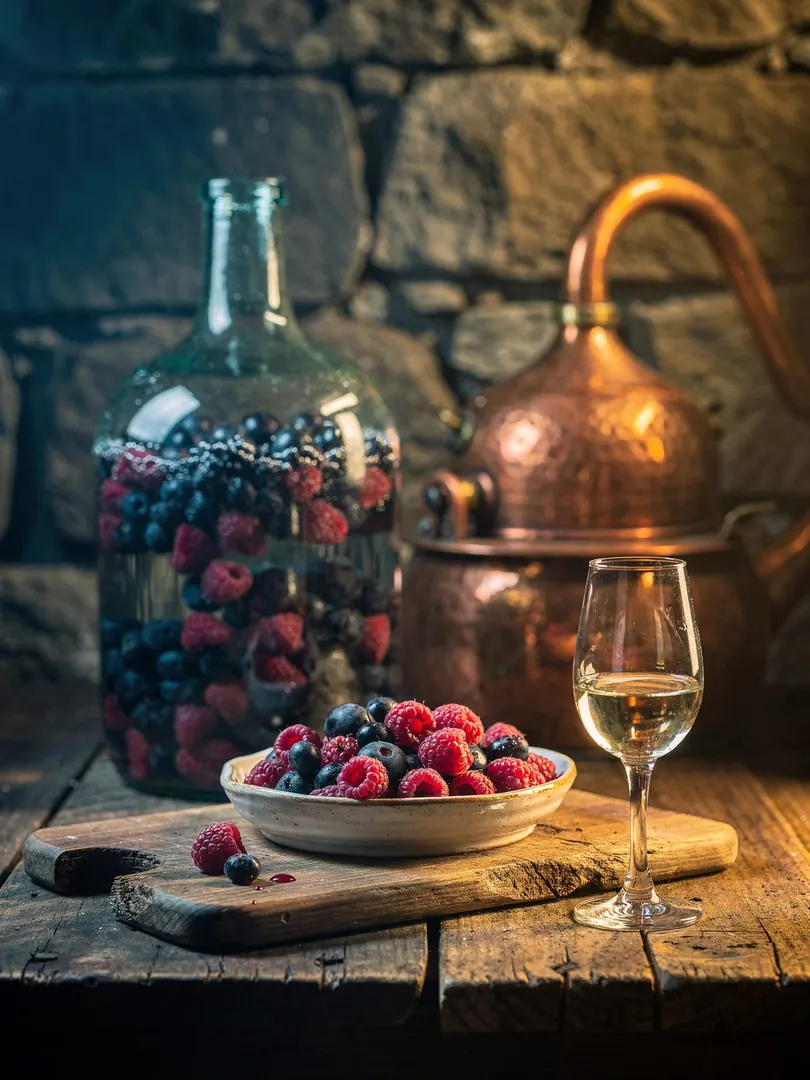
The hybrid form
Raspberry brandy through maceration: the third method alongside brandy and geist
A brandy labeled 'obtained through maceration and distillation' is neither a pure fruit brandy nor a geist: the fruit is partly fermented or left unfermented and steeped in alcohol, then distilled. This note must appear on the front label.
What does maceration mean for a brandy?
Maceration means steeping. Fruits sit in alcohol for a while, which dissolves and absorbs their aromatic compounds. With a geist, this happens with completely unfermented fruit; with a fruit brandy, it doesn't happen at all, since the alcohol there comes solely from fermentation. Category 16 of the Spirit Drinks Regulation sits in between. Here, the fruit may be partly fermented or unfermented before alcohol is added.
The added alcohol may be of agricultural origin, i.e. neutral alcohol, or a brandy made from the same fruit. After steeping, everything is distilled, and as with any brandy, each distillation run must stay below 86 percent alcohol. A minimum of 37.5 percent in the finished drink and a maximum of 18 grams of sugar per liter: these values are shared with the fruit brandy category.
The limit: 20 liters of alcohol per 100 kilograms of fruit
To ensure the fruit remains the main component, the law caps the amount of added alcohol. No more than 20 liters of alcohol may be used per 100 kilograms of fruit. The alcohol is meant to absorb aroma and enable distillation, not to become the actual basis of the drink.
Only fruits, berries and nuts listed in the regulation are permitted. These include raspberry, blackberry, blueberry, strawberry, sloe, rowanberry, rosehip, elderberry, sea buckthorn, walnut, hazelnut and chestnut, among others. Most of these share the trait of providing little fermentable sugar or, like nuts, not fermenting at all. The classic distilling fruits—cherry, plum and pear—are fermented and distilled as mash anyway.
Mandatory note on the front label
Because this process differs from classic fruit brandy production, the regulation demands clarity. The phrase 'obtained through maceration and distillation' must appear on the front label, in the same font, size and color as the name of the brandy. A small note on the back is not enough.
For buyers, this means: a bottle of raspberry brandy without this note contains a fruit brandy made from fermented raspberries, Category 9. If the note is included, alcohol was used during steeping. If the label says Himbeergeist (raspberry geist), unfermented berries were steeped in neutral alcohol. So three bottles with nearly identical imagery can contain three legally distinct drinks.
A pure raspberry brandy made from mash is rare, because raspberries contain little sugar and a huge amount of fruit is needed for very little brandy. One example is Framboise d'Alsace, protected as a geographical indication since 1989 and listed in the EU register as a fruit brandy under Category 9.
Sloe, walnut, rowanberry: where the hybrid form makes sense
The purpose of this category becomes especially clear with fruits that are low in sugar or have a tough shell. Sloes, for instance, are tart and low in sugar. A sloe brandy of this type can let part of the fruit ferment and extract the rest through steeping. Much the same applies to walnuts and hazelnuts, which don't ferment but release plenty of aroma into alcohol.
For connoisseurs, the hybrid form is no flaw. It allows brandies to be made from fruits that would yield almost nothing as pure mash, without losing their fruit character. What matters is that the label states openly which method was chosen. That is exactly what the mandatory note is for.
When tasting, the difference often turns out subtler than the regulations suggest. A sloe brandy made through maceration smells of almond and dark berries; a sloe geist is similar but usually a bit leaner. Anyone who tries both side by side quickly understands why the law distinguishes so precisely here: it's about honesty regarding the origin of the alcohol, not about flavor notes.