A Spirit Distilled from Cider
What is Calvados?
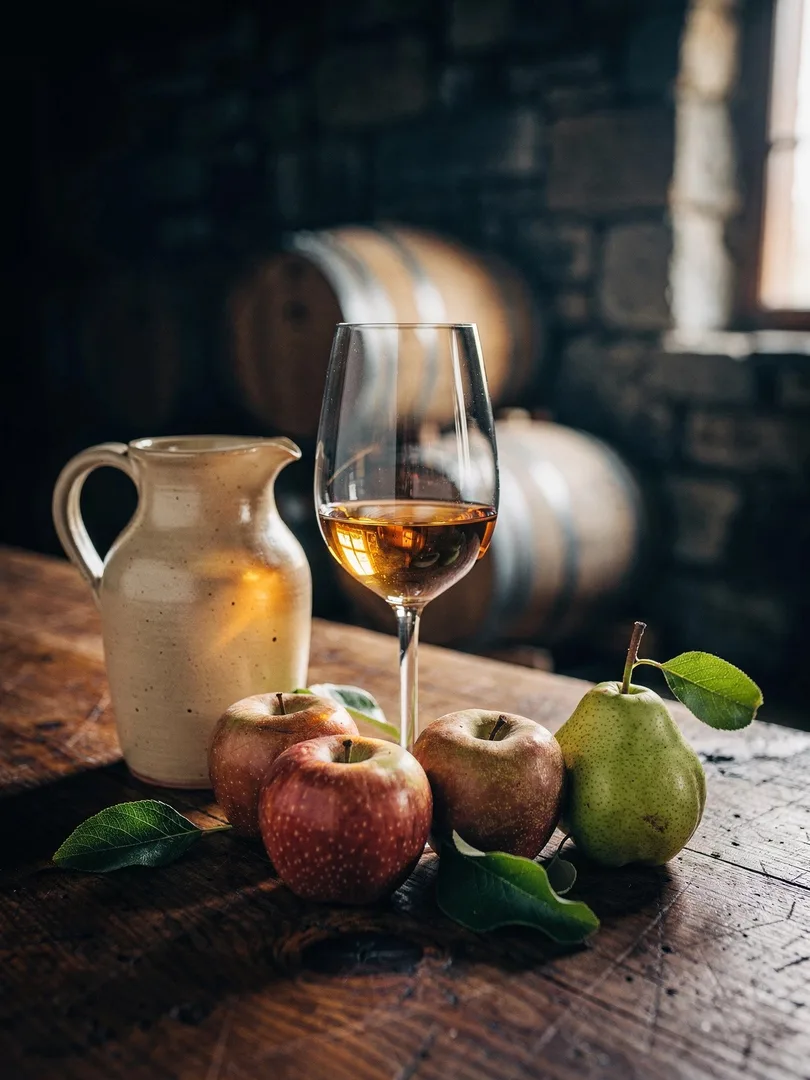
Calvados is a spirit distilled from cider, meaning from fermented apple wine, which may also include pear wine blended in. It comes from Normandy, matures at least two years in oak casks, and is bottled at a minimum of 40% ABV. It is not a fruit brandy made from apple mash.
Calvados Comes from Cider, Not Directly from Apples
It all starts with a drink you could just as well enjoy on its own. The apples are ground and pressed, and the juice ferments over several weeks into cider, a dry apple wine with a modest alcohol content. Only then does this cider travel to the distillery. This detour through a finished wine is what sets Calvados apart from most German and Austrian apple brandies. There, as a rule, the whole crushed fruit ferments together with skin and core, known as the mash, and it's this fruit pulp that is then distilled directly.
EU Spirit Drinks Regulation 2019/787 gives the cider route its own category. Calvados falls under Category 10, "spirit drink made from fermented apple juice" or "spirit drink made from fermented apple and pear juice." The classic apple brandy made from mash, by contrast, falls under Category 9, fruit spirit. For Category 10, the rules state: only distilled apple or pear wine, distillation below 86% ABV so the fruit aroma survives, no added alcohol and no flavourings. Sweetening up to 15 grams per litre is allowed, slightly less than the 18 grams permitted for fruit spirit.
What Rules Apply to Calvados?
The EU category is just the foundation. Calvados is additionally a protected geographical indication, and in France an AOC (Appellation d'Origine Contrôlée, controlled designation of origin), whose specifications set out much more. The fruit must come from the defined region, and only cider apples and perry pears may be used. At distillation, the cider must have a minimum of 4.5% ABV and must have completed a mandatory minimum fermentation period. The fresh distillate may not exceed 72% ABV. Rectification, meaning purifying the spirit to near-neutral alcohol, is forbidden.
After that comes the wood. Every Calvados matures in oak for at least two years, counted from when it's filled into the cask; for the sub-appellation Domfrontais, it's three years. Once bottled, it must have a minimum of 40% ABV. Caramel colouring, oak extracts and sugar are only permitted within tight limits: together they may shift the measured alcohol content by no more than 4% ABV. Experts call this effect obscuration, literally "darkening," because dissolved substances cloud the measurement.
How Long Has Calvados Existed?
Apples have grown in Normandy for centuries on meadows dotted with tall trees, with cattle grazing beneath them. Cider was long the everyday drink there, as grapevines struggled in the damp coastal climate. The oldest written reference to distilled cider in Normandy is considered to be the diary of the manor lord Gilles de Gouberville from the Cotentin, which mentions distilling equipment and spirits for the year 1553. Historians consider it likely that farmers were distilling even earlier. There is, therefore, no single inventor of Calvados.
The name came later. The spirit is named after the Département Calvados, which was created during France's post-Revolution reorganisation. Today the region of origin extends well beyond this département into other parts of Normandy. The current system of appellations dates back to a decree of 11 September 1984. Since 1989, Calvados and Calvados Pays d'Auge have been listed in the EU register of protected spirit names, with Domfrontais added to the register in 2008.
What Does Calvados Taste Like, and How Do You Recognize It?
Young Calvados smells distinctly of fresh apple, often with a green-skin note, some pear and a light spice from the cask. Over the years, the picture shifts. Baked apple, dried apple rings, vanilla, caramel and nuts move to the forefront, and the colour deepens from pale straw to amber. A high pear content, as required in Domfrontais, brings floral, finer notes and a noticeable freshness. Calvados from the Pays d'Auge, by contrast, often comes across as fuller and rounder.
The label will show one of three names: Calvados, Calvados Pays d'Auge, or Calvados Domfrontais. If none of these appears, there's a different spirit in the bottle, even if an apple is pictured on the label. The term "Production fermière" means a farm processes its own fruit, makes its own cider and bottles it itself. Age statements such as Fine, VSOP or Hors d'âge are explained in the chapter on Calvados age classifications, while the differences between the three regions of origin are covered in the next chapter.