Home remedies fact-checked
Schnapps as a home remedy: colds, wounds, rubbing, animals
Schnapps doesn't work as medicine. There's no evidence it helps against colds, a spirit at around 40 percent is too weak for disinfection, and children should never be given alcohol. These home remedies are folk tradition from a time when spirits were considered medicine.
From aqua vitae to home remedy: why was schnapps considered medicine?
Spirits came into use as medicine in the Middle Ages. Monasteries and pharmacies produced them and called them aqua vitae, the water of life. A text by Prior Vital Dufour from Gascony, dated 1310, has survived listing forty virtues of the burning water. The text praised it against all manner of ailments—today we'd call that a health claim. This is where brandy's reputation as a cure-all comes from, and it persisted in farmhouses for a very long time.
Many of today's home remedies are remnants of this tradition. Grandparents recommended a hot grog for a runny nose, an herbal schnapps for stomach ache, or rubbing alcohol for sore muscles. Some of these customs are harmless, others can cause harm. A look at studies and expert recommendations reveals how well they hold up.
Does schnapps help against colds?
There is no evidence that alcohol has any healing effect on colds. A hot grog or tea with a shot feels soothing because warmth and steam moisten the mucous membranes and the alcohol has a relaxing effect. Hot tea without alcohol achieves the same thing. The alcohol itself neither fights viruses nor shortens the illness.
It can even make things worse. Alcohol impairs sleep quality, and restful sleep is especially important when fighting an infection. It also interacts poorly with certain cold and pain medications, such as paracetamol, which like alcohol is broken down by the liver. Anyone who is ill and taking medication is better off skipping the grog and checking with a pharmacist if in doubt.
Schnapps on a wound, schnapps for rubbing
In the movies, wounds get washed out with whisky, and at home, fruit brandy used to be dabbed on scrapes too. But as a disinfectant, a drinking spirit barely works. The US health authority CDC recommends at least 60 percent alcohol for hand disinfection, and the World Health Organization's own formula calls for 80 percent ethanol. A fruit brandy at 40 percent falls well short and is inadequate against many germs.
Much the same applies to rubbing alcohol treatments. Rubbing alcohol, a liquid available from the drugstore or pharmacy, cools the skin because the alcohol evaporates. That feels pleasant, but it isn't a cure. A drinking spirit offers nothing better for this purpose—just a pricier version of the same idea.
One rule applies without exception: babies and toddlers should never have alcohol rubbed on their gums or chest, or added to their tea—not even a drop for teething pain. Children react far more sensitively to alcohol than adults do.
Schnapps for animals and other farming lore
In the Alps, stories are told of farmers using schnapps on their livestock too—rubbed on, given for colic, or as a winter tonic. Some sources even use such stories to explain why Tyrol and Vorarlberg have higher tax-free allowances for home-distilled spirits than the rest of Austria. This explanation is unverified and belongs to folklore.
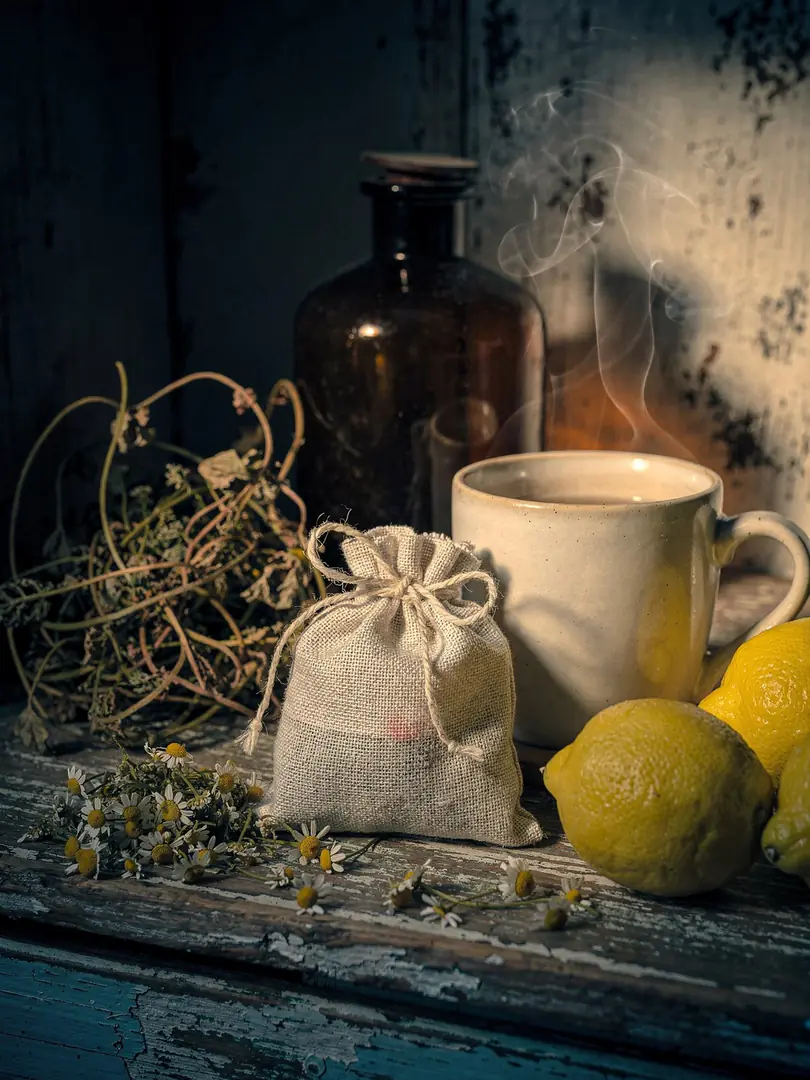
The same applies to animals as to people: alcohol is not medicine, and even small amounts are dangerous for dogs and cats. What has genuinely survived from distilling culture as a home remedy often involves no alcohol at all. In Fraxern in Vorarlberg, the pits of distilling cherries are filled into small sacks and used as warming cushions, while the cherry stems go into tea. The cushion delivers exactly what it promises: warmth.