Stills and Customs
Buying a Still: What's Allowed When It Comes to Distilling Equipment
Buying a small still is legal in Germany, but distilling alcohol with it is not. Anyone who buys or sells a still with a capacity of more than two liters must report this to the Hauptzollamt. Devices up to two liters don't need to be reported, but distilling without a license is still not allowed even with them.
Is It Allowed to Buy a Still?
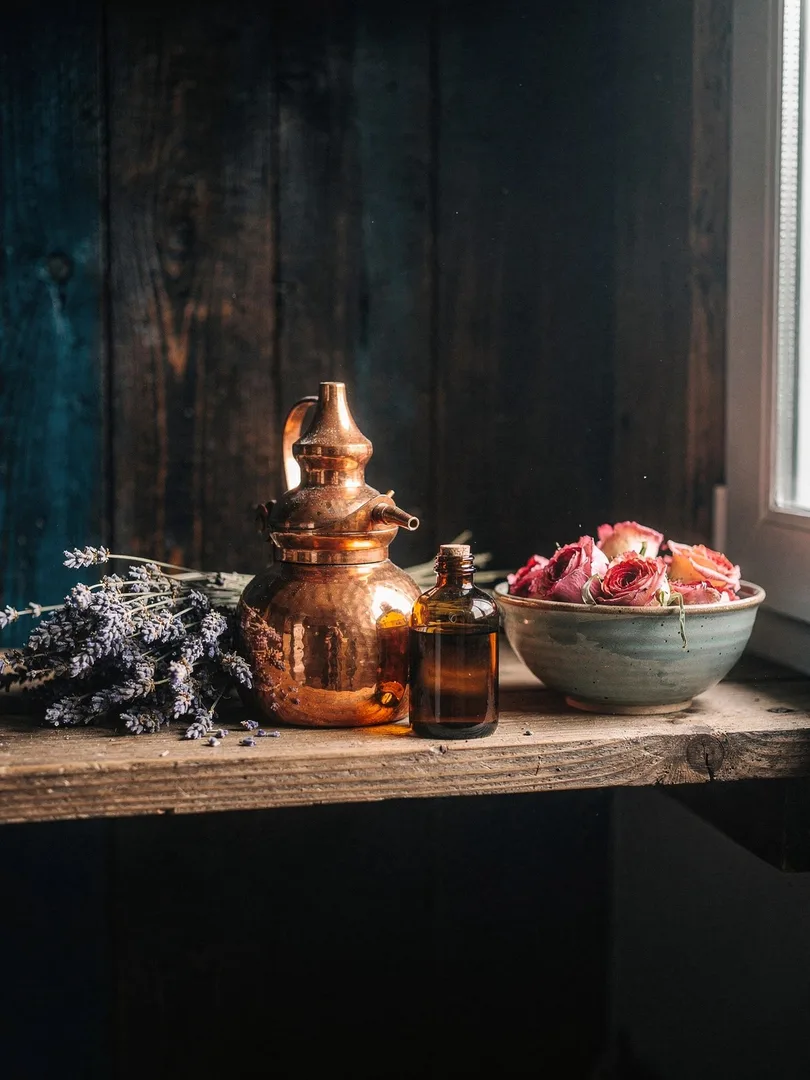
Yes. Copper tabletop stills are sold openly, both in specialty shops and online. Many buyers use them as decorative pieces on a shelf, while others distill essential oils or plant waters with them, so-called hydrosols like rose water or lavender water. The purchase itself isn't prohibited. What is prohibited is something else entirely: producing alcohol with the device without a license.
This distinction matters because it's often blurred. The device itself isn't a problem, as long as no one fills it with fermented mash. As soon as alcohol is separated out of wine, must, or fruit mash, § 4 paragraph 2 of the Alcohol Tax Act comes into play. It permits the production of alcohol only at a bonded distillery, at a licensed small-scale distillery, or for raw-material owners via such a distillery. The size of the device makes no difference here.
The Two-Liter Limit Under § 68 of the Alcohol Tax Ordinance
The rule for devices is set out in § 68 of the Alkoholsteuerverordnung (Alcohol Tax Ordinance), or AlkStV for short. Anyone who acquires a still or another device suitable for producing or purifying alcohol with a capacity of more than two liters must report this to the Hauptzollamt. The deadline is three working days. The report must include the location where the device will be set up and the purpose it's intended for. Anyone who hands over such a device, meaning sells or gives it away, is likewise required to report it.
Online, you'll still often read about a limit of half a liter. That figure is outdated or simply wrong. The current rule is: up to two liters, no report required; above that, a report is required. Neither size, however, counts as a license to distill.
The reporting requirement serves to keep track of things. Customs authorities want to know where devices capable of producing alcohol are located. For dealers, this means: anyone selling larger stills reports the sale, and anyone buying one reports the purchase. This regulation contains no instructions or quantity threshold that would make private distilling legal.
Essential Oils and Hydrosols: Operation Outside a Distillery
Anyone wishing to operate a reportable device outside a distillery, for example to produce plant waters or essential oils, must report the operation three working days in advance. That way, customs knows when the device is running and for what purpose. This may sound cumbersome, but it follows a simple logic: from the outside, a still for lavender looks exactly like one for plums.
The difference lies in the contents. A hydrosol is created when steam passes through blossoms, leaves, or herbs and carries their fragrant compounds along with it. No alcohol is produced in this process, because nothing was fermented. Alcohol only forms where yeast has previously converted sugar into ethanol. So anyone who distills a fermenting mash is producing alcohol, regardless of what the device is called or what it was supposedly bought for.
Why Two Liters Doesn't Mean a License to Distill
The widespread misconception arises from a mix-up. Because small devices don't need to be reported, many people assume they're free to use. But the reporting requirement only concerns the possession and operation of a device. Whether someone is allowed to produce alcohol is governed solely by the Alcohol Tax Act. A liter of fruit brandy from a tabletop device is just as illegal as a hundred liters from a large setup.
There's also a practical reason to steer clear. Methanol already forms in the mash from the pectin in the fruit, not only during distilling. Cutting off the heads only partially reduces the level. Licensed distilleries know their raw materials, their equipment, and the EU maximum limits, and their brandies are inspected. Anyone distilling in their kitchen without experience or measuring equipment doesn't have that safety net.
For the curious, there are legal ways to get to know the craft. Many distilleries open their doors for visits, and as a raw-material owner, you can be present while your own fruit is being distilled.