Six crus
Cognac vineyards: from Grande Champagne to Bois Ordinaires
The Cognac region has six vineyard zones, the crus: Grande Champagne, Petite Champagne, Borderies, Fins Bois, Bons Bois, and Bois Ordinaires. The two Champagnes have nothing to do with the sparkling wine. Fine Champagne isn't a vineyard zone at all, but a blend of the two, containing at least 50% Grande Champagne.
What does Grande Champagne mean on a Cognac bottle?
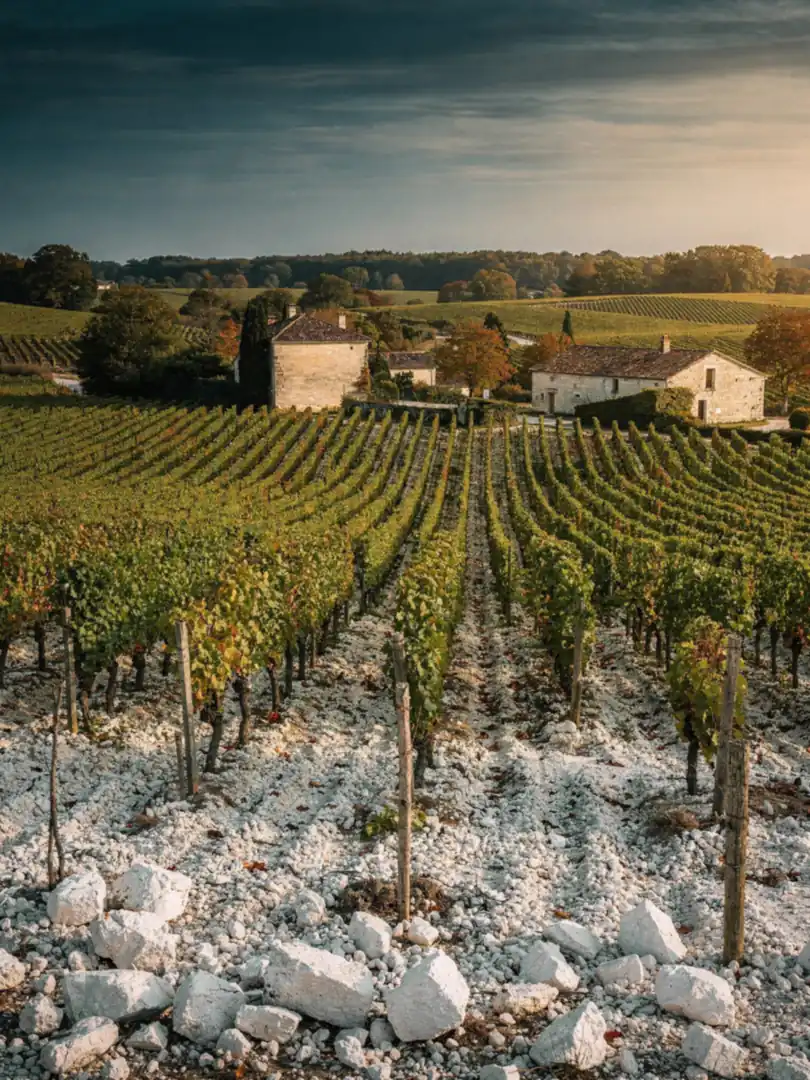
Anyone reading "Champagne" on a bottle of Cognac thinks first of sparkling wine. That connection is a misunderstanding. The Champagne wine region lies in northeastern France, while the two Cognac crus of Grande and Petite Champagne lie south of the town of Cognac. What they share is the soil: white, chalky limestone layers that retain water and keep the vines supplied with moisture even in summer.
This chalk produces wines with high acidity and relatively little body. For a table wine, that would be a drawback; for distilling, it's a stroke of luck. Distillates from such wines taste firm, almost austere, in their youth, but over decades in the cask develop a finesse that cellar masters rarely find in other crus.
The names of the crus predate today's regulations. They were formally established as supplementary geographical designations by decree on January 13, 1938. It's often said that "Champagne" derives from the Latin "campania," meaning open countryside. That derivation isn't documented here, though it does fit the wide, rolling landscape.
The six crus of Cognac, from the inside out
On the map, the crus lie roughly in rings around a center. Right at the heart lies Grande Champagne, with the chalkiest soil. Its spirits are considered fine, floral and somewhat reserved at first; they need many years in the cask to show their true character. Petite Champagne surrounds it, with similar, slightly less pure chalk soil and spirits that become accessible a touch earlier.
Northwest of the town lie the Borderies, the smallest of the inner crus. Clay and flint in the soil produce spirits said to carry notes of violet and nuts, and they mature comparatively quickly. Around this area stretch the Fins Bois, where much of the Cognac for the younger quality levels is made: fruity, round, ready to drink early.
Further out follow the Bons Bois, with sandier, mixed soils, and finally the Bois ordinaires, also called Bois à terroirs, which extend all the way to the Atlantic coast and the islands. Their spirits tend to be simpler and mature quickly. Some producers particularly value the slightly salty, maritime character found there.
Fine Champagne: a blend, not a cru
Many bottles carry the term Fine Champagne. This isn't a seventh cru but a blending rule. The Cognac comes exclusively from Grande and Petite Champagne, with at least half originating in Grande Champagne. Several major houses build entire ranges around this designation.
If, on the other hand, only a single cru appears on the label, such as Grande Champagne or Borderies, the entire contents come from that cru. The absence of any cru designation is not a bad sign. Most Cognacs, especially at the VS level, blend spirits from several crus to achieve a consistent house style.
For the houses, the cru is also a matter of planning. Spirits from the Champagnes mature slowly and therefore tie up casks, storage space and capital for many years. A house that bottles only Fine Champagne must hold correspondingly large reserves. Spirits from the Fins Bois, by contrast, are ready earlier and make up the bulk of the younger quality levels, without this needing to appear on the label.
Can you taste the cru in a Cognac?
In a direct comparison of Cognacs of the same age, this is often possible. A young Fins Bois shows ripe fruit and a soft character, while a Grande Champagne of the same age seems tighter, leaner and more reserved. As age increases, the picture reverses: the chalky crus gain depth, length and that layered aged aroma known in the Charente as "rancio," a blend of nut, mushroom, leather and dried fruit.
However, cask, age and blending strongly overlay the origin. A cellar master can craft an elegant Cognac from Bois spirits, and a young Champagne Cognac can taste closed and unspectacular. The cru is a clue, not a promise. Those wishing to explore the regions themselves will find them in the country travel guides; here, what matters is what the cru designation on the label actually means.