Neat and Mixed
Brandy in the Glass: Sidecar, Brandy Crusta, Asbach and Cola
Brandy and Cognac are drunk neat from a tulip glass at room temperature or mixed: the Brandy Crusta from 1850s New Orleans is considered a precursor to the Sidecar, whose first recipes appeared in 1922. For long drinks like Asbach and Cola, young qualities such as VS work better than old XO.
How Do You Drink Cognac and Brandy Neat?
The large, bulbous snifter is the image many people have in mind. For the nose, it's not very helpful, because alcohol rises unchecked from the wide opening and masks the finer aromas. Experts prefer a narrow tulip glass, which concentrates the aromas. If you don't have a dedicated glass, a small white wine glass will do.
Room temperature is perfectly fine. Warming the glass over a candle, as seen in old films, mainly intensifies the impression of alcohol. A few drops of water, however, can open up a strong spirit and draw out fruity notes. As with any spirit: small amounts, slowly, with pauses. A glass of water on the side never hurts. When comparing several spirits, start with the youngest and lightest and finish with the oldest. That way, the power of an old Armagnac won't overwhelm the subtle notes of a young Cognac. Between glasses, water and a piece of bread help clear the nose.
Brandy Crusta: The Ancestor from New Orleans
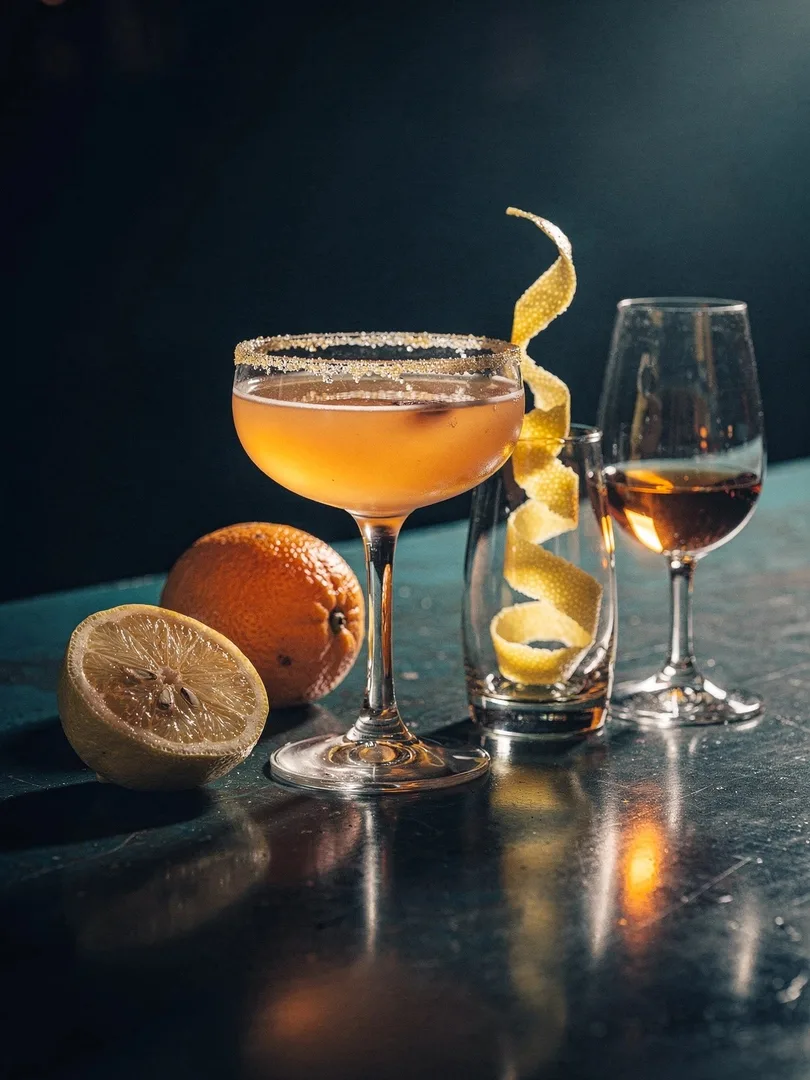
The Brandy Crusta is associated with Joseph Santini, a bartender in 1850s New Orleans. The recipe first appeared in print in 1862 in Jerry Thomas's bartending guide. The name comes from the sugar rim, the "crust" on the glass, and from a long, spiral-cut lemon peel that lines the inside of the glass.
What was new at the time was above all the splash of lemon juice. Until then, cocktails usually consisted of spirit, sugar, water, and bitters. With the acidity of lemon and an orange liqueur, the Crusta gained freshness and tension. Cocktail historians therefore see it as a precursor to many later sour drinks, in which spirit, sweetness, and citrus are kept in balance.
Sidecar: The Classic from 1922
The first printed recipes for the Sidecar appeared in 1922, almost simultaneously in two bartending guides: those of Robert Vermeire and Harry MacElhone. Who actually invented it remains disputed; several bars in Paris and London claim credit. What is certain is its kinship with the Crusta, as the Sidecar likewise combines brandy, orange liqueur, and lemon juice.
A Sidecar doesn't require an old Cognac. A solid VS or VSOP has enough strength to hold its own against the lemon and liqueur, and enough fruit to round out the drink. A very old XO, on the other hand, loses in the shaker exactly what it spent years in the barrel developing. How sweetness, acidity, and spirit come together is explained in the Encyclopedia under Cocktails and Balance.
Asbach and Cola and Long Drinks: Which Brandy Works Best?
In Germany, brandy with cola is a classic of the pub and the clubhouse, often named after the best-known brand. The mix works because the vanilla and caramel notes of many German brandies pair well with cola. Ginger ale or tonic are similarly proven choices, giving a young Cognac some freshness. In the Cognac region itself, a young Cognac with tonic is a popular aperitif, served in a tall glass with a slice of lemon or a sprig of mint. The drink shows that Cognac doesn't have to be reserved for an evening by the fireplace.
For long drinks, young, fruity qualities are worthwhile: a VS, a simple brandy, or a young Brandy de Jerez. Expensive, aged bottlings are better suited to being enjoyed neat, where their complexity can truly be appreciated. Anyone wanting a small home selection does well with one young bottle for mixing and one older bottle for slow sipping.
Brandy also has its place in the kitchen, for flambéing, in sauces, or alongside a dessert with dried fruits. What pairs well with dessert and cheese is described in the Encyclopedia under Wine for Dessert.