Low Wine and Spirit Run
Distilling
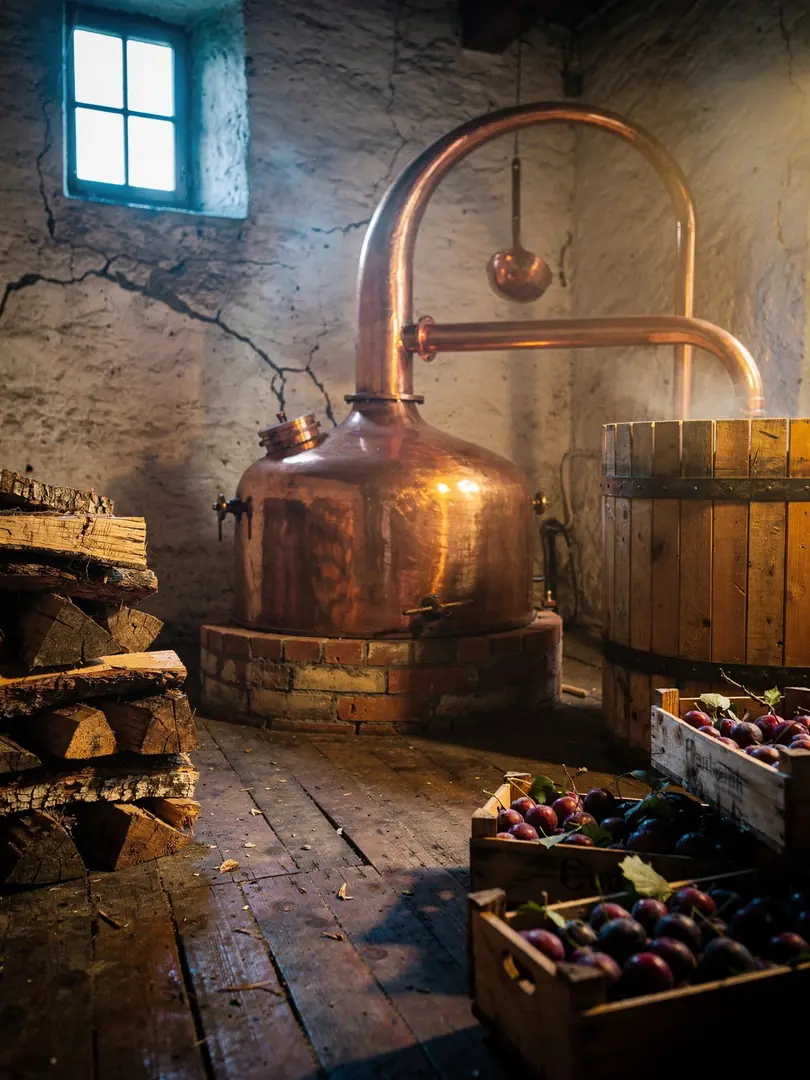
Slivovice is traditionally distilled twice. The still is a copper pot in which the mash is heated; the alcohol rises as vapor, cools in a coil, and drips out as distillate. The first run yields a cloudy, weak low wine, the second separates it more finely.
In the process, the distiller divides the distillate into three parts. The heads come first, smelling sharply of solvent, and are cut away. The heart is the centerpiece that later goes into the bottle. The tails, which taste of fusel oil and damp cardboard toward the end, are likewise separated out. Where exactly the cuts fall is a matter of nose and experience.
Methanol has less to do with the heads than many believe: it's distributed across the entire run, and cutting it away only partially reduces it. What matters most is the raw material, not the cut.
In Moravian Wallachia, around Vizovice for example, a licensed operator runs the still at the pěstitelská pálenice. The fruit grower supplies mash or fruit and receives the brandy back. During peak season, the equipment often runs without a break.
In September 2012, people died in the Czech Republic from methanol in adulterated alcohol sold as spirits; later counts put the toll at around 50. This involved counterfeit goods, not fruit brandies. On September 14, 2012, the government banned the sale of spirits with 20 percent alcohol or more nationwide, including in shops, restaurants, and online, and eased the ban in the following weeks. Afterward came tax stamps for alcohol, a three-liter maximum bottle size, and a licensing requirement for trade.