Pits, Pectin, Patience
Mash & Fermentation
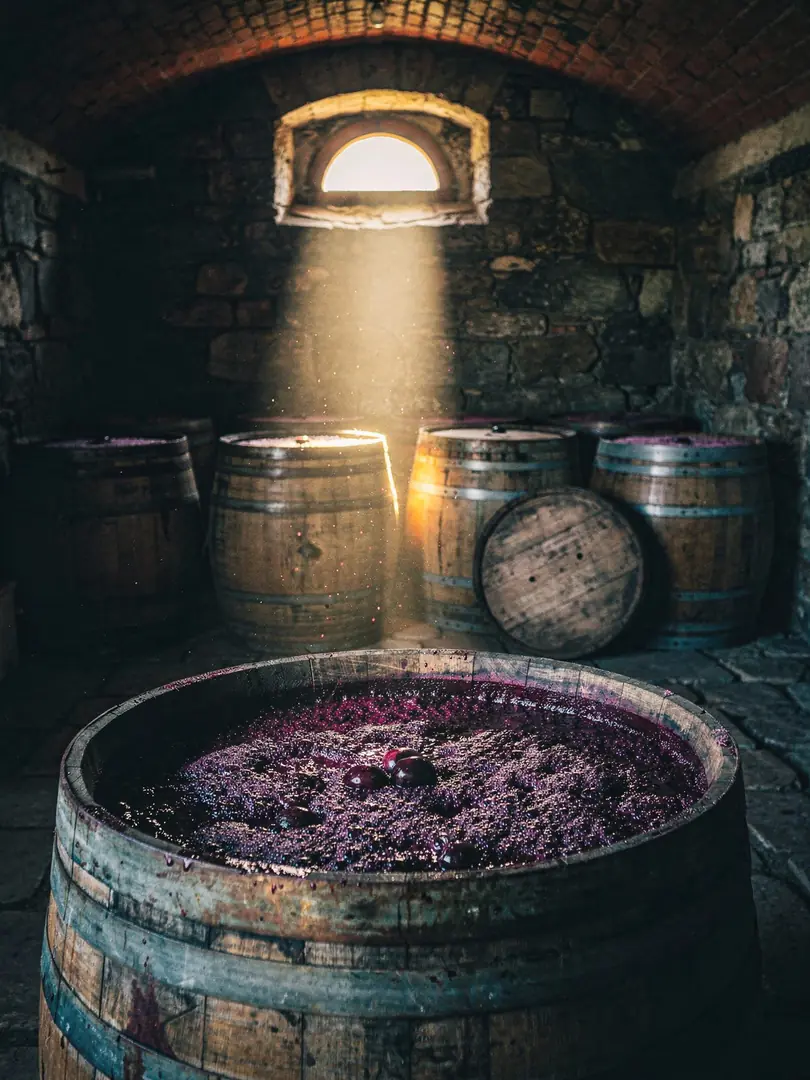
A mash is crushed fruit that ferments. For slivovice, the plums go into vats or barrels, where yeast converts the fruit sugar into alcohol. Added sugar has no place here: Czech law for custom distilleries allows only fruit, juice, and fruit residues, fresh or already fermented, with no outside sugary additives.
Many distillers leave the pits in the mash. They give the brandy the delicate note of bitter almond and marzipan prized in good slivovice. However, crushed pits release hydrogen cyanide, which can later form ethyl carbamate, a substance the German Federal Institute for Risk Assessment warns about in stone fruit brandies. The EU therefore caps hydrogen cyanide at 7 grams per hectoliter of pure alcohol. The pit note is meant to stay subtle.
How long fermentation takes depends on the cellar temperature and the yeast; expect several weeks. Whether wild yeasts from the fruit skin do the work or cultured yeast is added is up to the distiller. What matters is that the mash stays clean and isn't left open too long, or acetic acid will form and later show up in the brandy's aroma.
Methanol comes from the pectin in the fruit walls and forms already in the mash, not only through poor distilling. That's why every fruit brandy contains some. EU regulation sets an upper limit of 1,200 grams per hectoliter of pure alcohol for plum brandy, and properly made slivovice stays well below that.
In the custom distilleries of Moravian Wallachia, around Vizovice for instance, many barrels stand side by side in autumn because the small producers all harvest at the same time. Each barrel belongs to a different fruit grower, and each one expects their own brandy back at the end, not just any batch from the pool.