Rest and Wood
Maturation & Storage
Fresh from the still, the spirit seems rough, its aromas sitting side by side rather than coming together. That's why it rests, and with pálinka this resting period is often short. Újfehértói meggypálinka must rest for at least three months in clean stainless steel after distillation before it may be bottled.
The basic pálinka rule does not require a fixed maturation period. A crystal-clear spirit straight from the tank is just as compliant as a golden one from an oak cask, as long as nothing is added. So if you see a pálinka with a golden hue on the shelf, you can assume it's from wood, not caramel or coloring. Color, too, may only come from the wood, never from additives, just as sugar and flavorings are off-limits for any pálinka.
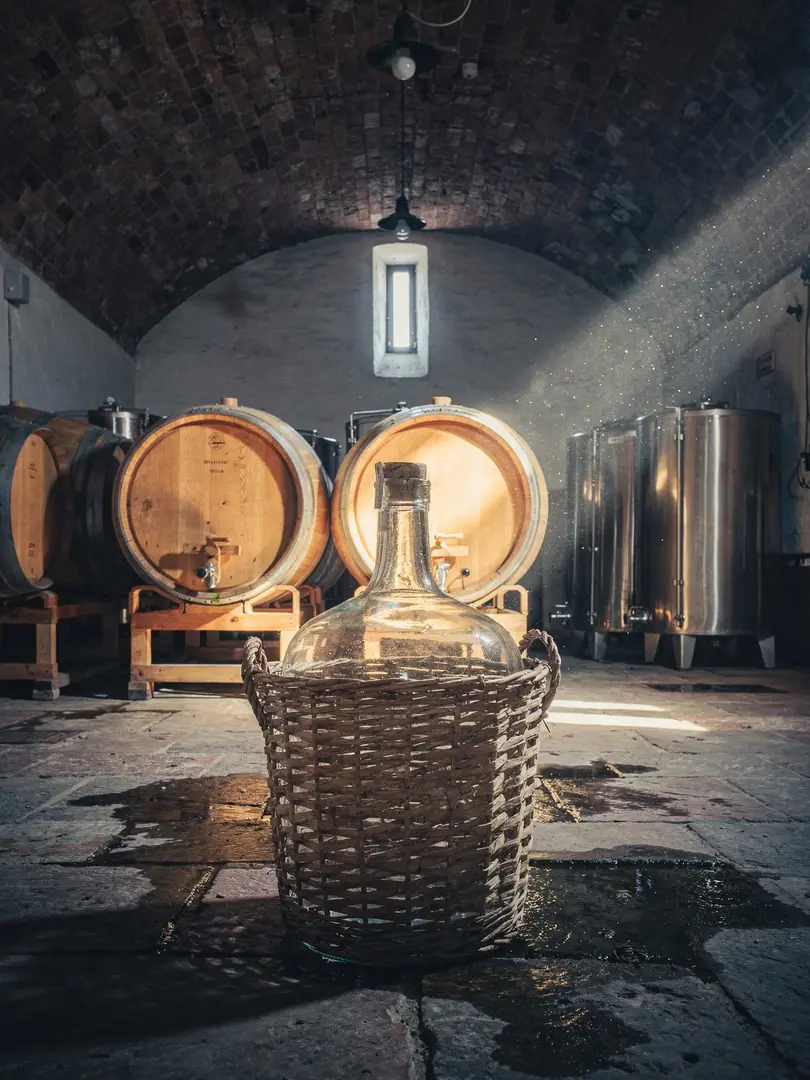
Glass demijohns and stainless steel are considered neutral. They don't change the spirit, they simply let it settle. Those who want more turn to wood: in Hungary, acacia casks are common, giving the spirit a pale golden color, while oak is also used, often contributing vanilla and toasted notes.
Plum brandies pair especially well with wood, because the dark, sweet fruit carries its spice notes well. With apple, wood tends to dominate more quickly, and sour cherry is often kept in tank to preserve its freshness. These are preferences of the distillers, not rules. In wood, the spirit also breathes a little with the air, a small portion evaporates through the cask wall, and the aroma becomes rounder, though also somewhat quieter.
Before bottling, the spirit is brought down to drinking strength with water. For Újfehértói meggypálinka, this is at least 40% ABV according to the specification, while the basic rule for any pálinka sets it at 37.5% ABV.