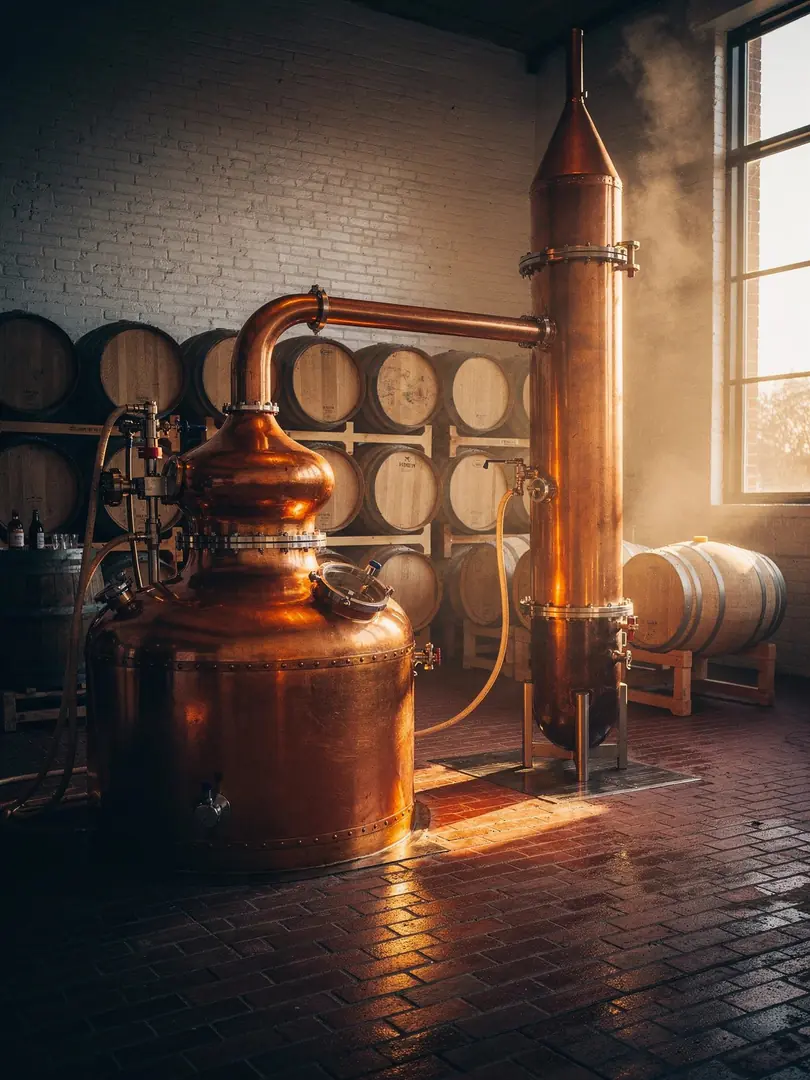
Pot, Column
Distillation
Whether the cider ends up in a pot still or a column still shapes the character of the brandy. In the copper pot, much of the fruit's aroma stays in the distillate; the column separates more thoroughly: the vapors rise through several plates, heavier components condense out, and what comes out at the top is a purer, more neutral spirit. Which equipment any given house uses is one of those things each distillery tells in its own way.
With each run, the distiller splits the distillate into three parts. The heads come first and contain volatile, harsh compounds that are cut away. The hearts are the centerpiece, which later go into the barrels. The tails bring heavier, often oily notes and are likewise set aside or redistilled. Exactly where these cuts fall is decided by the distiller based on smell, taste, and experience, not by a single fixed number. Afterward, the distillate is brought down to drinking strength with water.
Applejack comes with an added wrinkle. In Blended Applejack, only part of the alcohol comes from apples. Laird & Company states that its Blended Applejack contains 35 percent aged apple brandy and 65 percent neutral spirit. Neutral spirit is high-proof alcohol that has been purified in a column still to the point where it barely tastes of its raw material anymore. The blend is thus more than half technique rather than fruit, and that's exactly what comes through in the glass.
A Straight Apple Brandy, by contrast, contains according to the house only brandy made from apples, with no neutral spirit and no additives. Every barrel therefore has to be carried by the apple alone, and that shows in the glass. From cider, which has only a few percent alcohol, comes a spirit containing many times that amount.