Charred Oak
Maturation & Aging
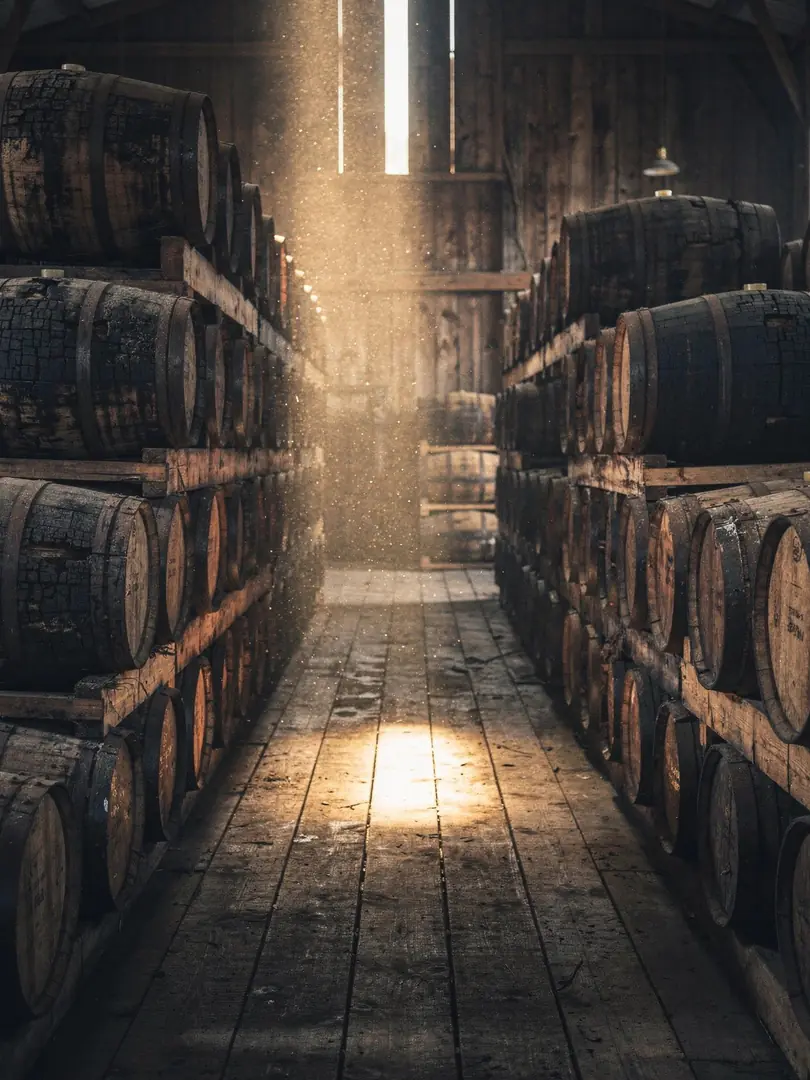
Freshly distilled apple brandy is colorless and sharp. It's the barrel that turns it into a round, amber-colored drink. Laird & Company ages its spirit, by its own account, in charred oak barrels, as is familiar from American whiskey. The wood imparts vanilla, caramel, and light toasted notes. The longer the brandy rests, the darker it becomes, the more oak spice it absorbs, and the softer the sharpness of the young spirit grows. At the same time, some brandy evaporates through the wood over the years, what the industry calls the angels' share.
For Blended Applejack, the house states the apple brandy component spends three to four years in charred oak. The neutral spirit, on the other hand, doesn't age—it's simply blended in afterward. That explains why a Blended Applejack tastes milder and lighter than a straight apple brandy.
The rules are stricter for Bottled in Bond. This label traces back to a US law from 1897: the brandy must come from a single distillery and a single distilling season, must spend at least four years in wood, and must be bottled at exactly 50 percent alcohol, or 100 proof. Laird & Company lists its Bonded apple brandy with these specifications, and brought it back in 2018 after a four-year hiatus.
Age statements on blends deserve some caution. In the EU, a stated age may only refer to the youngest component in the glass, not the oldest. In the United States, separate labeling rules apply, which aren't covered here.
To understand maturation, it's best to compare two glasses: a Blended Applejack from Scobeyville against a Bonded apple brandy from the same house. The difference then sits in the whole body of the drink—in color, density, and length—and the alcohol is only part of that.