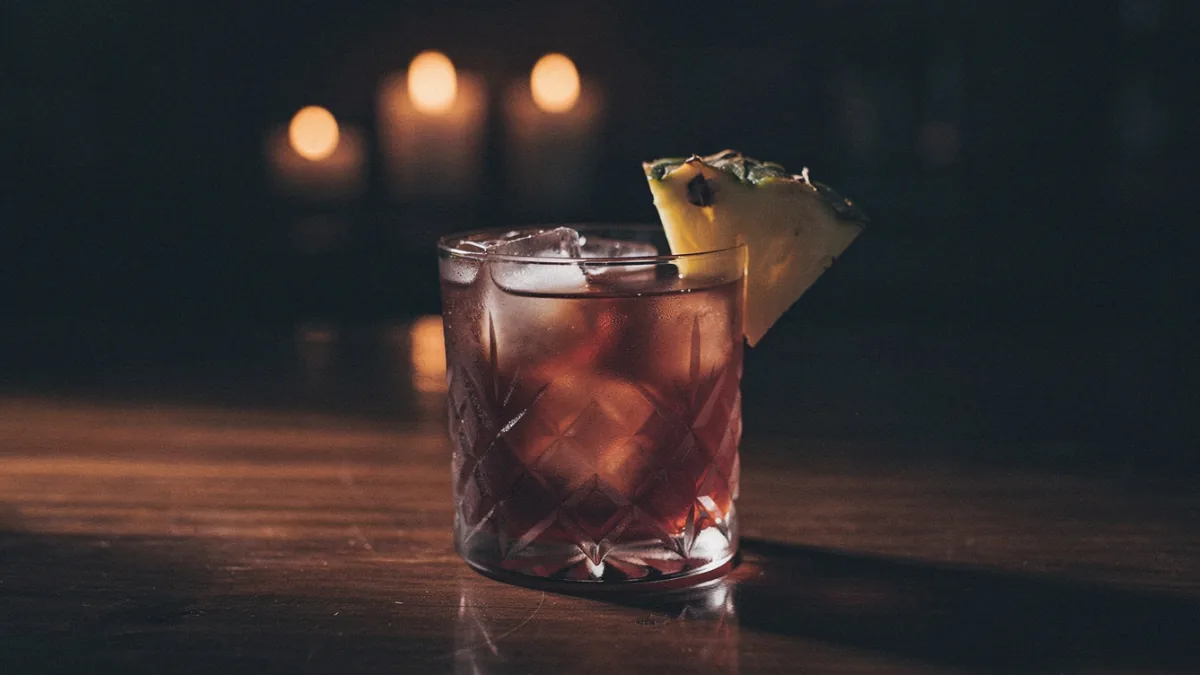
Preparation
- Fill the serving glass with fresh ice cubes. Add the ingredients to a shaker.
- Shake vigorously with plenty of ice for about 10–15 seconds.
- Strain through a strainer over the fresh ice.
- Garnish to finish: pineapple wedge.
What does it taste like?
The first impression is pineapple, sweet and juicy. Then the Campari kicks in, a red bitter aperitif, and lays itself across the fruit. This bitterness is intentional and stays until the end. The lime sharpens the edges further, while the dark demerara syrup adds a deep, almost molasses-like sweetness. That's exactly where it meets the blackstrap rum, which also tastes dark and heavy. The glass is well filled, so the drink doesn't feel harsh. Served cold, it tastes both fruity and bitter at once.
When does it work best?
A drink for anyone who likes bitter flavors but still wants some fruit. It works well before a meal, since the bitterness stimulates appetite. It also works as a long evening drink. Beginners should know what they're getting into: the Campari comes through clearly. If you like bitter aperitifs, you'll love it. If you have a fundamental aversion to bitterness, though, it's not worth trying.
What matters
The bitterness is meant to be there. Don't try to mask it with ever more syrup, or the drink just tips into cloying territory. Use freshly pressed pineapple juice if you can get it; it foams up slightly when shaken and makes for a nicer surface. Strain onto fresh ice, not the shaking ice. If you don't like bitter flavors at all, better choose a different rum drink.
Where the drink comes from
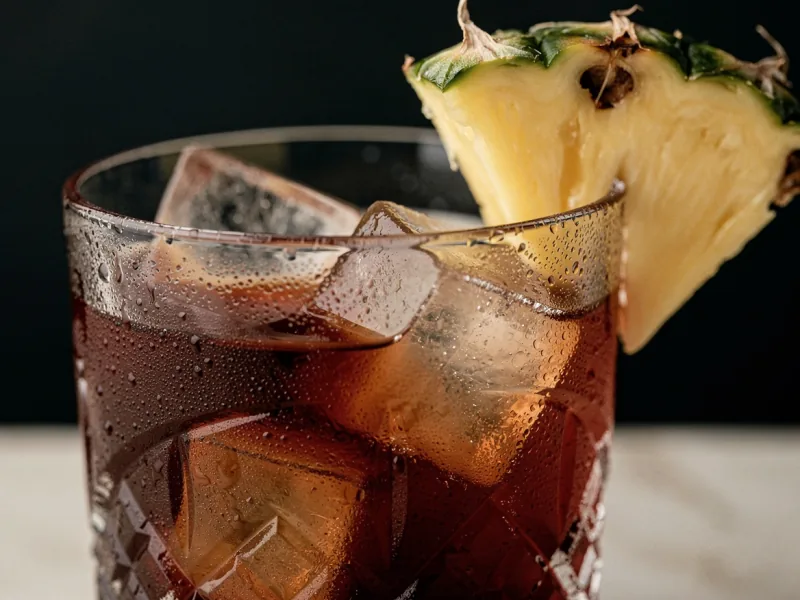
The Jungle Bird comes from the Hilton in Kuala Lumpur. Beverage manager Jeffrey Ong is credited as its creator. He was supposed to welcome guests at the hotel's opening in 1973. The bird name fit with the hotel's Aviary Bar. Then as now, the unusual idea was putting a red bitter aperitif into a tropical rum-pineapple cocktail. That's exactly what makes it recognizable to this day, and exactly why it keeps reappearing in bars.