The short answer
A tasting app is a notebook for everything you taste: stars or points, aromas and a few words about your impression and the food. It is good if it derives your taste from your notes and later shows you what you really liked. Some tasting apps also help you find tastings near you or host one yourself.
What a tasting app records
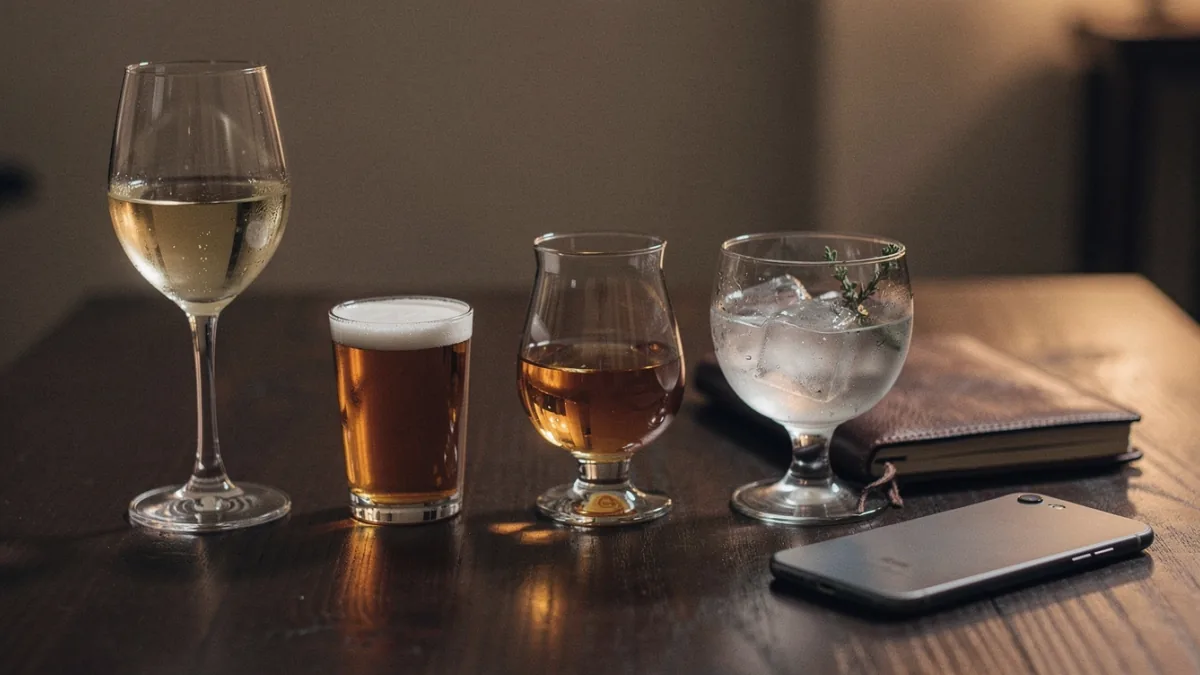
A tasting note has a core and a few extras. The core is your verdict, as stars or points. Then come the aromas you smelled and tasted and a sentence about your impression.
The extras make the note valuable later: what you drank it with, at what temperature, for which occasion and whether you would buy the bottle again. In a year you will remember the evening, not the number. A good tasting app asks for these things without making you type for long.
Stars, points or words: which system fits
Five stars are quickly given and enough for most notes. If you want finer distinctions, use a 100-point scale like many wine critics. On it, most decent wines land between 80 and 90 points, and the difference between 86 and 88 only means something if you always rate with the same strictness.
More important than the scale are the words next to it. A number says how good something was; the words say why. That is exactly what an app needs to suggest something fitting later.
Describing aromas without jargon
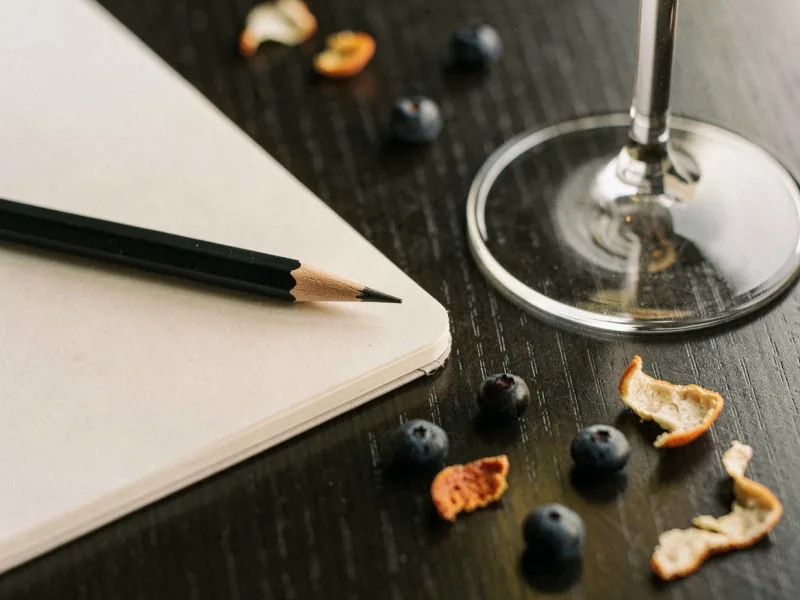
Nobody has to tell blackcurrant leaf from gooseberry on the first sip. Start with the big families: fruit, flowers, herbs, spice, wood, roast, smoke. Only then get more specific, for example from fruit to citrus and then to grapefruit.
Limit yourself to a few aromas per note. Three accurate terms help you more later than twelve guesses. Also note what you did not like; that reveals a lot about your taste too.
Tasting notes for wine, beer, whisky and gin
Every drink has its own dials. With wine they are acidity, sweetness, tannin and body. With beer it is bitterness, malt, carbonation and the notes from the yeast. With whisky you watch the cask, smoke and how it changes with a few drops of water. A gin you taste neat first and then with tonic.
A tasting app for all drinks should know these differences and offer you suitable aromas for each drink. Anyone who has to describe beer with wine terms soon gives up taking notes.
From notebook to taste profile
The real value of a tasting app shows after a few weeks. Many single notes reveal what you like again and again: fresh acidity, strong roast, little sweetness. An app that recognizes this can suggest drinks you do not know yet that still suit you.
Make sure the app explains its suggestions. A sentence like because you like wines with fresh acidity can be checked. A suggestion without a reason is usually just what other people like.
Finding and hosting tastings
Many tasting apps stop at the notebook. It gets interesting when they also bring you to other people: to wine tastings, beer tastings and whisky tastings near you, or to an evening you host yourself and invite your friends to.
For your own tasting you need little: four to six drinks, a fixed order and the same questions for everyone. How to do it at home is explained in the guide to wine tasting at home.
Checklist: the best tasting app for you
These questions separate a good tasting app from a pretty form.
- Can you log a tasting in under a minute?
- Can you choose between stars and points?
- Does it offer suitable aromas for each drink?
- Can you also record what you did not like?
- Does it learn from your notes and explain its suggestions?
- Does it know wine, beer, whisky, gin and the other drinks you enjoy?
- Does it show tastings near you or help you host one?
- Do your notes stay private until you share them?
How Gustofolio works as a tasting app
Gustofolio records tastings for ten drink types, from wine and beer to whisky, gin and sake. You rate with one to five stars or with points up to 100, pick up to six aromas you liked and up to six you did not, and add a note. Food, occasion, serving temperature and whether you would buy again have their place too.
All ratings build a single taste profile. Gustofolio then suggests drinks to you and says what each suggestion is based on. If you mark a bottle as finished and have not rated it yet, the overview reminds you.
Under Meet & Taste you find tastings near you on a map, filtered by drink, day and distance. You can also create a meetup yourself, private for invited guests only or public; public tastings are reviewed before they appear. Your notes stay private until you share something yourself.
Frequently asked questions about tasting apps
These questions come up before someone starts logging their tastings digitally.
What is a tasting app?
An app in which you record what you tasted and how you liked it. Good tasting apps analyze your notes and over time show you which styles and aromas you enjoy.
Which drinks is a tasting app suitable for?
For anything you taste deliberately: wine, beer, whisky, gin, rum, sake and more. What matters is that the app offers the right terms for each drink.
Are tasting notes on paper worse?
No, paper is often faster at the table. The drawback shows later: notebooks cannot be searched and learn nothing. That is why many people take notes on paper at the table and transfer them to the app afterwards.
Can I host a tasting with a tasting app?
Some apps can. In Gustofolio you create a meetup, invite guests and see who has accepted. Only those taking part see the exact address.