Preparation
- Measure all the liquid ingredients into the shaker.
- Shake vigorously with plenty of ice.
- Pour into a large tumbler along with the ice.
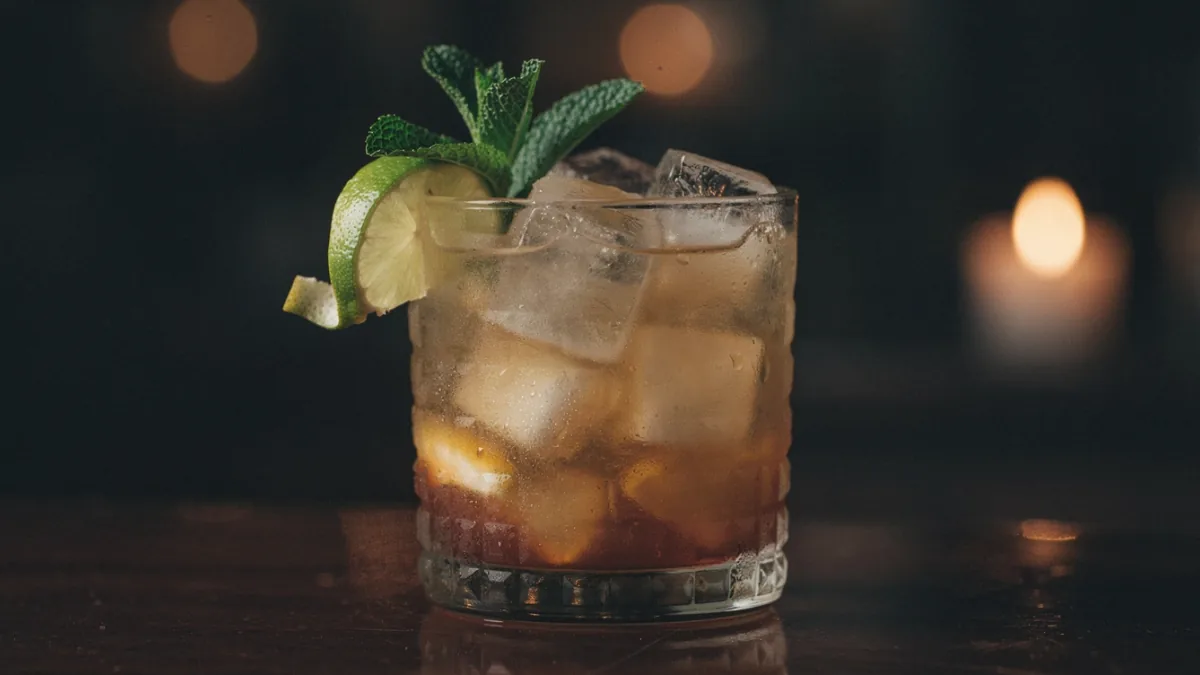
- Finish with a garnish: mint, lime peel and a piece of pineapple.
What does it taste like?
First you taste the lime. It's distinctly sour and gives the drink a fresh start. Then the rum comes through, since 60 milliliters of it go into the glass. The almond syrup settles softly over it with a nutty flavor. Orange liqueur and a bit of sugar syrup take the edge off the acidity without making the drink sweet. In the mouth, everything feels dense and smooth, thanks to the almond syrup. In the end, rum lingers. The drink is strong, but the ice dilutes it gradually.
When does it work best?
The Mai Tai suits a warm evening and works well as a drink for in-between moments. It's too bold for food pairing. Beginners handle it well, since lime and almond wrap the rum in a friendly package. Still, keep in mind: 60 milliliters of rum is a serious amount, so drink it slowly. If you prefer to taste less alcohol, a long drink with soda is a better choice.
What matters
In this classic form, the Mai Tai doesn't include pineapple juice. If you add juice, you end up with a different drink. Squeeze the lime fresh — the recipe explicitly calls for it. Shake hard with plenty of ice and pour the ice into the glass along with the drink, or it will warm up quickly. Orgeat is almond syrup and may contain nuts, so check the product.
Where the drink comes from
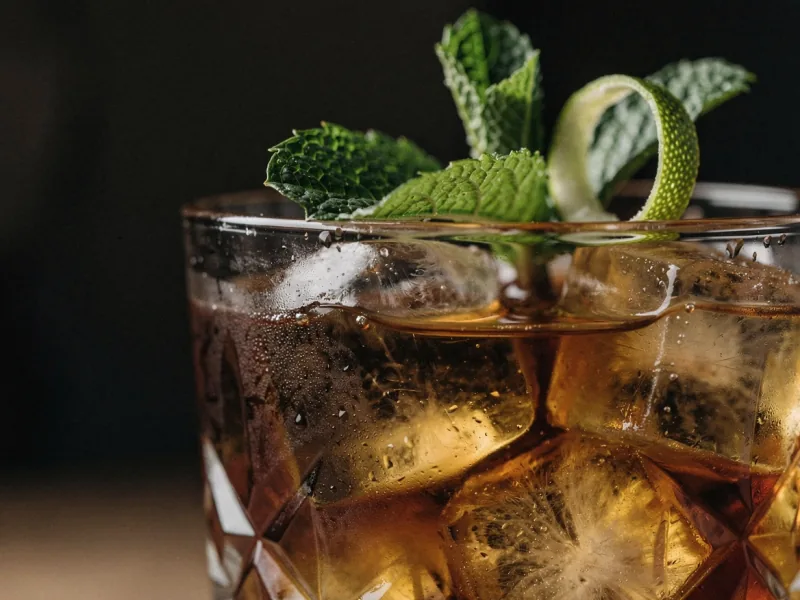
The best-known story traces the Mai Tai back to Victor Bergeron. He was known as Trader Vic, and the story is set in Oakland in 1944. Donn Beach also claimed the invention for himself. Who's right remains disputed to this day. The dispute is part of tiki culture itself. In Trader Vic's version, an enthusiastic Tahitian exclamation is said to have given the drink its name. What's certain, above all, is the structure: rum, lime, orange and almond take center stage. A large amount of fruit juice is not part of it.