The Bush in a Glass
Botanicals
Juniper doesn't grow wild in any significant quantity in Victoria, so Four Pillars and the Melbourne Gin Company buy it dried, mostly from Southern and Eastern Europe. Nearly every distillery outside the classic juniper regions does the same. What sets Yarra Valley gin apart, though, are the ingredients found alongside it, just a short drive from the distilleries, straight from the bush.
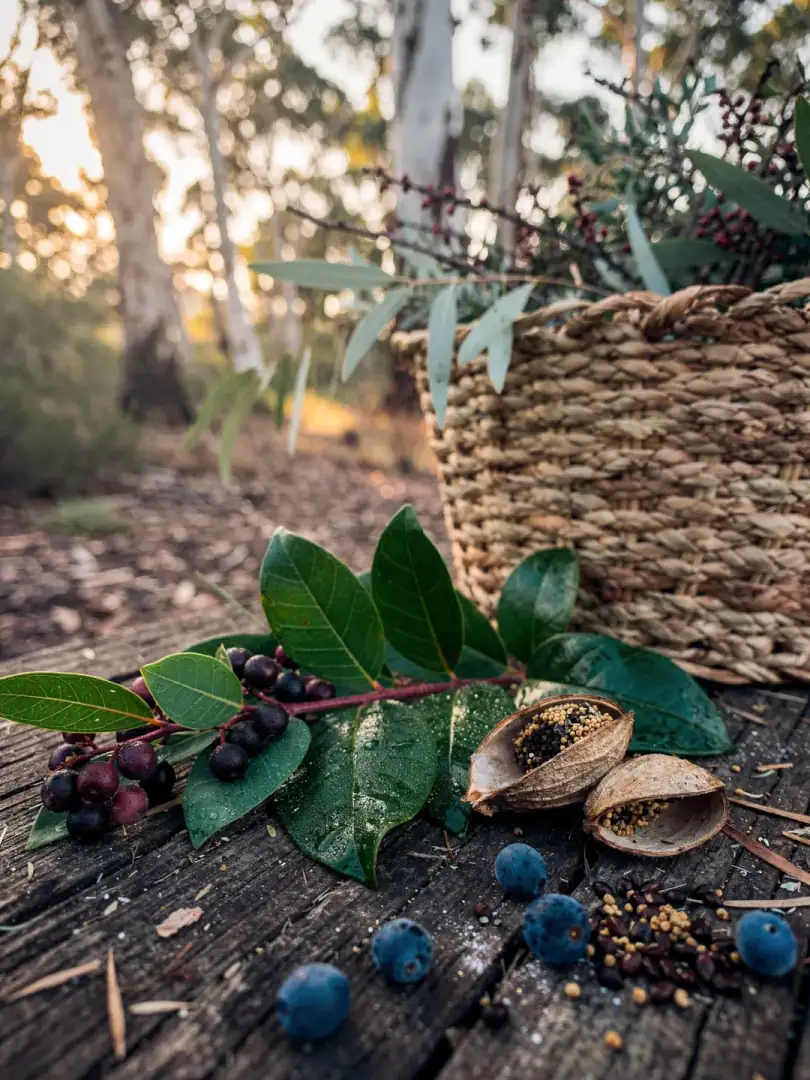
Tasmanian pepperberry is a small purple berry with a sharp heat reminiscent of lavender. Four Pillars processes mainly its leaf. In the Rare Dry Gin, it gives the juniper a peppery edge that lingers longer on the finish than black pepper. Lemon myrtle, a tree from Queensland's rainforest, delivers citral, the same aromatic compound found in lemon peel, only far more concentrated.
Anise myrtle carries anethole, the compound that also gives star anise its licorice character, rounding out recipes with a sweet spiciness. Wattleseed, the roasted seed of the acacia, smells of coffee and nuts and traces back thousands of years to use by Aboriginal peoples, who ground it into bush bread. Eucalyptus leaves appear in smaller amounts, adding a cool, resinous note.
The Melbourne Gin Company blends in sandalwood, honey myrtle, and macadamia nut, and uses fresh rainwater instead of tap water for its recipes. Anyone opening a bottle from this region smells juniper first, like anywhere else. On the second breath, though, they smell the bush surrounding the distilleries.
The Rare Dry Gin combines a total of ten botanicals in a single batch, from juniper and angelica root to pepperberry and lemon myrtle. It's exactly this blend of European foundation and Australian bush that makes it the flagship of the entire region.
Dark, iron-rich earth from weathered volcanic rock, found throughout the Yarra Valley beneath vines and bush growth.
The root: Fine roots find minerals here and retain moisture even through the dry summer.