Graanjenever & Distilleries
Region & History
Anyone walking through Hasselt in the nineteenth century smelled the town before they saw it. Over seventy distilleries turned rye and barley into graanjenever here, and jenever production was the leading industry in the entire province of Limburg. In the narrow lanes of the old town, steam boilers stood alongside malthouses and storage cellars, often just a row of houses apart.
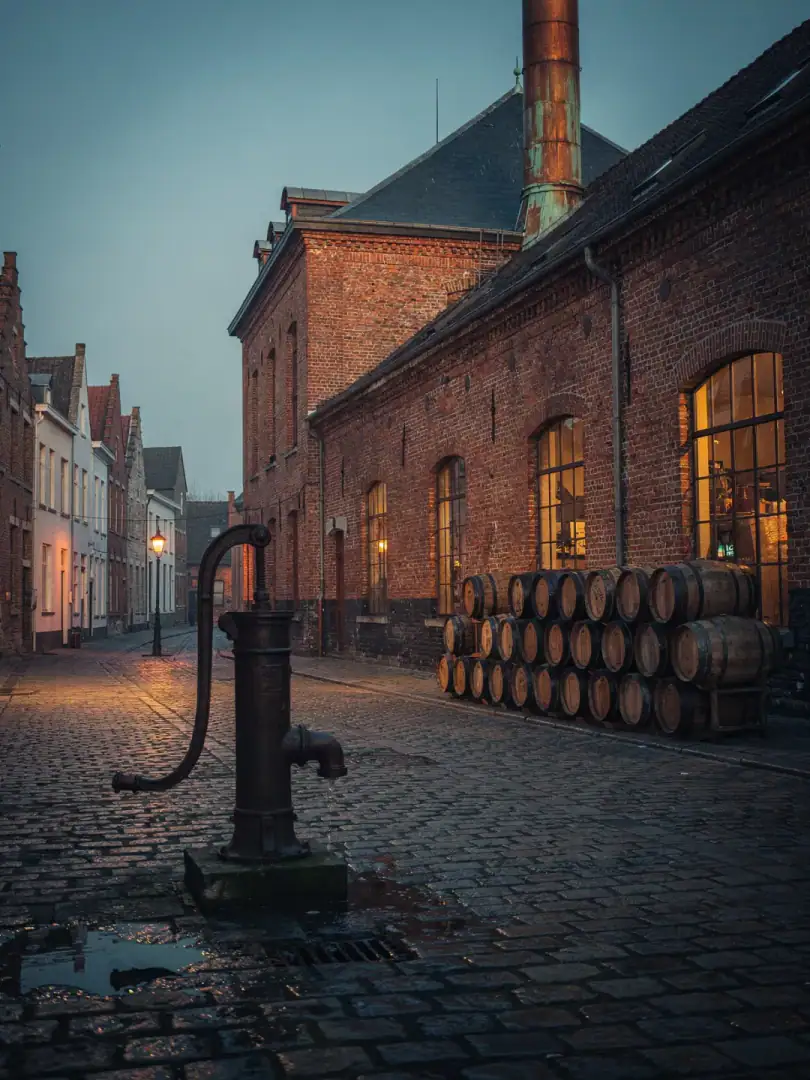
This era is now told by the Jenevermuseum on Witte Nonnenstraat. The building once housed the Stellingwerff/Theunissen distillery and was declared Belgium's first protected industrial monument in 1975. Since 1987, the museum has shown how grain, water and juniper became a drink that fed entire streets.
Then came the break. In 1919 the Belgian parliament passed the Vandervelde Law, named after the politician Emile Vandervelde. It banned the serving of spirits in cafés and allowed sales only in bottles of two litres or more, officially to combat alcoholism among workers. For Hasselt, this marked the beginning of the end for its open drinking culture, and a black market emerged that never fully disappeared until the law was repealed in 1983.
The Smeets distillery shows just how tight things became. Gerard Smeets founded his business in 1923 but only received an official distilling licence in 1950, so strict had the regulations become by then. The distillery closed for good in 2013, the building was converted into a shopping centre, and the Smeets brand name lives on in bottles from other producers.
What remained was pride. Since 1997, Hasseltse Graanjenever has been a protected designation in Belgium, and since 2007 also at the European level. The Confrérie van de Hasseltse Jenever keeps the knowledge of the old distillers alive, and once a year the town brings this history back to the streets with the Jeneverfeesten.