Forest Instead of Greenhouse
Botanicals
Juniper grows wild in the Black Forest along sunlit forest edges and on heathland, where spruce trees let in enough light for the shrub to thrive. For Monkey 47, juniper alone isn't enough. Alongside the juniper, 46 other ingredients go into the blend, from citrus peel to spices from overseas. About a third of them actually come from the distillery's own forest.
Most striking are the spruce shoots—the fresh, pale green tips at the ends of the branches. They can only be harvested for a few weeks each spring. They bring a resinous, fresh note to the gin that recalls wet conifer wood after rain. This note ties the gin firmly to its forest.
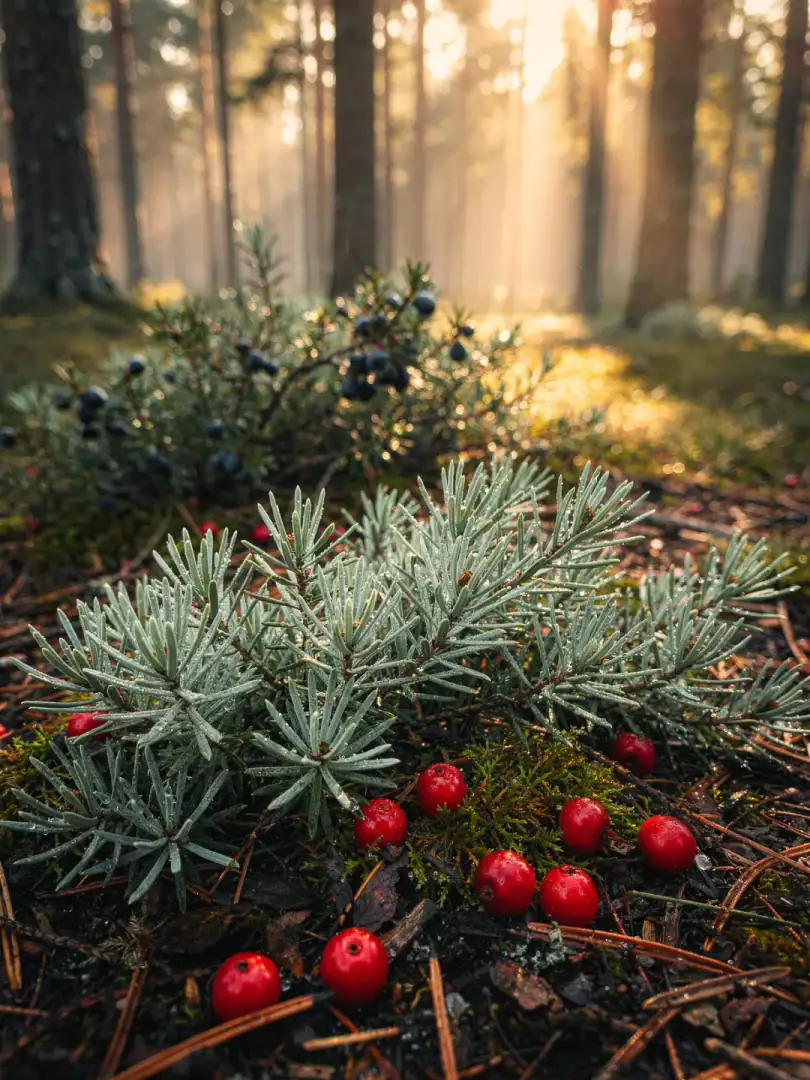
Lingonberries are native to the Black Forest's acidic, boggy soils. They add a light acidity and a touch of fruitiness that balances the resinous notes. Blackberry leaves and elderflowers from the surrounding hedgerows join in, lending the gin a quiet, floral sweetness.
The rest of the 47 botanicals travel from far away. Angelica root, cubeb pepper, mace, and bitter orange have never grown in the Black Forest. But they complete what the native plants can't provide on their own. Only in this interplay of imported ingredients and forest floor does the fullness emerge that made the gin famous.
Anyone reading the ingredient list finds names from three continents alongside plants from the local forest edge. It's exactly this contrast—native and foreign in one bottle—that's considered the hallmark of the Black Forest style. No other German gin carries as much forest within it as this one.
A thin, acidic layer of decomposing spruce needles and moss.
The root: Shrubs like lingonberry and blueberry root shallowly right here, because they need this acidity.