The Wild Monkey
Region & History
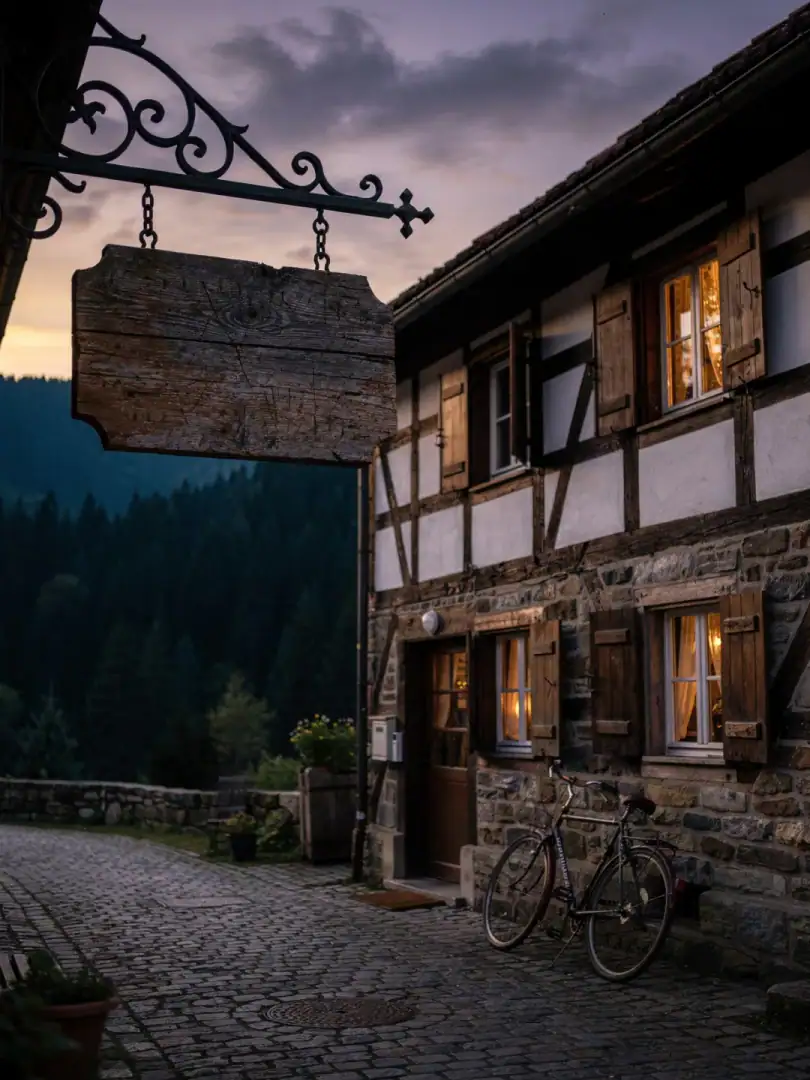
The story that turned the Black Forest into a gin destination begins at the inn "Zum wilden Affen" ("The Wild Monkey") in Loßburg. British Commander Montgomery Collins settled in the northern Black Forest in 1951 out of love. He opened a country inn there and named it after a Javan monkey called Max, whom he had sponsored at the Berlin Zoo. Together with a local distiller, Collins is said to have developed his own gin recipe. For decades, it was almost forgotten.
It wasn't until years later, when entrepreneur Alexander Stein stumbled upon records of this old recipe, that things picked up again. Together with distiller Christoph Keller, he founded the Black Forest Distillers in Loßburg. In 2009, they launched Monkey 47 Schwarzwald Dry Gin. The name refers to its 47 botanicals and its 47% alcohol by volume.
Two years later, the jury of the International Wine & Spirit Competition named the Loßburg gin the best gin in the world in a blind tasting. For a village in the northern Black Forest, that was quite an honor. Until then, the region was better known for cuckoo clocks and Kirschwasser. Suddenly, international attention turned to a place hardly anyone had heard of.
The German gin boom that took off after 2010 found fertile ground already prepared in the Black Forest. For generations, small-scale distillers in the region have been distilling fruit brandy from their own stone fruit. Often, the result is meant only for the home cellar or the farm shop next door. This craft knows all about quantities, temperatures, and the patience required for redistillation. It translated easily to gin, without anyone having to start from scratch.
Today, Black Forest Distillers, now part of the French group Pernod Ricard, offers tours through the distillery in Loßburg. Visitors see how juniper, forest herbs, and spring water come together to create the blend that has carried the region's name into bars around the world.