Seven Botanicals
Botanicals
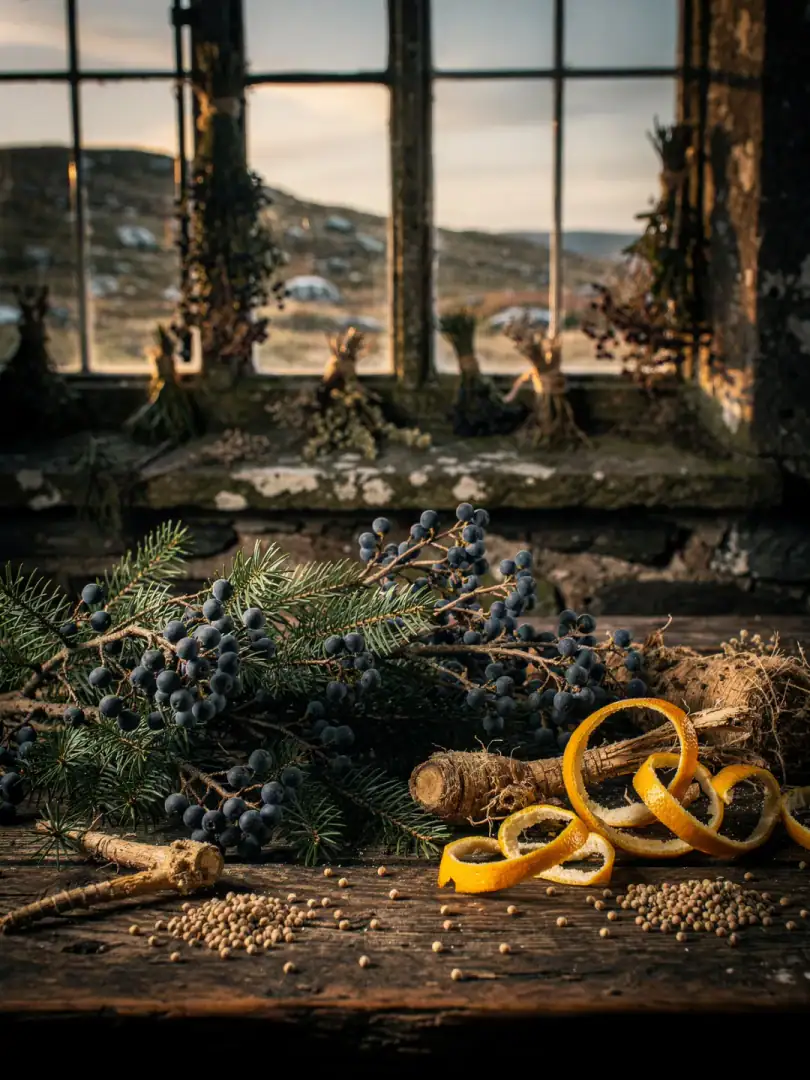
Juniper is mandatory in every gin. Plymouth Gin also relies on a very small, fixed recipe: seven botanicals said to have remained unchanged for generations. Alongside juniper, these include coriander seed, angelica root, orris root, cardamom seed, and orange and lemon peel.
Juniper itself barely grows in England anymore. Many stands are protected and can no longer be harvested. Like most British distilleries, Black Friars Distillery sources its berries from southeastern Europe. Origins from Italy or Macedonia are common, where the juniper bush grows on dry limestone slopes, yielding particularly resinous, spicy berries.
In the glass, juniper carries the resinous base note. Plymouth Gin is nonetheless considered softer and earthier than a classic London Dry, thanks to the other six ingredients. Angelica root brings an earthy, almost spicy tone. Orris root binds the aromas together and rounds out the finish.
Cardamom seed lays a warm, slightly sharp spice on top. Orange and lemon peel provide the citrus freshness that keeps the gin from feeling heavy despite the earthy notes. Coriander seed bridges the two: a light, almost soapy citrus note that mediates between juniper and peel.
This combination is deliberately conservative. While many new distilleries work with a dozen or more botanicals, Plymouth holds fast to a recipe that was already being mixed for sailors in the 18th century. Barbican traders once sold the berries and roots right on the quay, before they were turned into gin at the distillery.
A thin, crumbly layer of humus over limestone bedrock, found on the juniper slopes of southern Italy and Macedonia.
The root: Here, juniper's fine roots find little water, which keeps the berries small and full of aroma.