Water from Dartmoor
Water & Climate
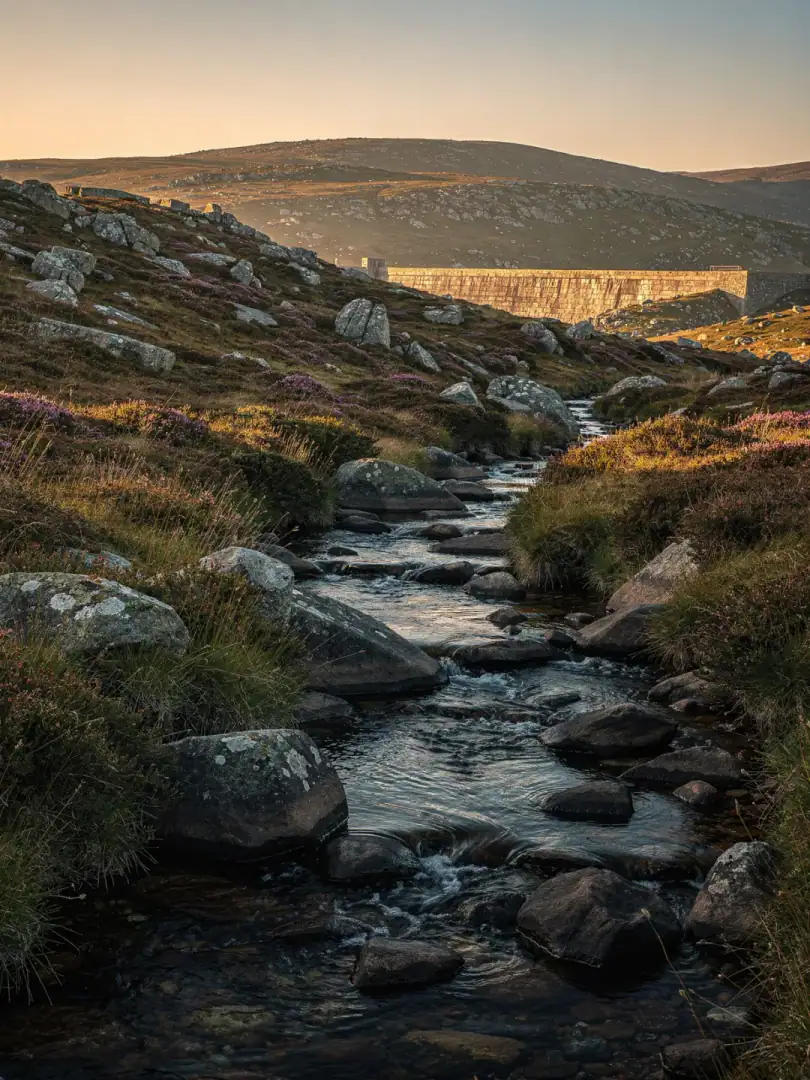
North of Plymouth rises Dartmoor, a high moorland of granite, peat, and rugged grass that has supplied the city's water for centuries. Rain seeps into the moor and filters down through thick layers of peat. Eventually it meets bare granite, which releases hardly any minerals.
The result is soft water with very little limescale. It's filtered through peat, not limestone, as is common in many other gin regions. For Plymouth, this is no coincidence but part of the recipe. This very water has been used since 1793 to bring the finished spirit down from cask strength to drinking strength.
Soft water dissolves the essential oils of the botanicals more evenly than hard, mineral-rich water. The gin stays clear as it's diluted, rather than turning cloudy. For a gin with as many root and peel oils as Plymouth, this makes an audible difference in the glass.
The link between moor and port city is old and extends beyond gin. As early as the late 18th century, the Navy built the Devonport Leat, an artificial watercourse. It carried Dartmoor water for miles to the dockyard at Devonport. The fleet depended on clean drinking water for long voyages, and a dedicated channel was safer than open wells in the city.
So moor and sea carry the same character into the city. Along the quay, a raw, salty climate prevails. From inland comes soft, mineral-poor water instead. Together, both shape a gin that tastes rounder and more velvety than hard and mineral, a difference you notice from the very first sip.