Docks & Navy
Region & History
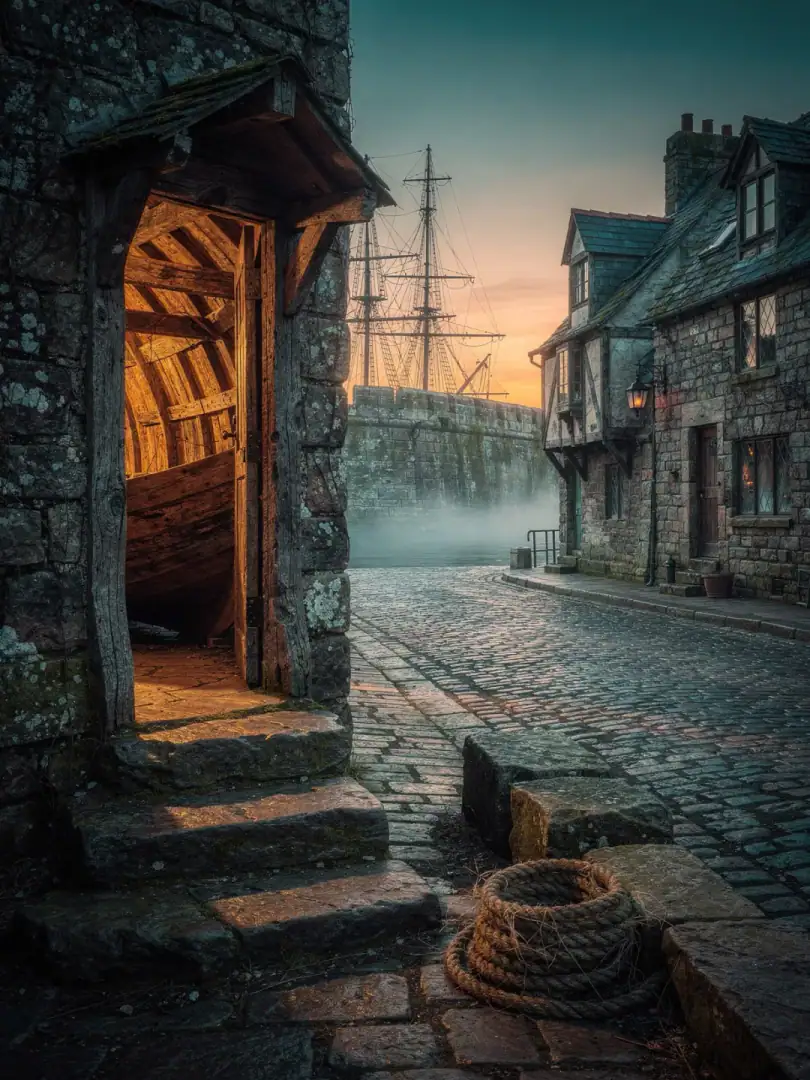
On the quay of the Barbican lies Plymouth's oldest harbour district. Here stands a building older than any gin distillery in England. The Black Friars Distillery on Southside Street dates back at its core to 1431. The name recalls the Black Friars of the Dominican order, said to have lived here. This, however, is not firmly documented.
One other chapter is well documented. In 1620, the Pilgrim Fathers spent their last night on English soil in the building's refectory. From there, they set off for America from the Mayflower Steps. It wasn't until 1793 that gin distilling began within the same walls. That's when the Coates family merged with the existing business of Fox & Williamson.
From then on, the distillery's history was closely tied to the harbour and the Royal Navy. As early as the 19th century, Coates & Co supplied the fleet with cask-strength gin. By around 1850, that meant over a thousand casks a year. Newly commissioned ships received a wooden "Commissioning Kit" on board, containing two bottles of Plymouth Gin and matching glasses. This tradition lasted well into the 20th century.
The distillery survived wars, changes of ownership, and the decline of the dockyard city without ever moving location. To this day, distilling continues here, in the same building as in 1793. That makes Plymouth the only city in England where a historic gin brand has been produced continuously at its place of origin.
Today, the distillery serves as museum, visitor destination, and working site all at once. Walking through the old vaulted chambers, you pass historic pot stills and casks that still carry the scent of navy strength. Outside, fishing boats set out from Sutton Harbour, much as they did over two hundred years ago.