Copper and Vapour
Distilling
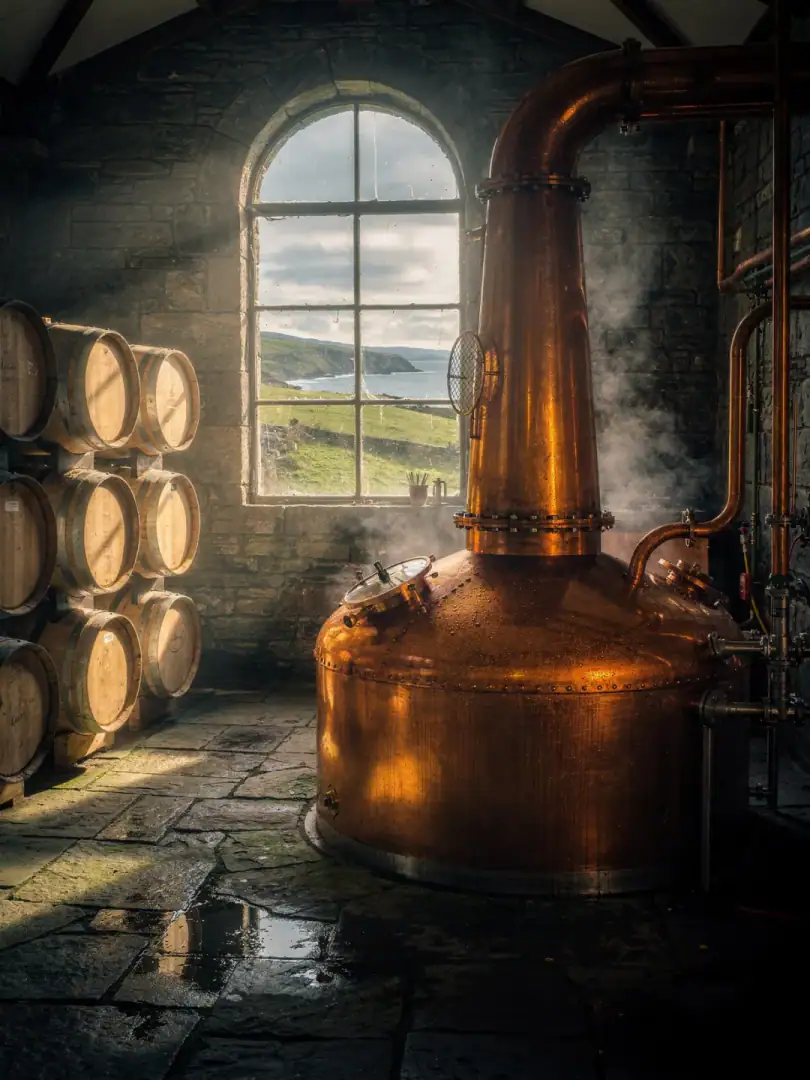
Most Irish gin distilleries rely on copper pot stills, often the very same or identically built stills later used to make whiskey. Copper binds sulphurous, unpleasant aromas during distillation, rounding out the spirit as a result. Distillers have used this effect for centuries, long before understanding the exact chemistry behind it.
The Shed Distillery in Drumshanbo macerates eight of its twelve botanicals in alcohol for several hours. They're then slowly distilled in medieval-looking copper pot stills. Four further botanicals are added via a vapour basket, a perforated basket in the upper part of the still. Hot alcohol vapour passes through it, picking up only the most volatile, delicate aromas.
At Dingle Distillery in Kerry, the botanicals are steeped in neutral alcohol for around 24 hours, according to the distillery. The batch is then distilled in small 500-litre stills. A vapour basket is optionally used as well, when a delicate aroma such as fuchsia blossom needs to be preserved.
Glendalough in the Wicklow Mountains distills in small batches. The wild botanicals, gathered fresh each day, don't keep for long. The distillery considers the short window between harvest and still to be crucial. It's the only way delicate notes like wood sorrel or elderflower make it into the finished gin at all.
Almost every house works one-shot. All botanicals go into a single distillation run that produces the finished recipe. Afterwards, only water is added to reach drinking strength, usually between 40 and 43 percent alcohol by volume. A concentrate, diluted only shortly before bottling, remains the exception in the Irish craft scene.
The base alcohol usually comes from neutral grain spirit, often made from Irish barley. Many gin distilleries also produce whiskey and use the same raw material for both. This links the two spirits technically, even though a very different drink ends up in the bottle at the end.