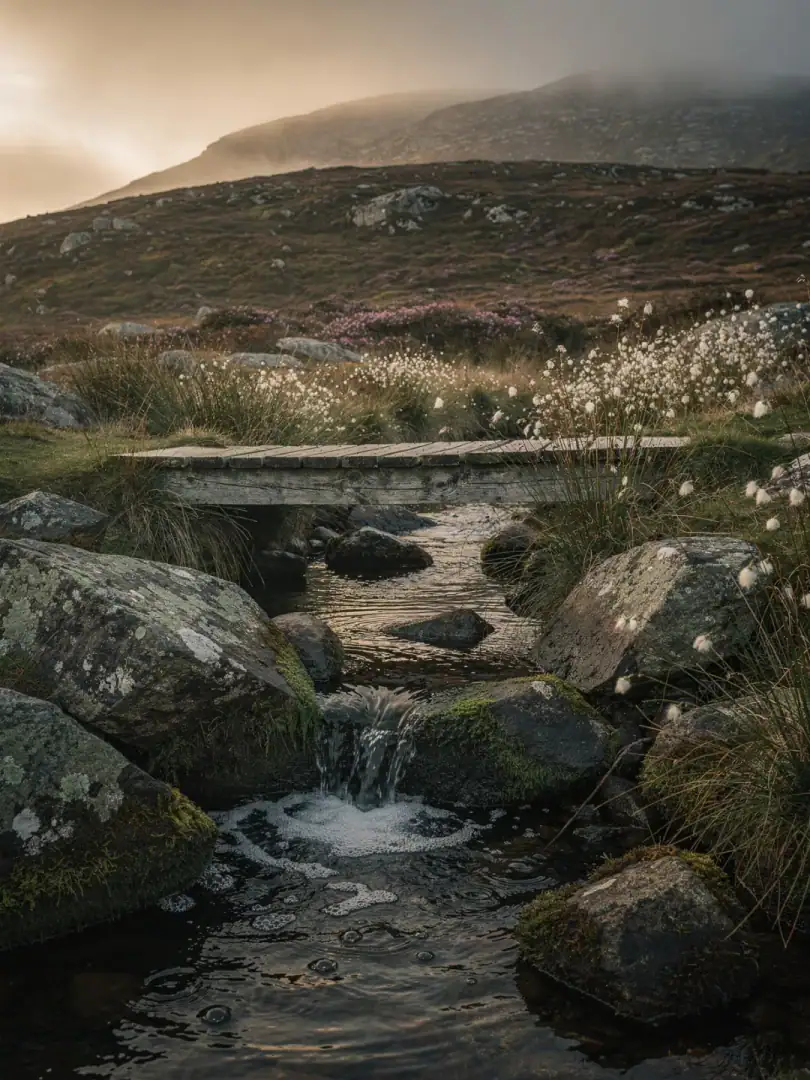
Rain and Bog
Water & Climate
Ireland is one of the rainiest islands in Europe, and that very abundance shapes how distilleries source their water. Rather than drawing from deep limestone wells as in some whisky regions, many Irish houses take their water from springs, pre-filtered through peat and granite.
In the Wicklow Mountains, where Glendalough is based, the mountains are made of granite, which releases very few minerals. The water flowing off the slopes is therefore considered soft, with very little lime. Soft water helps a gin appear clearer when cut down to bottling strength. It barely alters mouthfeel, since it carries little flavour of its own.
On the Dingle Peninsula in Kerry, Atlantic rain hits the mountains first. It gathers into fast, cool streams before reaching the sea. The peninsula's damp, constantly windy climate lets botanicals like fuchsia and bog myrtle grow plumper and more aromatic than they would inland, in more sheltered spots.
In Leitrim, where The Shed Distillery is based, sprawling bogs and small lakes define the landscape. Water that has seeped through peat can carry a slightly brownish tint and an earthy undertone. Because of this, it's usually filtered before use so it doesn't discolour the gin.
When cutting spirit down from cask strength to drinking strength, usually between 40 and 43 percent, water quality helps determine whether a gin turns cloudy. Oils from botanicals like angelica root or fuchsia blossom dissolve readily in high-proof alcohol, but can flocculate if diluted too quickly or with water that's too cold. Distilleries avoid this by using calm, temperature-controlled water.
So Ireland's climate remains far more than backdrop. The abundant rain feeds the springs used to dilute the finished gin. That same moisture nurtures the very plants that were distilled together in the same still beforehand.