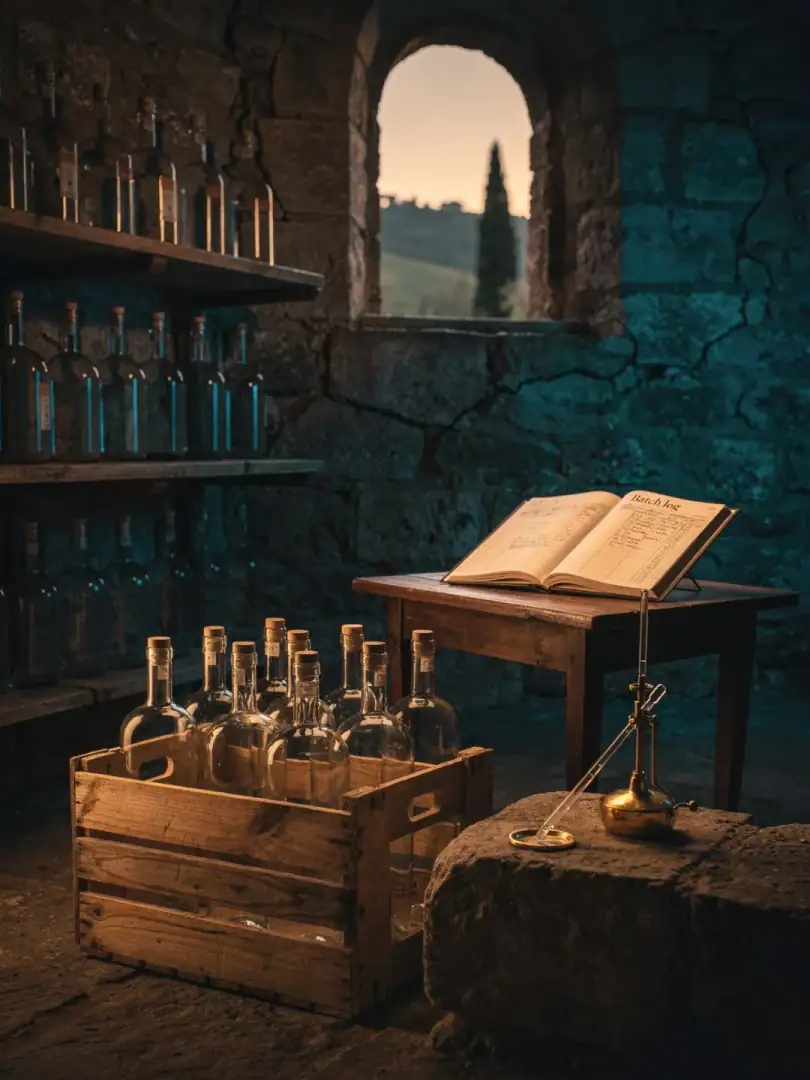
Tuscan London Gin
Style & Law
Anyone reading the term London Dry Gin might picture a city. Legally, it isn't one. Under EU Spirit Drinks Regulation 2019/787, "London Gin" is a protected process designation, not a geographical indication. It must be distilled from alcohol of agricultural origin. All flavor must come solely from re-distillation with natural botanicals. After that, only water may be added, no further alcohol, and no more than 0.1 grams of sugar per liter. That's why both Sabatini Gin from Cortona and Peter in Florence from Pelago can legally call themselves London Dry Gin, even though not a drop of either has ever seen London.
The basic rule for gin overall applies here too: at least 37.5% ABV, with juniper as the dominant flavor and everything else supporting. Both Tuscan gins exceed that minimum. Typical strengths in the category run between 40 and 43%.
Unlike Genever from the Netherlands or Belgium, there's no dedicated protected gin designation for Tuscany or Umbria. Genever is recognized as its own geographically protected juniper spirit category, with a minimum of 30% ABV. This region instead plays the role of supplier and interpreter, not protected origin, unlike, say, Gin de Mahón from the Balearic Islands or Vilnius Gin from Lithuania.
What the region brings instead is the raw material. Tuscan and Umbrian Apennine juniper is regarded by connoisseurs as especially aromatic, which is why distilleries outside Italy have sourced it for years. The two producers featured here flip that logic on its head, processing their own juniper right where it grows instead of exporting it.