Carter-Head and Copper
Distilling
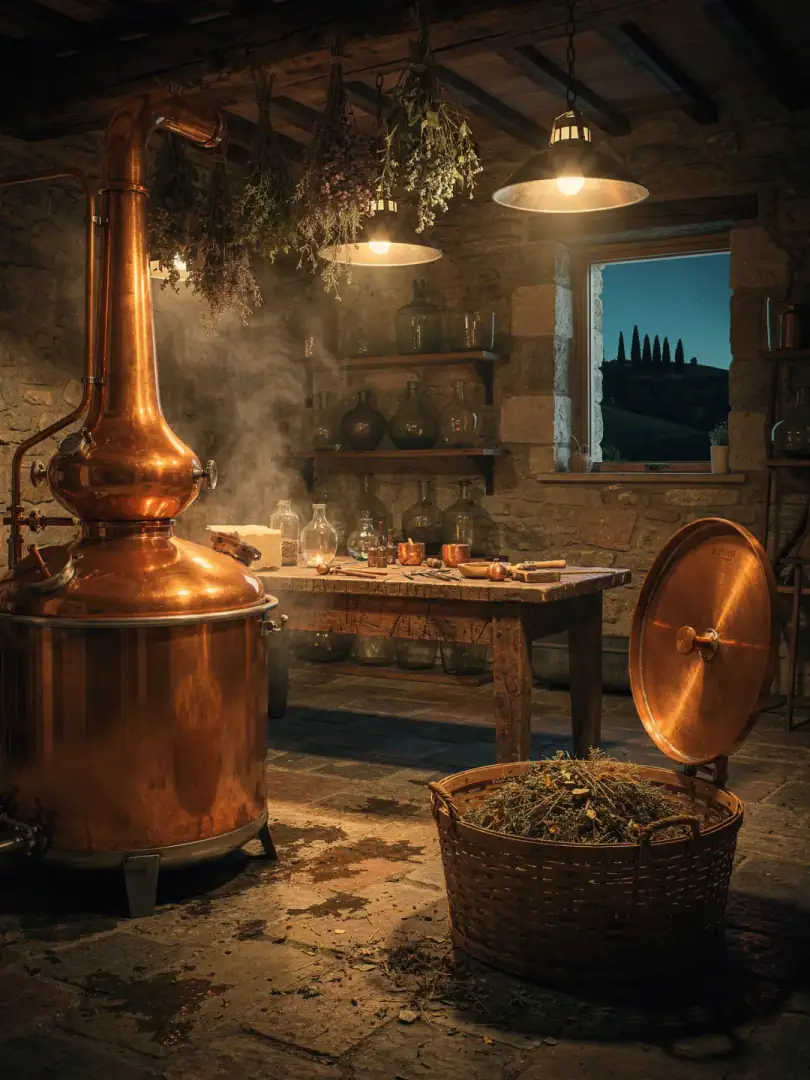
Both Tuscan gins start from neutral alcohol, in Italy often derived from wine or grain. In it, they macerate or vapor-infuse their botanicals in copper pot stills. Copper binds unwanted sulfur compounds that would otherwise leave a sharp, off-putting smell, making the resulting distillate smoother.
Peter in Florence in Pelago uses a carter-head still. Here the botanicals sit not in the alcohol itself, but in a vapor basket above the liquid. As the rising alcohol vapor passes through the basket, it draws out the light, floral aromas of Florentine iris, rose, and lavender, leaving behind the heavier, more resinous notes typical of a classic pot maceration. That explains this gin's distinctly floral character, reminiscent of orris root.
Sabatini Gin from Teccognano near Cortona, by contrast, follows the classic London Dry Gin method. All nine botanicals, from juniper to coriander to wild fennel, macerate together in the alcohol. They're then distilled in the same run, with no flavorings permitted afterward. That yields a denser, more herb-forward profile than the vapor-basket method.
Both distilleries work in small batches using traditional copper pot stills rather than the industrial columns that large-scale producers use for high-volume output. It costs time and limits quantity, but it gives the distillers the control to taste every batch individually and fine-tune it if needed before the gin is cut to drinking strength and bottled.