Gion Meets Dotonbori
Drinking Culture
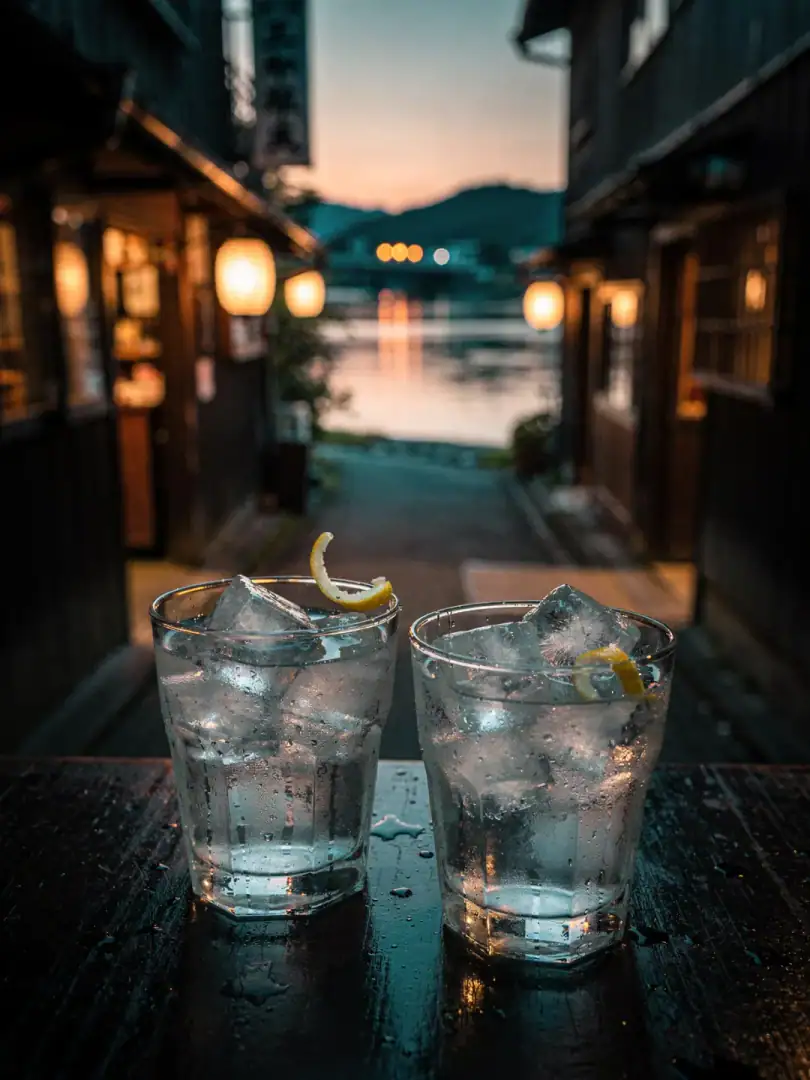
Japan's drinking culture is primarily one of whisky and sake. Still, gin has carved out a solid place for itself in recent years, mostly in the simplest of all drinks: the gin and tonic, often called "jin tonikku" here, served in slim highball glasses packed with ice.
In Kyoto's old town districts of Gion and Pontocho—narrow lanes lined with wooden facades along the Kamo River—small bars tuck away behind dark wood counters, where a bartender often serves just a handful of guests at a time. Ki No Bi is often served neat here with a large ice cube, so the delicate tea notes don't dilute too quickly.
Osaka is louder. Around Dotonbori, the canal lined with oversized neon signs, izakaya line up one after another—small pubs for beer, sake, and now cocktails too. As a mass-market product, Suntory Roku is far more widely available. You'll find it in standard gin and tonics as well as in highball variations with soda.
A Japanese gin and tonic often differs in the details from its European counterpart: plenty of clear, slow-melting ice, minimal stirring to keep the drink cold and clear, plus a restrained approach to garnish. Martinis made with Ki No Bi appear as house specials in some Kyoto cocktail bars, typically with dry vermouth and a whisper of yuzu peel.
Unlike London or Amsterdam, Kyoto and Osaka have no historic gin palaces or juniper festivals. The drinking culture here is younger and quieter, woven more deeply into existing bar and izakaya traditions than standing as a spectacle of its own.