Archipelago in a Glass
Botanicals
Juniper doesn't grow in the Philippines; the country lies too close to the equator for that. Ginebra San Miguel therefore buys its juniper berries dried from overseas. To compensate, the brand leans on citrus: Calamansi, a small green fruit that grows all over the country. It gives Ginebra its sharp, fresh edge.
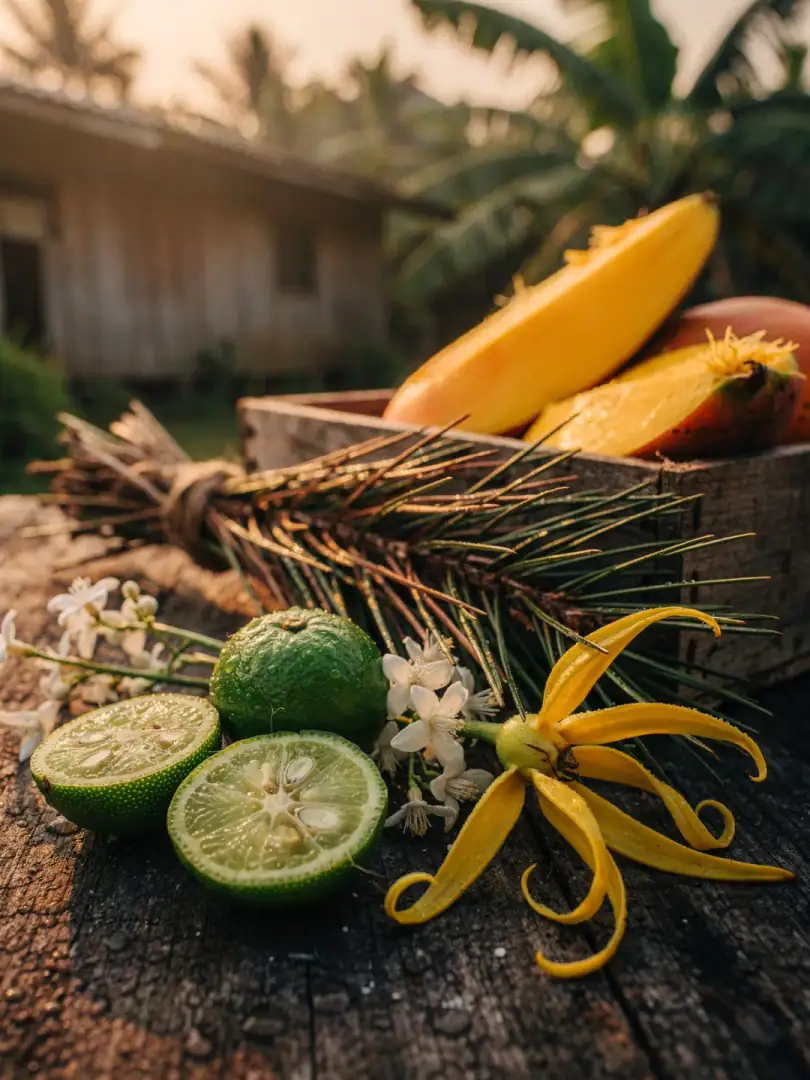
The young craft scene goes further still. Full Circle Craft Distillers from Calamba City blends 28 ingredients for its ARC Archipelago Botanical Gin. Twenty-two of these come from the Philippines itself: pomelo and oranges from the south, fresh mango from a family farm in Pangasinan. Added to that are Sampaguita and Ylang-Ylang, two flowers found in almost every Filipino garden.
Sampaguita is the national flower of the Philippines and smells sweet, a little like jasmine. It's traditionally strung into garlands and hung on statues of saints. In the gin, it lends a floral layer beneath the citrus top notes. Ylang-Ylang, a yellow flower from the Kananga tree, brings a heavier, almost oily fragrance by contrast. It has long been prized in perfumes from the region.
From the north comes Benguet pine, a conifer wood from the cool mountains of the Cordillera on Luzon. In the glass, it stands in for the missing juniper to some degree. Its resinous aroma recalls a pine forest, bringing a coolness to an otherwise tropically warm gin.
So in Manila, two botanical philosophies stand side by side. The old one builds a people's drink from a few affordable ingredients. The new one treats the entire archipelago as a spice rack.
Dark, mineral-rich soil formed from weathered volcanic rock, found in the Calamansi and mango groves of Laguna and Pangasinan.
The root: The citrus trees draw nutrients from it quickly and bear fruit several times a year.