Pasig and Monsoon
Water & Climate
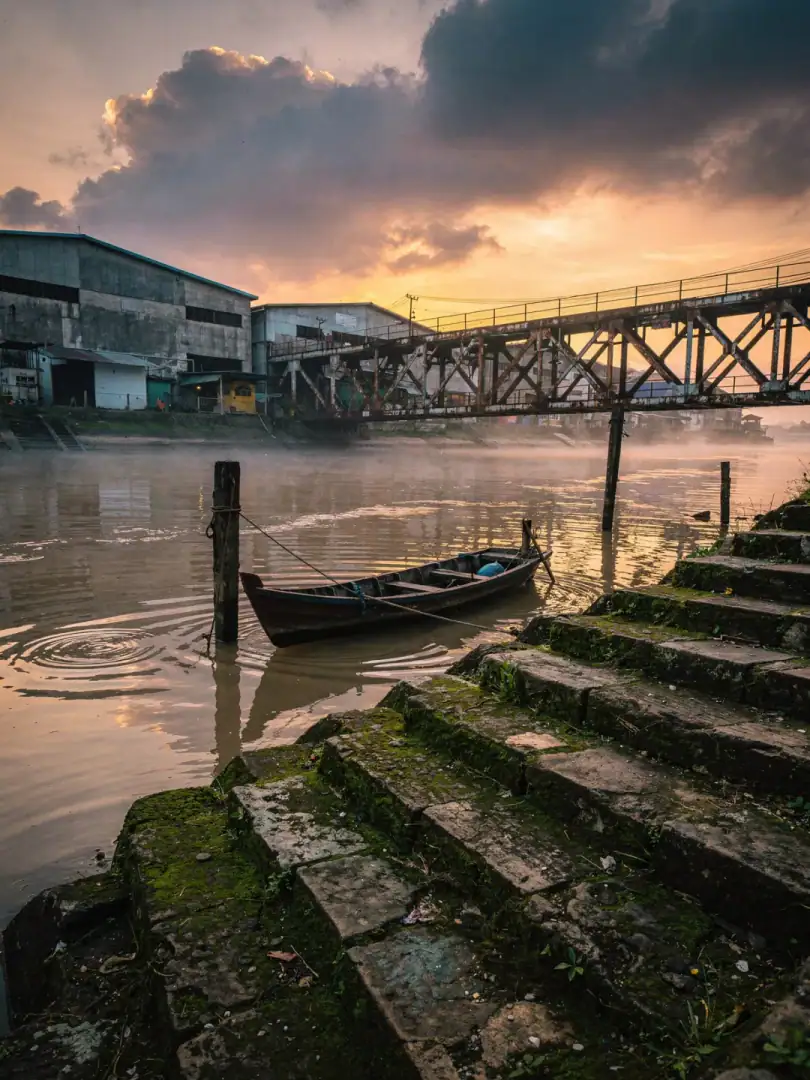
Manila sits at the mouth of the Pasig River. It connects Laguna de Bay in the east with Manila Bay in the west. For centuries, the river was the city's lifeline, carrying trading boats. Today it mainly carries ferries, and on bad days, the reputation of being one of the most polluted waterways in Southeast Asia.
For the city's distilleries, what matters less is the river itself than the groundwater and tap water of the plain it runs through. It's filtered and treated. Only then is it used to bring the high-proof raw spirit down to drinking strength. This is the step that turns sharp neutral alcohol into a drinkable gin like Ginebra San Miguel.
The climate is tropical and humid. A dry season runs from December to May. The rainy season lasts from June to November and often tips into heavy monsoon storms. For citrus fruits like Calamansi, this is exactly ideal: plenty of warmth, plenty of water, virtually no risk of frost all year round.
This humidity also shapes how gin is stored and drunk in Manila. Warmth and high humidity age aromas faster. That's why a bottle rarely stays in the cupboard for long. It gets opened, shared, and usually emptied the same evening, often right in the Quiapo district among neighbors.
Anyone talking about water in Manila is, in the end, almost always talking about weather too. The city lives by the rhythm of dry and rainy seasons. Gin belongs on the table in both: as a warming sip in the rain, and over plenty of ice in the heat.