Fish, Fire, Glass
Gin & Food
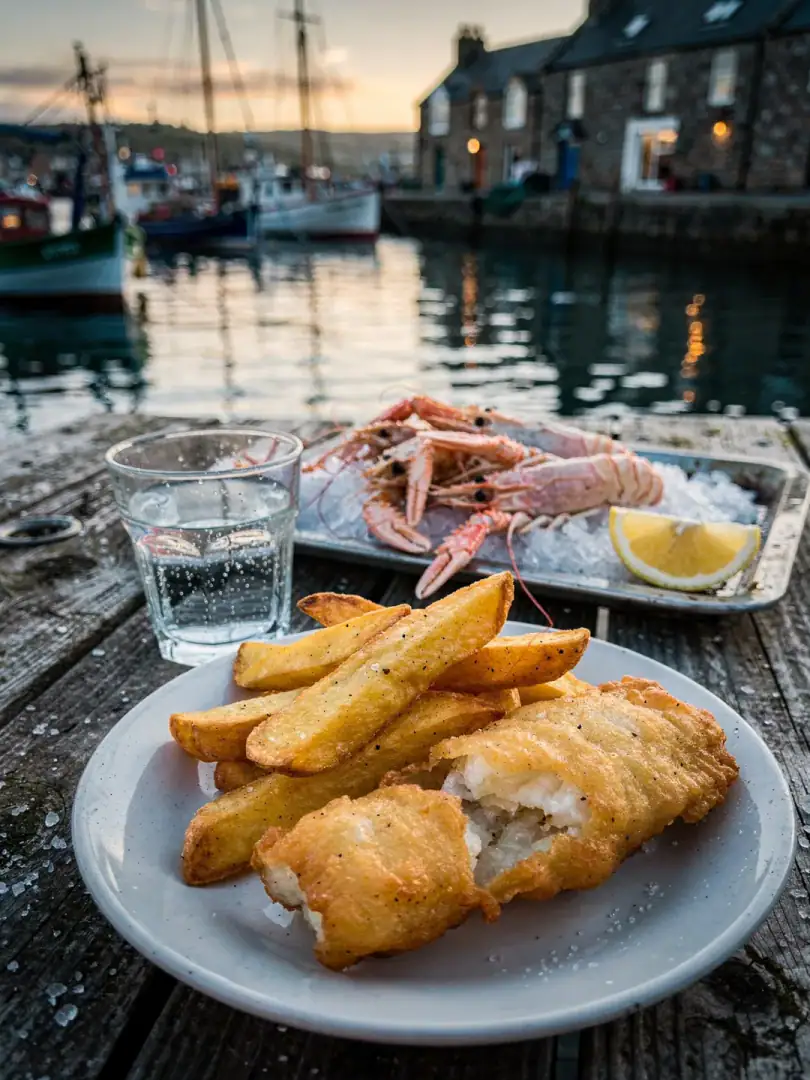
On the east coast of Fife, in the area known as the East Neuk, small harbor towns like Anstruther, Crail, and Pittenweem line up one after another. Fishing boats still sail out from there today. The catch consists mainly of langoustine, as Dublin Bay prawns are called here, and haddock. It's sold fresh at the harbors and fried up in the local pubs.
Anstruther is known for its fish and chips: crispy fried haddock with chips, traditionally doused generously with malt vinegar. As a flavor pairing, a gin with a clear citrus and juniper edge, like Tanqueray or Gordon's, suits it well. The acidity in the vinegar and the acidity in the gin pull in the same direction. Together, they cut through the greasy fried batter.
Langoustines from the Firth of Forth taste delicate and slightly sweet, almost floral in the aftertaste. Hendrick's, with its rose and cucumber, picks up exactly this note. The delicate fish isn't drowned out by too much juniper sharpness.
Smoked fish brings smoke and salt with it. In Scotland, it's traditionally made over an open fire or in small smokehouses. Against that, a more earthy gin has to hold its own. A gin with heather and milk thistle notes, like Edinburgh Gin, offers a more even match for this than a sharp, purely juniper-forward style would.
Anyone eating on a Fife harbor evening often sits just a few steps from the boat that brought in the fish that very same day.
Fish from the same sea, spirit distilled from the same fields: in Fife, kitchen and distillery are rarely more than an hour's drive apart.