Mediterranean Instead of London
Style & Regulation
A gin from Vilanova i la Geltrú can't be pigeonholed into any of the classic categories like London Dry or Plymouth. It is indeed produced as a Distilled Gin under EU Spirit Drinks Regulation (EU) 2019/787. All the botanicals are distilled together rather than merely added afterward. Flavor-wise, though, it doesn't aim for the citrus-and-juniper-forward sharpness of the London style.
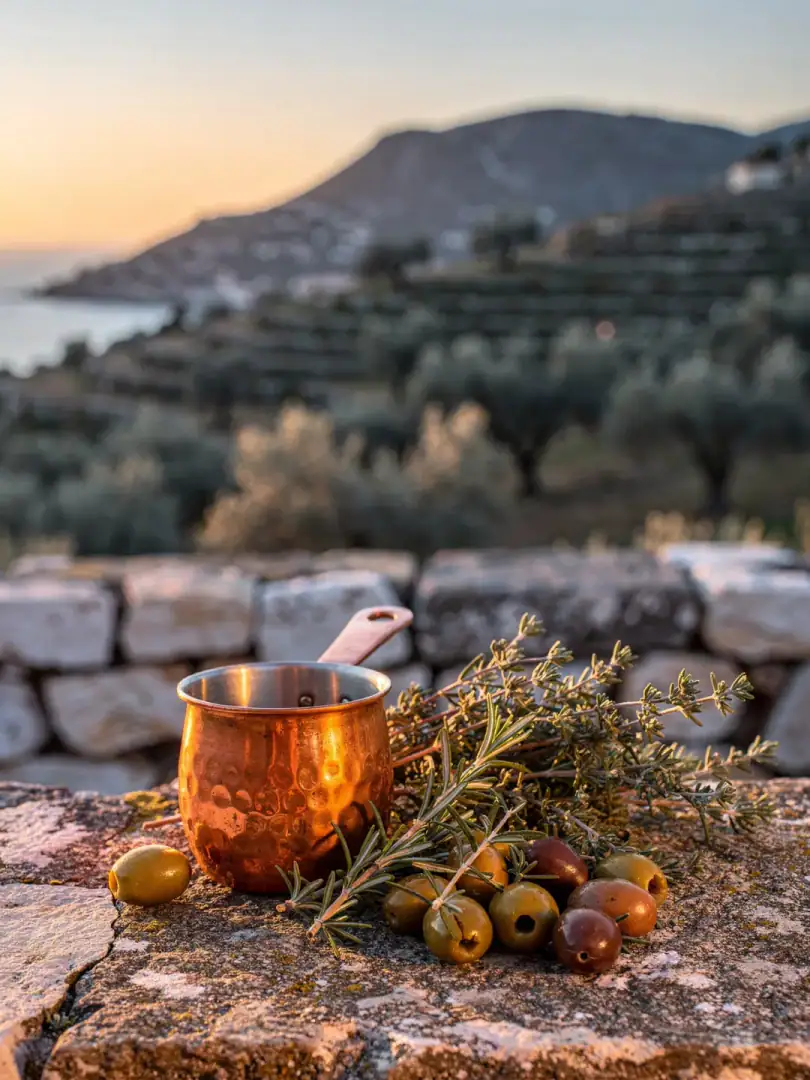
This newer category is usually called Contemporary Gin. It's a style with no fixed recipe, one that deliberately pushes certain botanicals to the front. For Gin Mare, that means olive and Mediterranean herbs dominate, while juniper remains audible but takes a back seat. This sets it fundamentally apart from a strictly juniper-forward spirit.
Legally, though, the same minimum applies across all of Europe. The regulation requires at least 37.5% ABV for "gin." For "Distilled Gin," all botanicals must additionally be distilled together with the alcohol. After that, only water, ethanol of the same quality, and at most coloring may be added. A gin from Vilanova i la Geltrú, distilled at 42.7% ABV, clearly meets this requirement.
Catalonia doesn't have a protected geographical indication for its gin, unlike "London Gin" or "Gin de Mahón" on the neighboring island of Menorca. Here it's the distillery's name that provides recognition, not a protected designation of origin. That holds true for many newer Spanish gins, most of which only emerged after the turn of the millennium.
The lack of a protected designation doesn't mean the style is arbitrary. The distillery holds itself to its own recipe. That includes sourcing olives and herbs from the Mediterranean, and it includes distilling each botanical separately. This self-imposed discipline, not any law, is what has kept the style from Vilanova i la Geltrú consistent over the years.