Juniper, Nothing Else
Botanicals
Most gins blend half a dozen botanicals: coriander, citrus peel, angelica root. Gin de Mahón does not. Under the regulation that protects its name, no botanical other than juniper berries may be used. No flavoring, no extract, no additive.
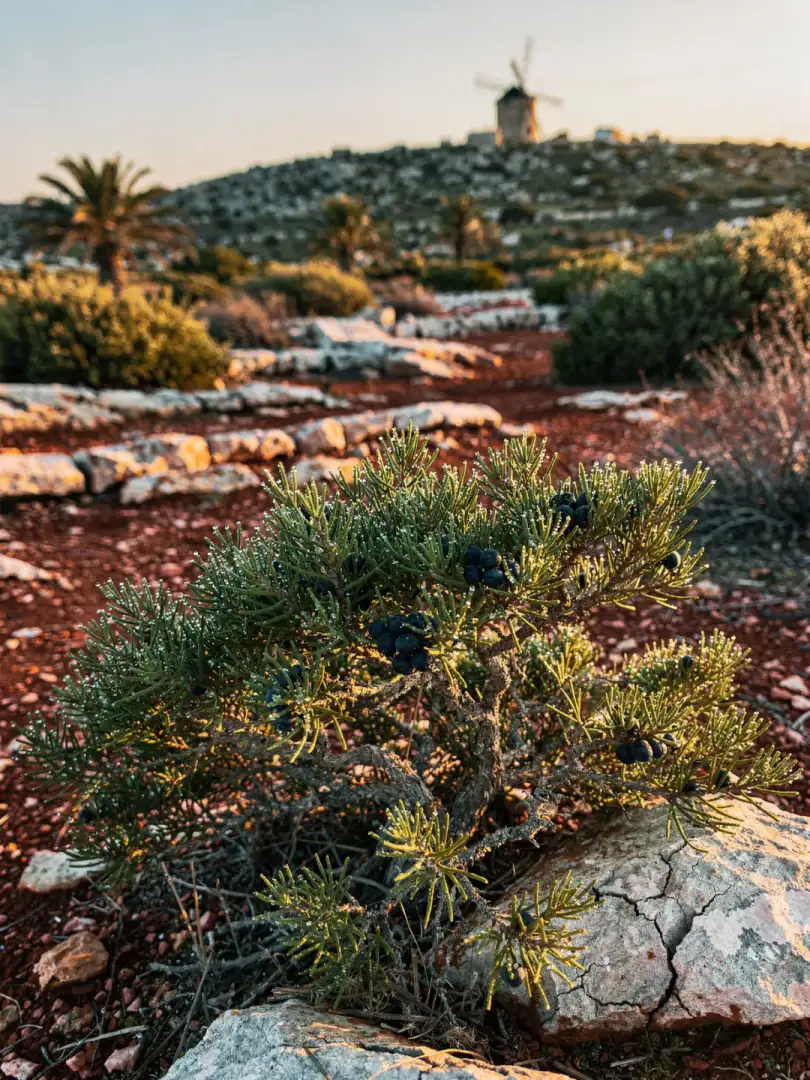
That makes the juniper itself the whole point. It grows wild on the island's dry limestone soils, in the scrubland known here as garriga, often standing among holm oaks and dwarf palms. The Tramuntana, the harsh north wind that sweeps the island, toughens the shrubs and concentrates the resin in the berries.
The ripe, dark blue berries are traditionally harvested by hand, usually in autumn once they've developed their full bitterness. Before going into the still, they macerate in alcohol, releasing their essential oils.
At the Xoriguer distillery in the port of Mahón, the Pons family reportedly holds back a secret selection of additional herbs, added before each distillation away from public view. This can't be verified—it remains a story told by the house itself.
In terms of flavor, this means: where a London Dry leans on citrus and root spices, Gin de Mahón stays resinous. Piney, almost needle-like, entirely focused on pure juniper.
This makes Gin de Mahón one of the few juniper spirits in Europe that could be named after the single botanical it actually contains. Other regions need a dozen ingredients for their character; Menorca gets by with just one.
A narrow, stony layer of weathered limestone with little organic matter.
The root: The roots of the juniper shrubs stay shallow, since few nutrients await further down.