Copper from Salt River
Distilling
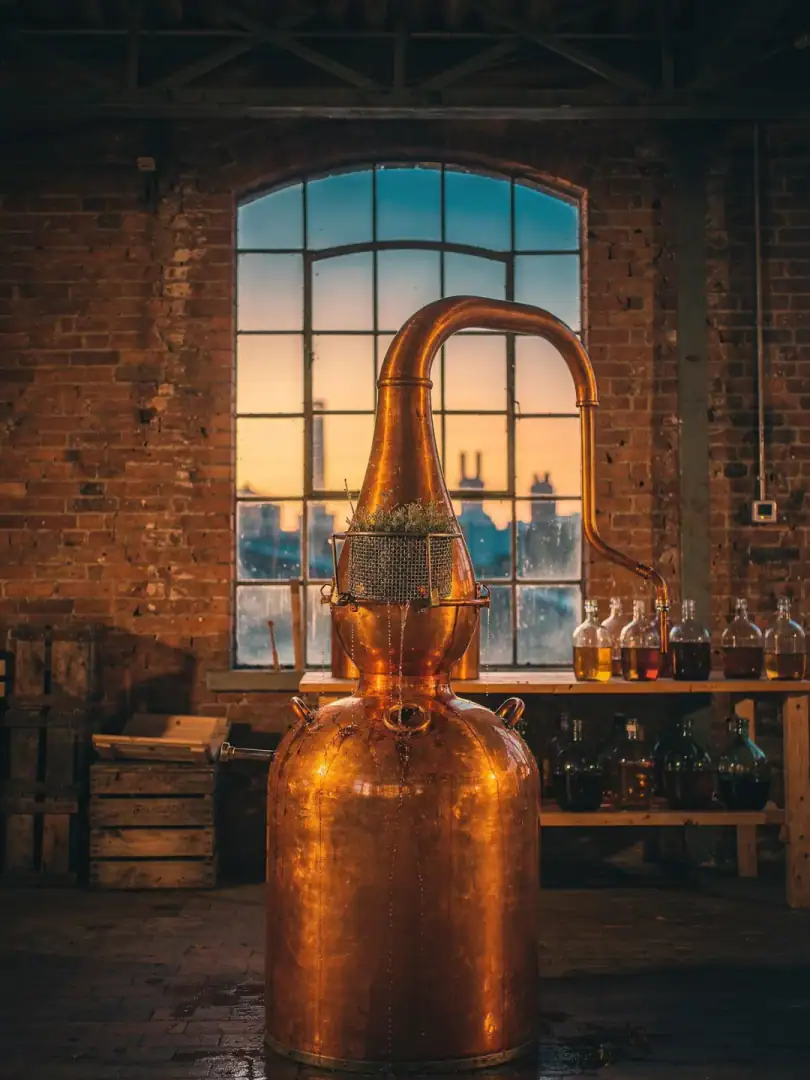
In Salt River stand Hope Distillery's two copper stills, numbers 001 and 002. They sit inside a once-derelict warehouse that the couple, Beard and Lisk, renovated themselves. Copper binds sulfurous compounds during distillation that would otherwise leave a sharp, pungent smell. This makes the spirit smoother.
The base is usually neutral grain alcohol bought in from elsewhere, much like the juniper. It's combined with the botanicals in water and macerated before distillation begins. This lets the essential oils from buchu, rooibos, and honeybush start releasing before the heat is applied.
Some distilleries also use a vapor basket, a mesh insert positioned above the liquid, through which alcohol vapor passes as it rises. Delicate botanicals like flower parts sit there instead of in the simmering mash. Their aroma stays finer and less altered by heat than with direct maceration.
The raw spirit comes off the still at well over 60 percent ABV and is only afterward brought down to drinking strength with water. Most gins from the region land between 40 and 43 percent ABV. Some of Hope Distillery's contract clients have their own recipes distilled there rather than building their own setup.
This practice of distilling other brands' recipes under contract has become common at the Cape. The number of new gin labels grew faster than the number of new stills. As a result, several young brands share the same copper still, without their gins tasting alike.