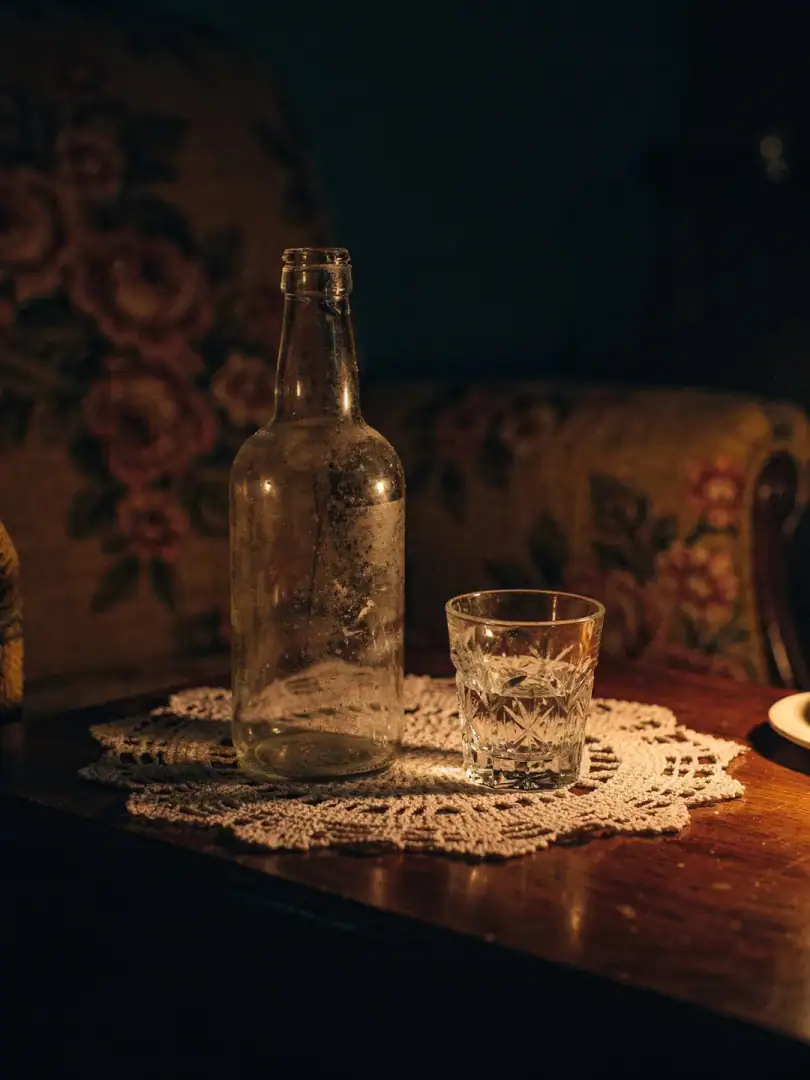
Grandma's drink
The decline: gin in the vodka decades
Between the 1960s and 1980s, gin lost its shine. Vodka conquered bars around the world because it blended into nearly any cocktail without imposing its own flavor, and to many young drinkers, gin suddenly seemed old-fashioned.
Vodka conquers the Western bar
Vodka was barely known in the US before the Second World War, but that changed rapidly after 1945. The Smirnoff brand, originally of Russian origin, was relaunched with a new marketing angle in America. Its slogan promised that it had no smell and no taste, so it would blend with any mixer. Drinks like the Moscow Mule, and later the Vodka Martini, capitalized on exactly this quality. Vodka took over the role of the neutral base spirit in cocktails that had previously been mixed almost automatically with gin.
For a generation of postwar bartenders and drinkers, this neutrality felt modern and uncomplicated. Gin's pronounced juniper character was suddenly seen as quirky, even old-fashioned. During the 1960s and 1970s, vodka pushed gin out of many of the most popular cocktails across the Western world. Spirits producers responded by cutting back investment in gin brands, since money was easier to make elsewhere.
The trend toward the Vodka Martini in film and advertising, notably in the James Bond movies starting in the 1960s, also reinforced the image of a modern, cool drink free of gin's old-fashioned juniper note. In the novels, Bond originally ordered his Martini with gin. But in many later film adaptations, vodka took center stage instead. This detail shows just how strongly pop culture can shape the reputation of an entire spirits category, far beyond what actual sales figures might suggest.
How gin became a drink for the grandparents' generation
Gin remained present in classic British households and in tradition-steeped clubs, but its standing among younger drinkers declined sharply. In many countries, the gin and tonic became a drink associated with one's grandparents. People pictured stately living rooms and afternoon sherry, not trendy bars. Big brands like Gordon's or Beefeater kept selling solid volumes. But genuine innovation in the gin category was absent for decades, while other spirits categories experimented with new styles.
Industry consolidation reinforced this stagnation. Major heritage brands changed hands repeatedly during this period, until the 1997 merger of British companies Guinness and Grand Metropolitan created the spirits giant Diageo. Diageo brought brands like Gordon's, Tanqueray, and Gilbey's under one roof and managed them more as reliable cash cows than as sources of new ideas. Innovation was hard to justify within such a corporation as long as existing brands delivered stable revenue. Small, adventurous competitors were almost entirely absent, since Britain's distilling license requirements essentially blocked new ventures.
An additional problem was Britain's strict distilling license system. Anyone wanting to open a new distillery in Britain with a classic copper pot still had to clear enormous bureaucratic hurdles. For small, independent founders, these were nearly impossible to overcome. As a result, the number of new gin producers stayed practically at zero for decades. In other countries, at least a few new whisky or vodka distilleries emerged here and there. By comparison, gin seemed like a frozen, historical category with no future.
Rock bottom before the turnaround
By the 1980s, gin's reputation had hit rock bottom. Surveys and sales figures from that period in Britain and the US showed a noticeably aging customer base. Young adults were turning instead to vodka, rum, or, later, tequila. Gin advertising relied almost exclusively on conservative, traditional imagery of country houses and gentlemen's clubs, which alienated young audiences rather than drawing them in.
Yet it was precisely this stagnation that laid the groundwork for a fresh start. Because so little had changed in the market for so long, pent-up demand for fresh ideas was substantial once the legal hurdles for new distilleries finally eased. How this low point turned into one of the most striking spirits revivals of recent history is shown in the next stop.