The craft wave since 2009
The gin renaissance: craft gin conquers the world
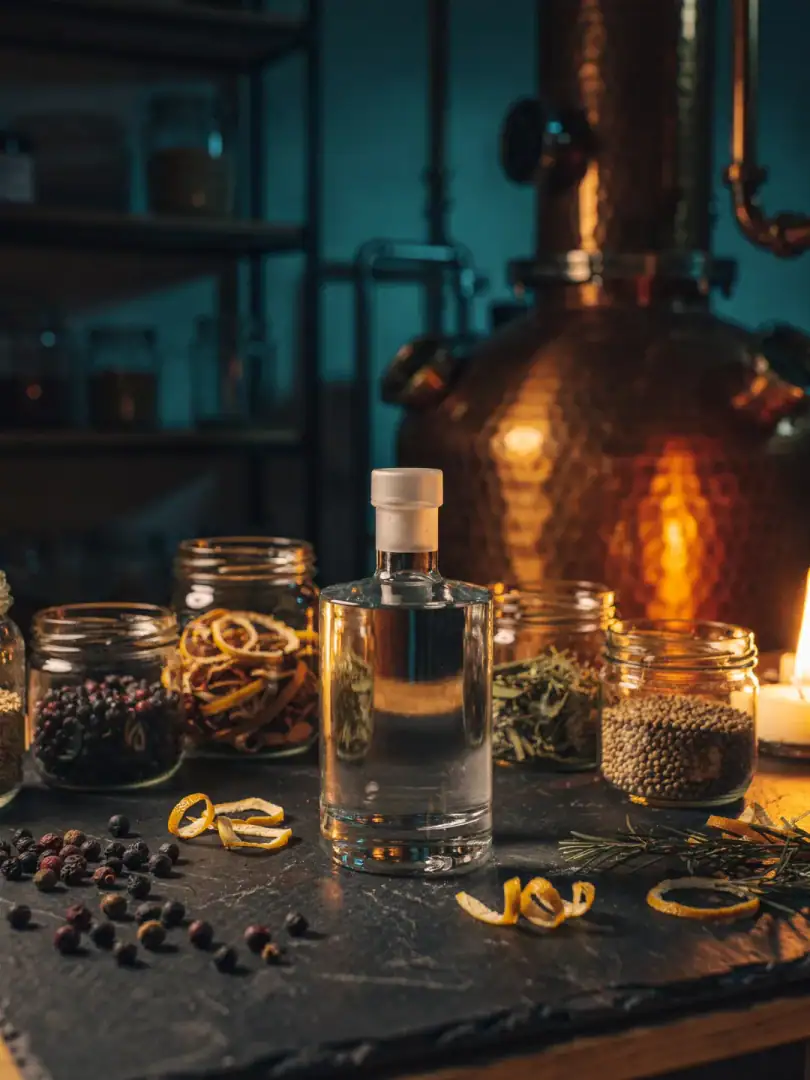
In 2009, a pause of nearly two hundred years came to an end: for the first time since 1820, a new distillery with a classic copper pot still was allowed to open in London. From there, a craft gin wave rolled out across the entire world.
Sipsmith and the new distilling license
The founders of Sipsmith spent years fighting British regulations. These effectively set minimum still-size requirements that were out of reach for small distilleries. Only after intensive lobbying did they manage, in 2009, to get the rules relaxed. They thereby became the first independent distillery in almost two hundred years to put a copper pot still into operation in Greater London. They named the still Prudence, built by the storied German company Christian Carl. From there on, they produced a classic London Dry Gin, distilled under their own name.
Sipsmith's success acted like a starting gun. Within a few years, hundreds of new small distilleries opened across Britain, many of them focused exclusively on gin. Part of the reason was that, unlike whisky, gin can be sold immediately without years of cask aging. This quality made gin especially attractive to founders. A new recipe could go from test distillate to ready-to-sell bottle within weeks, while a new whisky only started generating revenue after years in the cask.
The numbers reveal the scale of this wave clearly. Where Britain counted only a handful of gin distilleries around the turn of the millennium, industry associations report that several hundred new operations sprang up across the country in the years following Sipsmith. Similar movements emerged almost simultaneously in other countries. Small urban distilleries appeared in the Netherlands and France, and new brands launched in the US and Australia. Nearly all these new ventures shared one trait: they marketed a tellable story behind the bottle, whether tied to a specific region or an unusual botanical. Established companies took notice too, buying up successful craft brands to get a piece of the trend.
Hendrick's and Monkey 47 change the flavor
Ten years before Sipsmith, the Scottish brand Hendrick's had already shown in 1999 that unconventional marketing could reach entirely new groups of buyers. Unusual ingredients like cucumber and rose petals made the difference. Hendrick's deliberately broke with the classic, heavily juniper-forward London Dry style. The brand proved that gin could taste soft, floral, and surprising without abandoning its roots.
In Germany, the brand Monkey 47 from the Black Forest, founded in 2009, gave another push to the worldwide craft movement. With more than forty botanicals, including regional lingonberries, Monkey 47 positioned itself as a complex, high-priced gin. The brand proved that serious, internationally regarded gin could emerge outside Britain too. Together with hundreds of other new brands from around the world, this craft wave changed what customers expected from a bottle of gin altogether. Uniformity was no longer the goal; a distinctive, often regional signature was what people wanted.
Why gin could reinvent itself so quickly
The decisive advantage gin holds over whisky or rum is that it requires no aging period. A new single malt can't be sold until it has spent years in an oak cask. A newly developed gin, by contrast, can go from the first test batch to a finished bottle on the shelf within a few weeks. This short development time let hundreds of new ventures experiment quickly and adjust their recipes. They could respond to customer feedback without having to wait years for a return on their investment.
At the same time, bar culture was shifting worldwide. Cocktails experienced a broad revival starting in the 2000s. Gin benefited doubly from this, since it worked equally well classically in the Martini and in the elaborately garnished modern gin and tonic. Within a few years, a once-frozen category had become perhaps the most dynamic spirit on the market. Its effects still shape the global gin market of today.