Glass, Ice, Garnish
The Perfect Gin & Tonic
A great Gin & Tonic depends just as much on the glass, the ice and the garnish as on the choice of gin itself. Even small decisions in preparation change how cold, how diluted and how aromatic the finished drink turns out in the glass.
Which glass suits a Gin & Tonic?
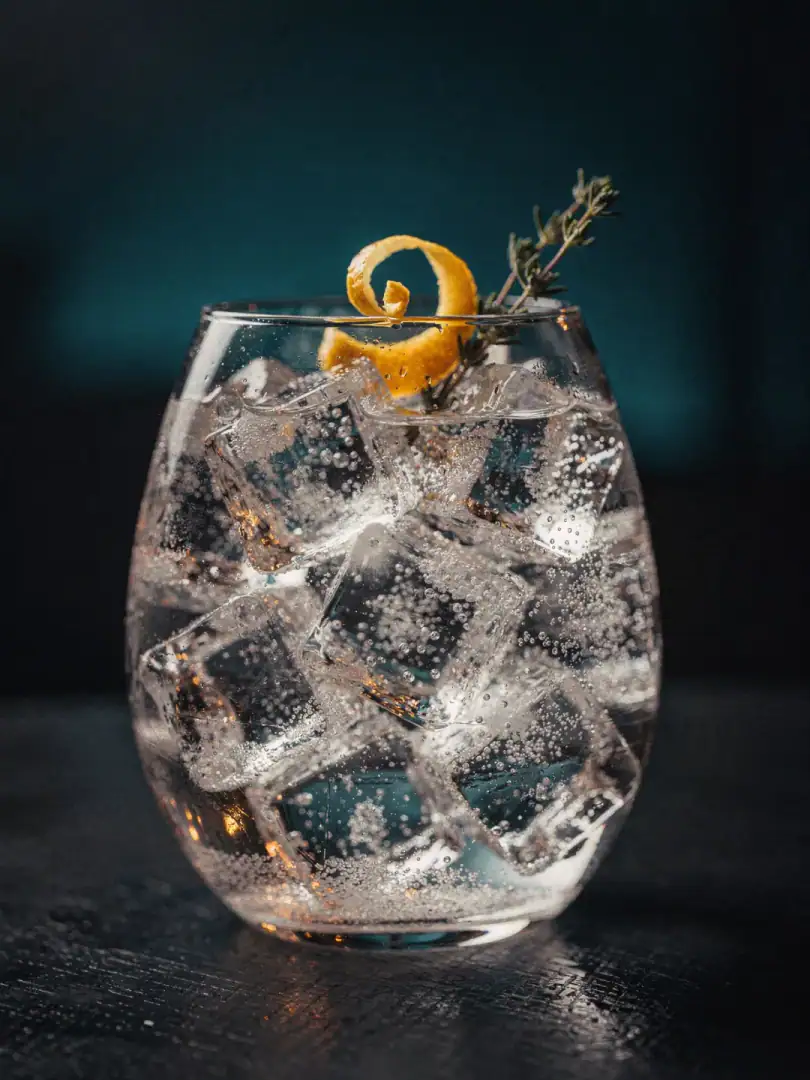
A large, rounded glass, often called a balloon glass or copa glass, concentrates the gin's aromas at its wide opening, making them more noticeable while drinking. These glasses also offer plenty of room for ice, ensuring even, long-lasting cooling without the need for constant refills.
Alongside it, the classic tall highball glass remains a solid choice, especially when simplicity and practicality are the priority. It holds less ice than a balloon glass but still cools reliably, as long as it's generously filled. In the end, which glass takes precedence is also a matter of occasion and personal taste.
Why does the amount of ice matter so much?
Large, clear ice cubes melt more slowly than small, chipped pieces, and dilute the drink significantly less as a result. A glass only half-filled with ice cools less effectively and melts faster, because the remaining liquid stays warmer and attacks the ice more aggressively.
So the basic rule is: fill the glass generously with ice before adding the gin and tonic, rather than topping up with individual cubes later. This keeps the temperature stable throughout the drinking time, so the Gin & Tonic doesn't lose its chill and sparkle after just a few minutes.
What ratio and garnish work best?
As a rule of thumb, the tonic water should take up noticeably more space in the glass than the gin, so that the carbonation and bitterness of the tonic set the tone while the gin plays a supporting aromatic role. When pouring, it helps to let the tonic run gently down the side over the ice rather than pouring it in forcefully, to preserve as much carbonation as possible.
The garnish should match the botanicals of the particular gin rather than being chosen at random: a citrus peel emphasizes citrus-forward gins, a cucumber slice suits floral or mild recipes, and a sprig of rosemary or thyme highlights herbal gins. This makes the garnish the final — but by no means unimportant — building block of the finished drink. Quantity matters too: a single, cleanly cut strip of peel often looks more elegant than several carelessly tossed-in pieces.
What mistakes commonly happen when mixing?
A common mistake is using too little ice, since this leaves the drink insufficiently chilled and causes it to become watered down faster rather than staying fresh. Another mistake is stirring or swirling too vigorously, which causes the tonic's carbonation to escape prematurely, leaving the drink flat instead of sparkling.
An overly generous garnish can also overpower the gin if herbs or fruit slices are added in large quantities rather than used sparingly. Knowing these simple pitfalls makes it easy to get close to a well-balanced, sparkling Gin & Tonic with little effort. The temperature of the ingredients also plays a role: a warm gin or a room-temperature tonic will melt the ice much faster than if both ingredients go into the glass already well chilled. That's why it's worth putting the gin and tonic in the fridge briefly before mixing, rather than opening both straight from a warm kitchen counter. The glass itself should also be pre-chilled, since a warm glass heats the drink from the outside and accelerates ice melt even further. Paying attention to these small details results in a Gin & Tonic that stays noticeably colder and less diluted throughout the drinking time than one made with less care.