Aging in the Barrel
Aged Gin
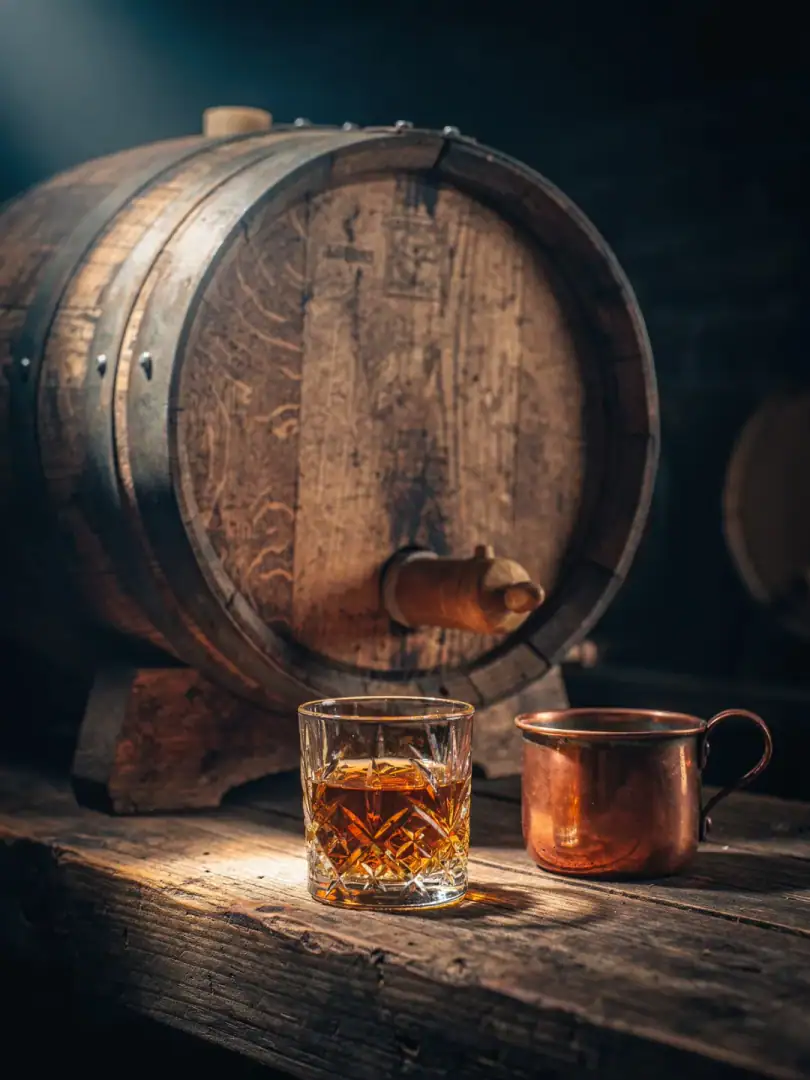
Aged Gin spends time in a wooden cask, often a used whisky or sherry barrel. This gives it color and an entirely new flavor.
What Is Aged Gin?
Aged Gin, often sold as "Barrel Aged Gin" or "Reserve", starts out as ordinary gin that, after distillation, spends weeks to years in wooden casks instead of going straight into bottles. Distilleries often use used casks from whisky, sherry, or wine production for this, less often fresh oak. During aging, the gin draws color and flavor compounds from the wood and from remnants of the barrel's previous contents.
Legally, aged gin remains gin as long as it still clearly tastes of juniper and meets the remaining requirements of the EU spirits regulation. Only the strictest subcategory, London Gin, prohibits any addition of color after distillation, which is why explicitly colored or wood-aged gin is usually no longer allowed to carry that designation.
Some distilleries deliberately use unusual casks for aging, such as former rum barrels or small, new casks made from regional wood, to create their own distinctive flavor signature. Cask size plays a role here too: in small casks, the gin has more contact with the wood surface relative to the volume of liquid and therefore matures faster than in large, traditional casks.
How Does Cask Aging Change the Flavor?
The wood contributes vanilla, caramel, and spice notes, along with light toasted notes and sometimes a hint of dried fruit if sherry was previously stored in the cask. The resinous sharpness of juniper in a fresh gin becomes rounder after aging, as the cask flavors merge with the botanicals. The gin doesn't lose its basic structure in the process, but gains an additional, often warm layer reminiscent of mild whisky or rum.
For tasters, this means an aged gin rarely tastes purely of juniper and citrus anymore, but rather of an interplay between botanicals and cask wood. Anyone who enjoys both will find in this style a bridge between the world of gin and the world of aged brown spirits.
The exact aging duration strongly influences the result. Just a few weeks in the cask are enough to produce initial changes in color and aroma, while several months or years can bring the gin much closer to a mild whisky. Some distilleries taste regularly throughout the process to find the exact point where juniper and cask wood complement each other best, before the wood completely overwhelms the botanicals.
Color as a Telltale Sign
The most striking change is the color: instead of staying clear, aged gin usually turns straw yellow to amber, depending on the type of cask and aging time. This color genuinely comes from the wood and isn't an additive, unlike some artificially colored products. Anyone spotting a bottle on the shelf can therefore often recognize an aged gin just by looking through the glass.
Historically, unaged, clear gin was long the exception, since spirits were often stored and transported in wooden casks anyway before modern refrigeration and filtration technology existed. Today's cask aging picks up on this older practice, though it only emerged as its own marketing term with the craft-driven gin boom of the 2010s, as distilleries looked for new ways to stand out from the broad range of London Dry offerings.
For serving at the bar, the color also brings a practical limitation: a classic gin and tonic with plenty of tonic water and ice often lets the subtle cask notes get lost. Aged gin is therefore better suited to being served neat, over a large ice cube, or in stirred cocktails with little added liquid, where its additional aromas can actually shine through. This way, the true purpose of cask aging is preserved, rather than getting lost again in a long, heavily diluted long drink. A small glass is all it takes.