Copper in the Hangar
Distilling
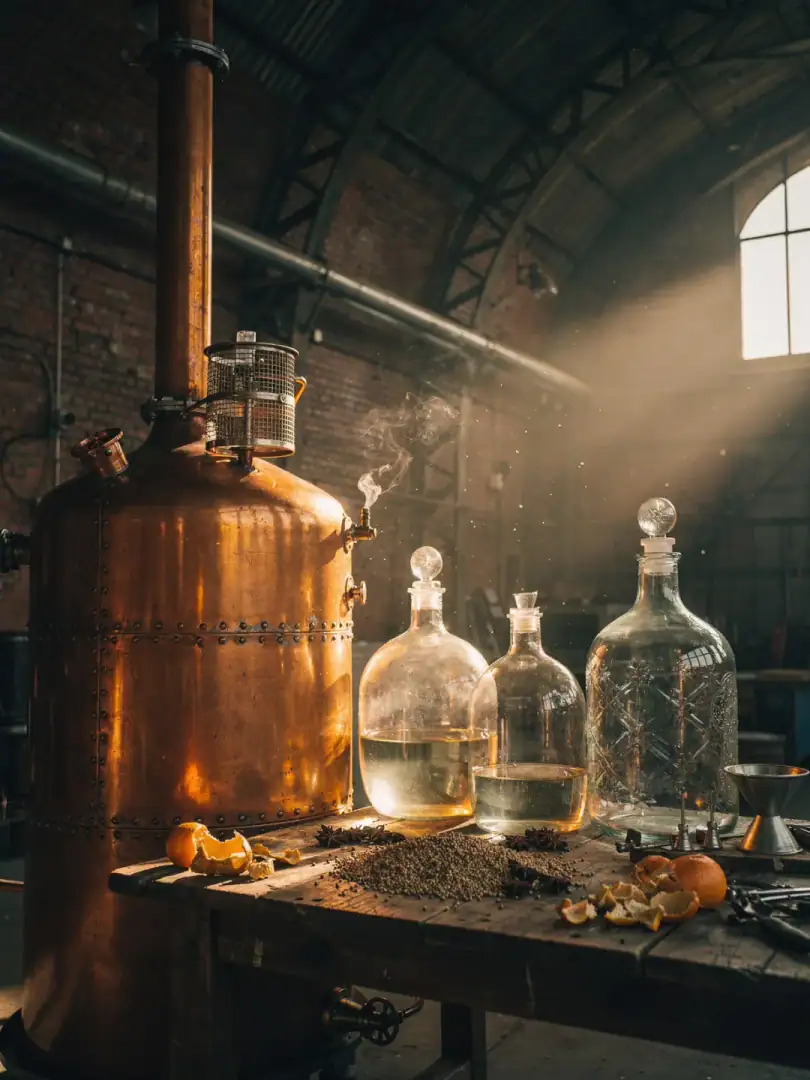
St. George Spirits distills its gin in a copper pot still with a capacity of around 1,500 liters. The still stands in the same hangar in Alameda where the distillery began in 1982. Copper binds unwanted sulfur compounds during distillation, making the spirit rounder and cleaner. A pure stainless steel still doesn't offer this effect in the same way.
The base is usually neutral grain spirit, which the distillery buys in ready-made rather than distilling itself. This has been common practice among Californian, and indeed almost all American, gin makers for decades. With Dry Rye, however, a rye spirit distilled in-house forms the entire base. This means the spicy, slightly bready rye note is already present in the finished spirit before the botanicals even come into play.
For Terroir Gin, St. George Spirits works with three separate methods at once. Douglas fir and coastal sage are each distilled separately in a smaller still, one at a time. This way, the fluctuating strength of a single year's harvest doesn't carry over to the entire batch. Fresh bay laurel and juniper, meanwhile, hang in a vapor basket above the boiling alcohol. There, only their vapor picks up the aromas, not the liquid itself. The remaining botanicals, including wok-toasted coriander, macerate directly in the mash at the bottom of the still.
These three separately obtained streams are only combined right at the end. In the trade, this process is called multi-shot distillation, as opposed to the simpler one-shot method, where all botanicals sit together in the same still from the start. This means multi-shot distillation allows each individual ingredient to be controlled precisely. Just a few buildings away, Hangar 1 in Alameda makes vodka, not gin, but on the same former naval grounds.