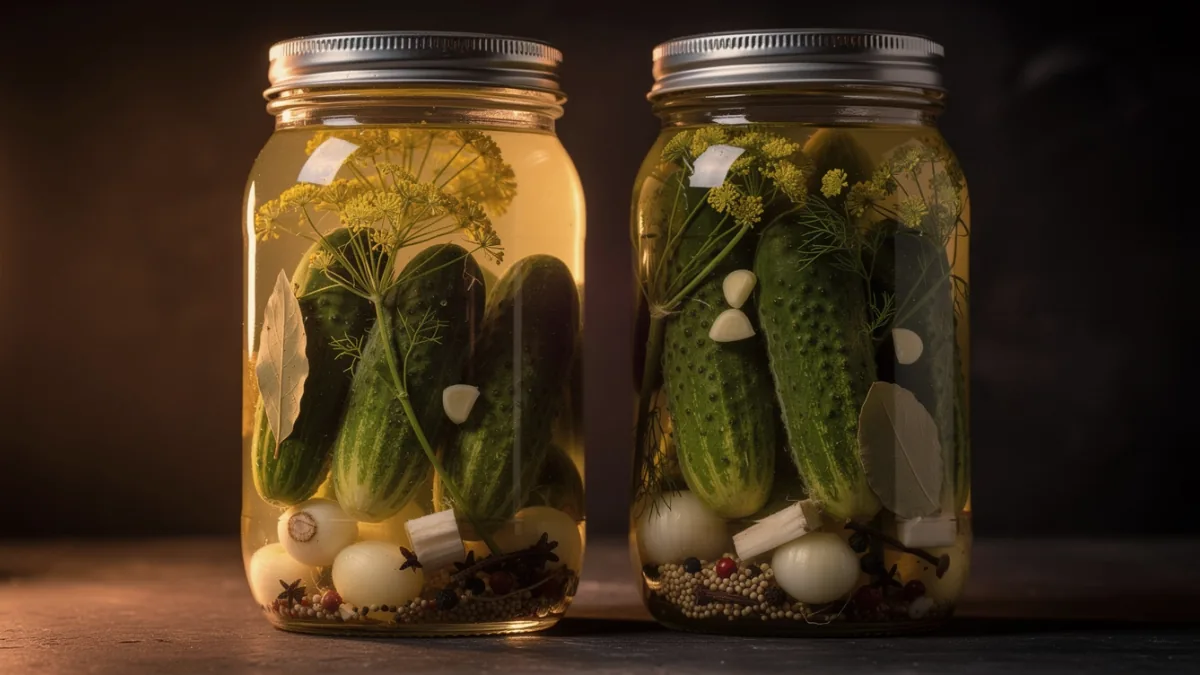
Preparation
- Wash the cucumbers, trim the ends and leave them overnight in a bowl of cold salted water. This keeps them crunchy later.
- The next day, rinse the cucumbers and drain them. Wash two screw-top jars (1 litre each) and their lids thoroughly and sterilise them in boiling water for about 10 minutes.
- Divide the dill, garlic, bay leaves, pepper, mustard seeds, allspice, juniper, pearl onions and horseradish between the jars. Pack the cucumbers in upright and tightly.
- Bring the water, vinegar, salt and sugar to the boil and pour the boiling brine over the cucumbers until everything is covered to about 1 cm below the rim.
- Screw on the lids but do not tighten fully, so air can escape. Stand the jars on a rack in a large pan and top up with hot water until they are covered by 2 to 5 cm. Boil for 15 minutes.
- Remove the jars with a jar lifter or cloth and leave them undisturbed at room temperature for 12 to 24 hours. Then check that the lid is firm in the middle and no longer gives; put any jars that have not sealed in the fridge and use them up within 3 months.
Drink with it
Vodka · excellent match
Clear vodka, neat and ice cold, with the gherkin as a bite afterwards
The salt and acidity of the gherkin make the vodka seem rounder and freshen the mouth for the next sip, the classic of Eastern European tables.
What Is Vodka? Raw Materials, Flavor, and CocktailsPale lager · good match
Pale lager or Pils, ice cold
Light malt sweetness and carbonation catch the salt and vinegar of the gherkin while the beer stays fresh.
Pils or Helles: What's the Difference?Sour beer · good match
Gose
The salt and acidity of the Gose mirror the flavours of the gherkin, a deliberate aroma bridge.
What is sour beer? Recognizing intentional acidity