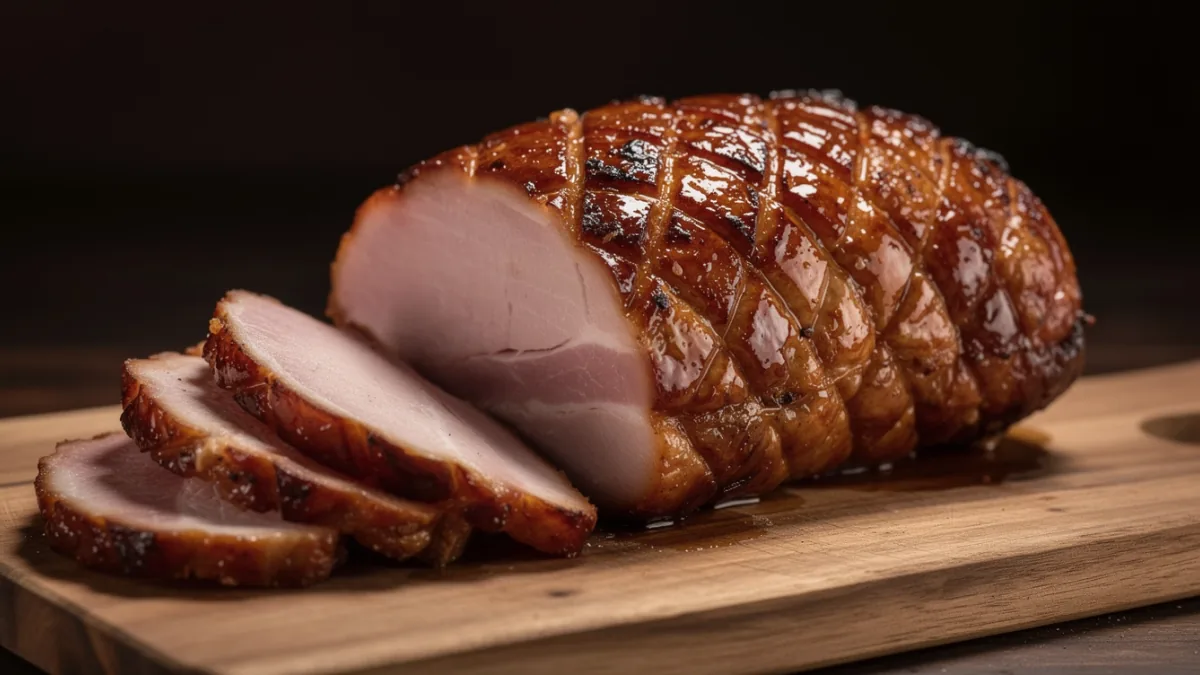
Preparation
- Put the ham in a large, deep pot, add the herb bundle, onion, carrot, celery, peppercorns and cloves and cover everything with cold water.
- Bring to the boil, put the lid on and simmer the ham gently over a low heat for about 45 minutes (for 2.5 kg the source recipe allows 1 hour 15 minutes); then switch off the heat and leave the ham in the liquid for about 20 minutes.
- Lift the ham out of the liquid (the liquid makes a good stock) and leave to cool until you can handle it.
- Peel off the thick rind so the layer of fat is exposed, and score the fat in a diamond pattern with a sharp knife.
- Preheat the oven to 200 °C conventional (180 °C fan). Mix the mustard, honey and brown sugar.
- Put the ham on a baking tray lined with foil, brush on half the glaze generously and bake for 15 minutes.
- Apply the remaining glaze and bake for a further 20 to 30 minutes until the surface is sticky and dark with caramel; the core temperature should reach about 65 °C.
- Leave the ham to rest for 15 minutes and carve into thick slices.
Drink with it
Mellow whisky · excellent match
Bourbon or mild Irish whiskey, neat or with a few drops of water
Vanilla, honey and caramel from the new oak cask pick up the caramelised honey and mustard crust, and the sweetness catches the salt of the cured meat.
Whisky with food: cheese, chocolate, and savory dishesWhite wine · excellent match
Riesling Kabinett or Spätlese, off-dry
Residual sugar mirrors the honey glaze and the high acidity holds up against the salt and fat of the cured ham; this is the classic wine pairing for glazed ham.
Which wine pairs with food? A simple approach to choosingAged rum · good match
Aged rum over one large ice cube
Toffee and vanilla notes from cask ageing mirror the brown sugar in the glaze.
Drinking rum neat: how to get to know a bottlingRosé · good match
Dry rosé
Fresh fruit and acidity refresh against the salty ham.
Wheat beer · good match
Hefeweizen
Banana and clove in the wheat beer pick up the clove in the poaching liquid and the sweetness of the glaze.
Wheat Beer: Where Do Banana and Clove Come From?