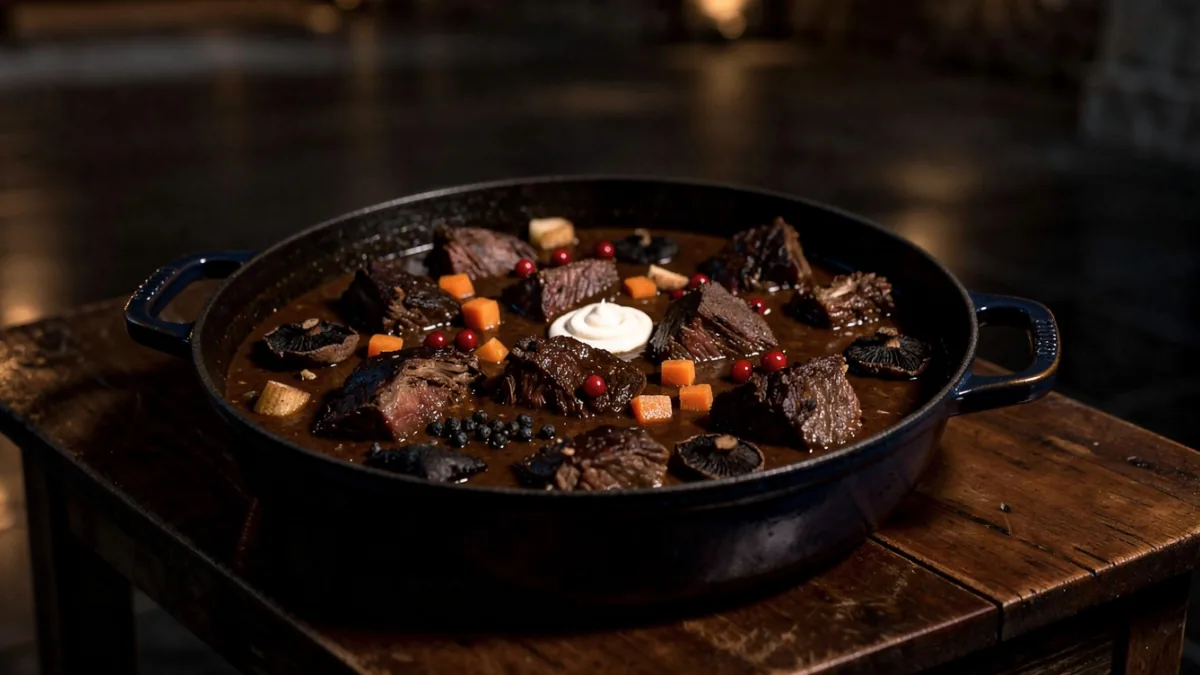
Preparation
- Soak the porcini in the cold water for 1 hour, then squeeze out and chop. Keep the soaking water.
- Drain the meat and pat dry. Heat the clarified butter in a casserole and sear the goulash meat in batches, then take it out.
- Fry the onions, carrot, celeriac and porcini in the casserole and roast the tomato purée briefly with them. Deglaze with half of the red wine and game stock and return the meat. Season with salt and pepper.
- Add the remaining red wine, the soaking water, juniper, cloves, thyme, vinegar, 2 tbsp lingonberry compote and, to taste, a pinch of sugar.
- Braise, covered, for 2.5 to 3 hours until the meat is tender, stirring now and then. Cook uncovered for the last half hour so the sauce thickens.
- Stir in the remaining lingonberry compote, season with salt, pepper and a little red wine and add a splash of cream if you like. Serve with dumplings or spätzle.
Drink with it
Red wine · excellent match
Lemberger, Blaufränkisch or Syrah, slightly below room temperature
Dark berry fruit and firm tannins stand up to the game, the peppery note meets the juniper, and the acidity keeps the lingonberry sauce fresh.
Which wine pairs with food? A simple approach to choosingDark beer · excellent match
Doppelbock or Bavarian dark lager (Dunkel), 8 to 10 °C
Roasted malt picks up the seared meat and tomato purée notes, while the malty sweetness goes with the lingonberries.
Which beer goes with food? More than just pils with barbecueSherry-cask whisky · excellent match
Sherry-cask whisky, neat with a splash of water
Dried fruit, clove and dark spice from the sherry cask mirror the red wine, lingonberry and juniper; Scotch whisky connoisseurs recommend little more readily with a game stew.
What Does the Cask Do to Whisky?Cognac and brandy · good match
Cognac VSOP, neat after the meal
Oak and dried fruit pick up the dark braising sauce and juniper without overpowering them.
Cognac and Armagnac: Two Origins for Brandy