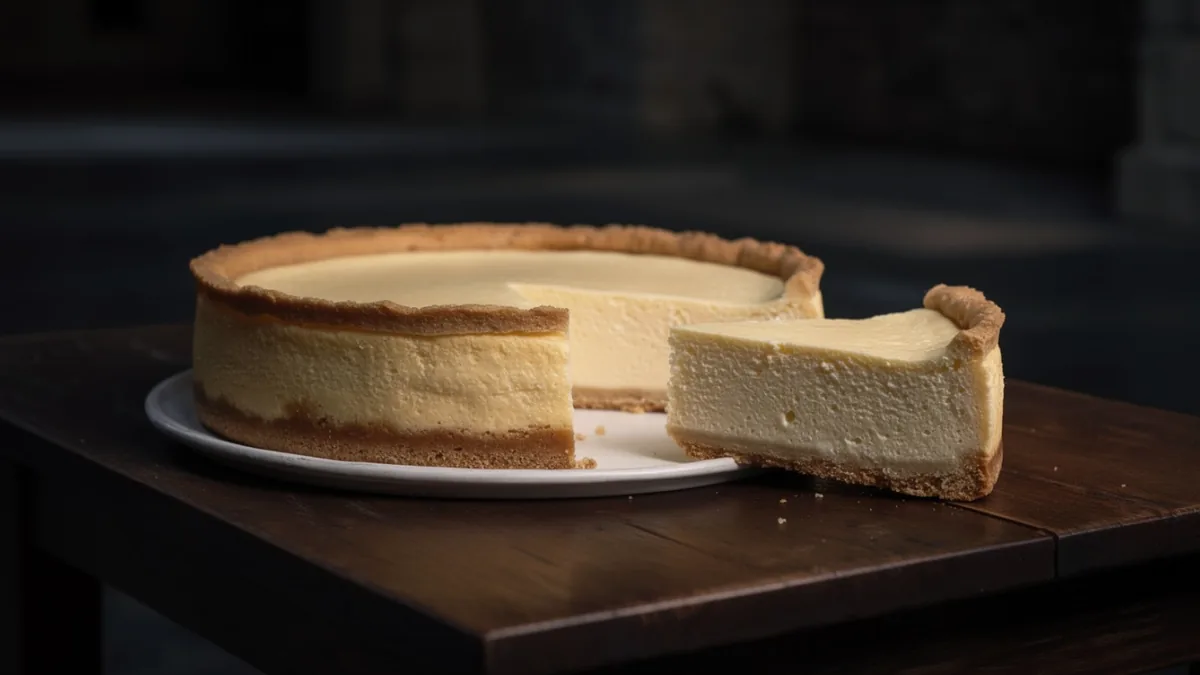
Preparation
- Quickly knead the flour, sugar, butter, egg and baking powder into a smooth dough, working it only briefly so it stays short. Wrap in cling film and chill for 30 minutes.
- Beat the softened butter, sugar, vanilla sugar, custard powder and eggs until smooth, then mix in the quark and soured cream.
- Whip the double cream until stiff and fold it in gently until the filling is evenly pale and thick and creamy.
- Preheat the oven to 180 °C (conventional) and grease a 26 cm springform tin.
- Roll the dough out into a round on a floured surface, line the tin with it and press up an edge about 3 cm high. Prick the base several times with a fork.
- Pour in the filling, smooth the top and bake on the second shelf from the bottom for about 1 hour. If the surface darkens too much, cover with foil; the centre may still wobble slightly.
- Switch off the oven, open the door and leave the cake inside for about 30 minutes. Then take it out, loosen it from the edge with a knife and let it cool completely in the tin.
- Chill for several hours before slicing, and dip the knife in hot water before each cut.
Drink with it
Sweet wine · excellent match
Riesling Auslese with apricot and citrus notes
The acidity of the sweet Riesling stands up to the creaminess of the quark, and its sweetness matches that of the cake.
Which wine goes with dessert? Comparing sweetness deliberatelySparkling wine · excellent match
Moscato d'Asti, well chilled
Low alcohol, residual sugar and fine bubbles lighten the rich quark filling, and the grapey fruit goes with the vanilla.
Sparkling wine, Champagne, and Prosecco: what's the difference?Sour beer · good match
Lambic with cherry or raspberry (Kriek, Framboise)
The fruity acidity cuts through the sweetness, much like berries on a cheesecake.
What is sour beer? Recognizing intentional acidity
Why it pairs well
A Kriek or raspberry lambic is unusual with cake, but its fruity acidity works like berries served with cheesecake.