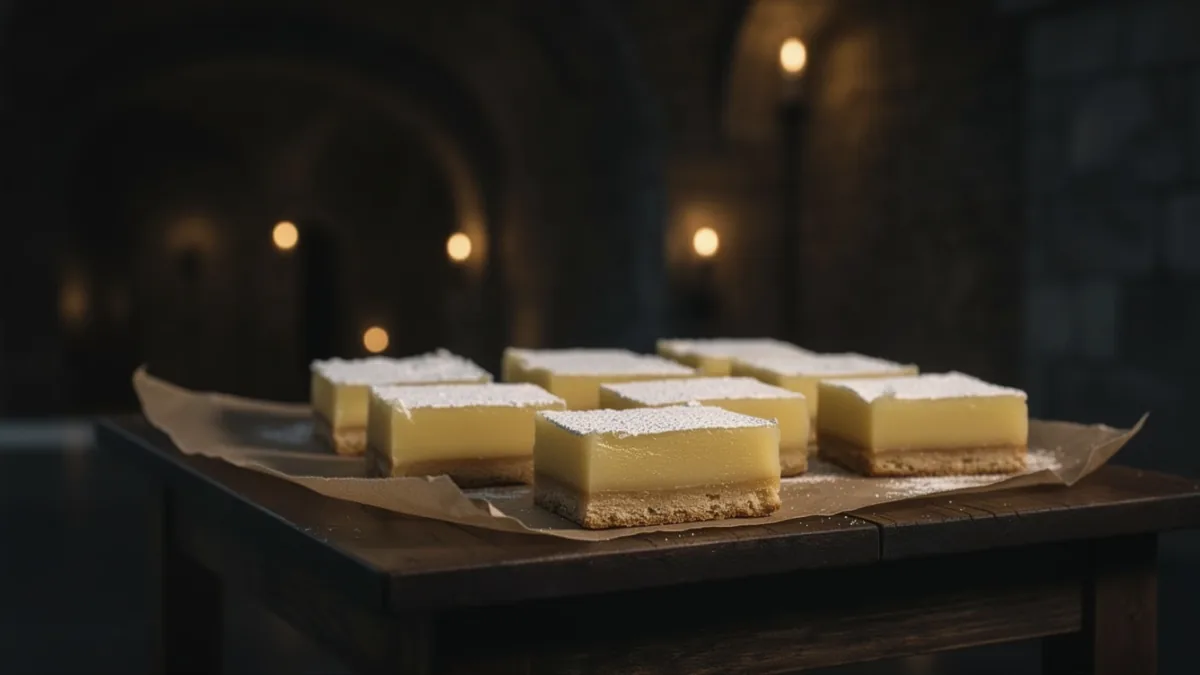
Preparation
- Preheat the oven to 175 °C conventional (top and bottom heat). Line a square tin (about 20 × 20 cm) with baking paper so that the paper stands up at the sides.
- For the base, cream the butter and sugar, add the vanilla, flour and salt and work together briefly until crumbly with no loose flour visible. Press evenly into the tin.
- Bake the base for about 20 minutes until the edges are lightly golden, then leave to cool briefly.
- Meanwhile whisk the eggs and sugar, add the lemon juice and zest. Stir in the flour and baking powder until the mixture is smooth with no lumps of flour.
- Pour the lemon mixture over the still-warm base and bake at 175 °C for about 30 minutes. Take out as soon as the middle no longer wobbles, so the filling does not overcook.
- Leave to cool in the tin at room temperature for at least 1 hour, then chill for at least 2 hours.
- Lift out of the tin using the paper, cut into 9 squares and dust with icing sugar before serving.
Drink with it
Sweet wine · excellent match
Riesling Auslese, Sauternes or Tokaji, well chilled
The wine is sweeter than the lemon filling and has its own acidity, so the dessert does not taste sour and the wine does not seem flat.
Which wine goes with dessert? Comparing sweetness deliberatelySparkling wine · excellent match
Moscato d'Asti
Low alcohol, clear sweetness and fine bubbles pick up the citrus fruit and cut the butter of the shortcrust base.
Sparkling wine, Champagne, and Prosecco: what's the difference?White wine · good match
Riesling Spätlese, fruity-sweet
Peach and citrus notes suit the filling, but the residual sweetness only just matches the sweetness of the bars.
Which wine pairs with food? A simple approach to choosingFruit liqueur · good match
Limoncello, ice cold, in a small glass
Lemon meets lemon; ice cold and in a small measure it stays fresh rather than sticky.